

Why Does the Knee Lock When Walking?



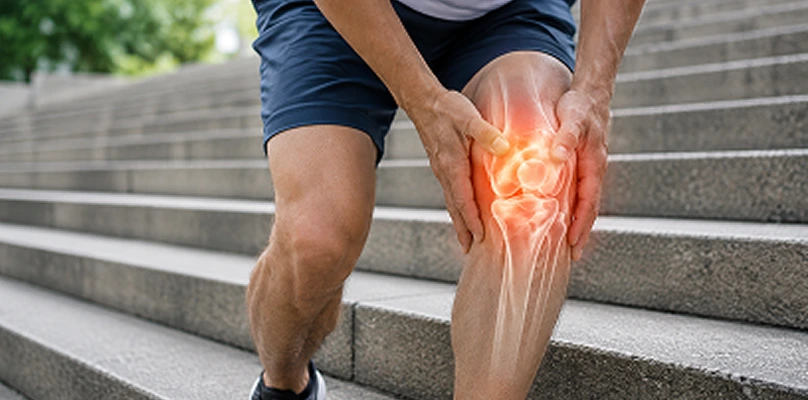
Knee locking and a catching sensation directly affect daily life and are often a complaint patients fear. Described as “I cannot put weight on my knee,” “something catches inside my knee,” or “my knee suddenly locks and it is hard to straighten,” this problem suggests a mechanical block or a functional issue in the knee joint. Catching or locking while walking is not only a temporary discomfort; it may be a sign of underlying tissue damage.
This article covers the causes of knee locking and catching, diagnostic methods, treatment options, and when urgent evaluation is needed.
What Is Knee Locking?
Knee locking is when the knee joint restricts motion at a certain point and the person cannot fully bend or straighten the knee. Locking may mean the knee will not open at all, or it may be a temporary “stuck” feeling. The locking sensation is usually accompanied by the feeling that something is trapped inside the knee.
This complaint is most often related to meniscus tears. A fragment of a torn meniscus can move in and out of the joint and mechanically block knee motion. Knee locking is not limited to the meniscus, however; ligament injuries, cartilage damage, and intra-articular loose bodies can cause similar pictures.
Meniscus Tear: The Most Common Cause
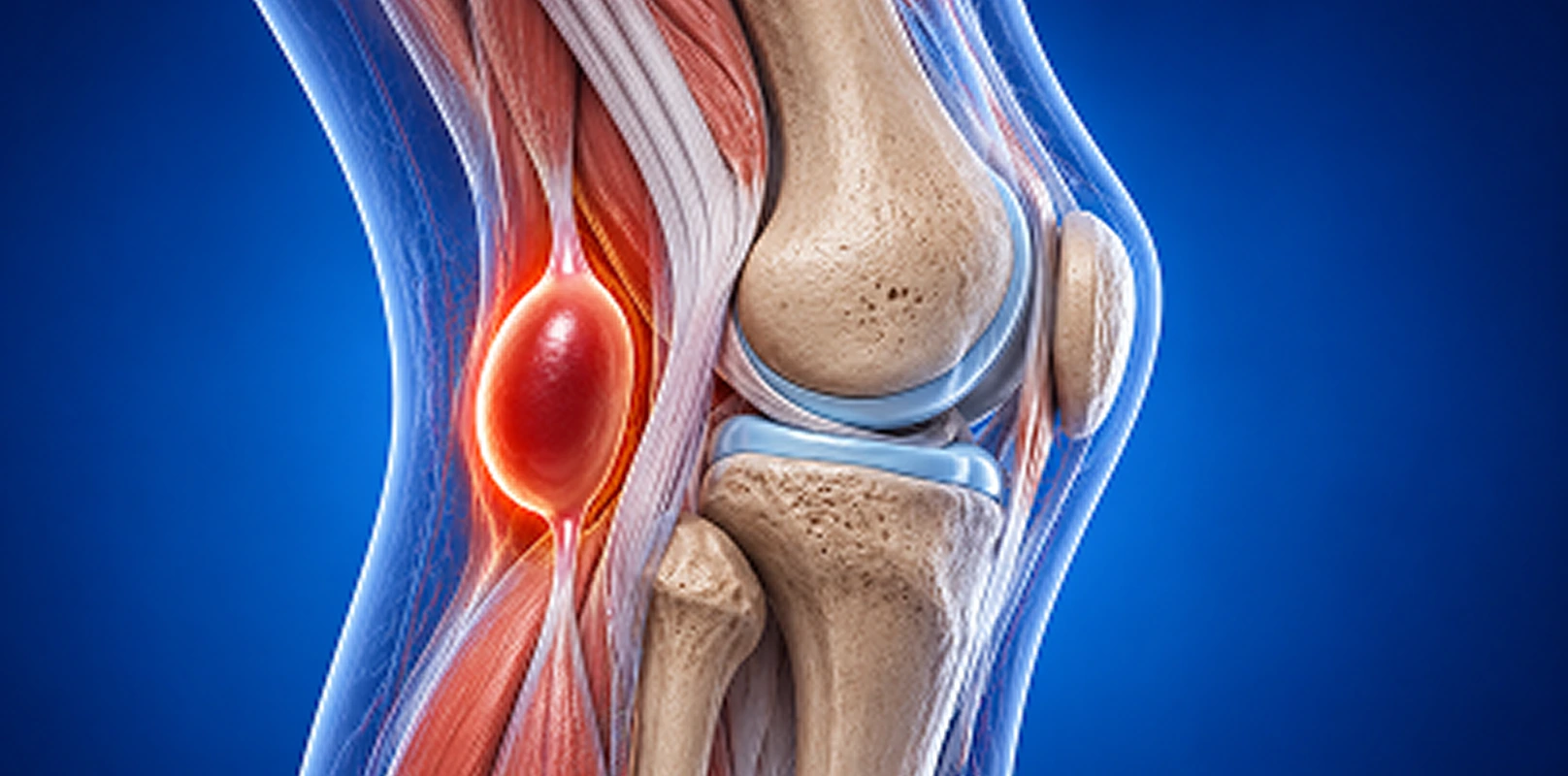
The most common cause of knee locking is a meniscus tear. The menisci are C-shaped cartilage structures inside the knee that protect the joint surfaces and distribute load. Meniscus tears usually occur after sudden twisting, squatting, sports injuries, or age-related degeneration.
Patients with a meniscus tear often experience:
- A sudden “catching” sensation in the knee
- Knee locking (especially in a bent position)
- Pain that increases when going up or down stairs
- Swelling and tenderness
- Sometimes a feeling that the knee gives way
Locking occurs especially when a fragment of the tear catches inside the joint. The knee then sticks at one point, and the person has to straighten it themselves or with help.
Loose Bodies: A “Foreign Piece” Inside the Joint
Loose bodies inside the knee may be a cartilage fragment, a bone fragment, or a piece of torn meniscus circulating in the joint. These pieces can catch at one point and cause locking. Loose bodies usually appear after trauma or after cartilage damage associated with arthritis.
In these cases, locking can be more sudden and more frequently recurrent. Patients may also describe a feeling that “something is spinning inside my knee.”
Cartilage Damage and Knee Locking
Damage to the cartilage in the knee (an osteochondral lesion) can also cause locking and catching. Cartilage damage can produce a picture similar to loose bodies when fragments break off the joint surface and fall into the joint. This is more common in athletes and after trauma.
Cartilage damage can set the stage for knee osteoarthritis in the long term. Early diagnosis and treatment are therefore important.
Knee Ligament Injuries and Instability
Anterior cruciate ligament injury or weakening of other ligaments that stabilize the knee can also cause catching and a locking sensation. If catching occurs together with a giving-way feeling, a ligament injury should be considered. In this situation, control is lost during knee motion and the patient may feel the knee “going out” while walking.
Locking does not always mean a mechanical block; sometimes a reflex muscle spasm related to instability can feel like locking.
How Is Knee Locking Diagnosed?
Diagnosis of knee locking starts with a detailed history and physical examination. Your doctor listens to your symptoms, assesses the knee’s range of motion, and identifies which movements cause locking. Clinical tests such as meniscus tests and ligament stability tests are performed at this stage.
Imaging is used to clarify the diagnosis. X-ray is a basic method for assessing arthritis and bone structure. MRI (magnetic resonance imaging) is the most effective method for evaluating meniscus tears, cartilage damage, and ligament injuries. If an intra-articular loose body is suspected, arthroscopic evaluation can be used for both diagnosis and treatment.
How Is Knee Locking Treated?
Treatment of knee locking depends on the cause. If there is a mechanical cause such as a meniscus tear, options include conservative methods and surgery.
Small, stable meniscus tears may heal with an appropriate physical therapy program and muscle strengthening. During this period, reducing load on the knee, rest, and anti-inflammatory treatment may be used. If locking keeps recurring or the tear is large, arthroscopic meniscus repair or partial meniscus resection may be needed.
In cases such as cartilage damage or loose bodies, arthroscopy is also the most effective method for both diagnosis and treatment. Procedures such as arthroscopic debridement, removal of loose bodies, or cartilage repair may be performed.
In ligament injuries, reconstruction surgery may be needed, for example after an anterior cruciate ligament tear. This decision is made considering the patient’s age, activity level, and instability symptoms.
When Is Urgent Evaluation Needed?
Knee locking sometimes requires urgent evaluation. An orthopedic specialist should be seen immediately in the following situations:
- The knee is completely locked and cannot be moved
- There is severe pain and swelling
- There is deformity or obvious bending of the knee
- Sudden locking started after trauma
- Sensory loss or weakness in the leg is present
These signs may suggest a serious meniscus tear, ligament injury, or a loose body.
Conclusion
Knee locking and catching while walking is an important finding that indicates a mechanical problem in the knee joint. Meniscus tears, cartilage damage, loose bodies, and ligament injuries are among the most common causes. With accurate diagnosis and appropriate treatment, most patients can return to normal life.
If your knee catches, locks, or hurts while walking, do not postpone it hoping it will “go away.” Early evaluation and the right treatment both bring symptoms under control more quickly and protect your knee health in the long term.
Frequently Asked Questions

Specialist Opinion
Knee locking and catching while walking is an important finding that indicates a mechanical problem in the knee joint. Meniscus tears, cartilage damage, loose bodies, and ligament injuries are among the most common causes. With accurate diagnosis and appropriate treatment, most patients can return to normal life.
If your knee catches, locks, or hurts while walking, do not postpone it hoping it will “go away.” Early evaluation and the right treatment both bring symptoms under control more quickly and protect your knee health in the long term.
Contact us to have your symptoms assessed and to learn about treatment options that may be right for you. Get in touch .
Frequently Asked Questions
Knee locking is when the knee cannot fully bend or straighten, or temporarily “gets stuck.” It may be caused by a mechanical block or a functional problem.
The most common cause is a meniscus tear. Loose bodies, cartilage damage, and ligament injuries can also cause locking or a catching sensation.
Sudden catching, locking in a bent position, pain on stairs, swelling, and sometimes a giving-way sensation often accompany a meniscus tear.
After physical examination and special meniscus/ligament tests, X-ray and MRI are used. If a loose body is suspected, arthroscopy can provide both diagnosis and treatment.
Physical therapy may be tried for small, stable tears. Recurrent locking may require arthroscopic repair or resection.
If the knee is completely locked and will not move; if there is severe pain and swelling, deformity, sudden locking after trauma, or loss of strength, urgent evaluation is needed.
 WhatsApp
  Facebook
  Twitter
  Linkedin




 +90 505 398 34 34
 doctoryavuzarikan@gmail.com
 Book Appointment / Contact