

Bone Tumor Biopsy: Needle Biopsy and the Diagnostic Process


How Is a Biopsy Done? Biopsy in Bone and Soft-Tissue Tumors
Bone and soft-tissue tumors are abnormal cell growths that may be benign or malignant. Biopsy is the final and most important step in diagnosis.
What Is a Biopsy?
A biopsy is the removal of a tissue sample for pathology. It is needed to learn about the tumor, confirm the diagnosis, and plan treatment. The sample shows cell structure, growth rate, and whether the tumor is malignant. Biopsy may be a closed needle biopsy or an open biopsy (incisional or excisional).
Why Is Biopsy Performed?
Diagnosis: Biopsy is the most reliable way to tell whether a tumor is benign or malignant. This information strongly affects treatment.
Treatment planning: Results guide the choice of treatment according to tumor type and stage.
Prognosis: Cellular features can influence the course of disease. Biopsy findings help estimate outlook.
Follow-up: A biopsy may also be used to assess how a previously diagnosed tumor is responding to treatment.
Types of Biopsy
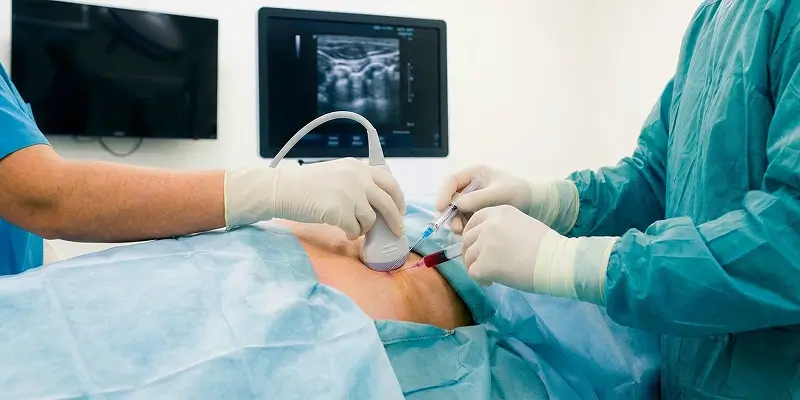
Needle biopsy: A tissue sample is taken with a trucut needle in soft tissue or a Jamshidi needle in bone. It is usually done under local anesthesia and is minimally invasive. Needle biopsy is often preferred for bone and soft-tissue tumors.
Surgical biopsy: The tumor, or part of it, is removed surgically. This is used when the tumor is large or needle biopsy does not provide enough information. It may be done under local or general anesthesia.
How Is a Biopsy Performed?
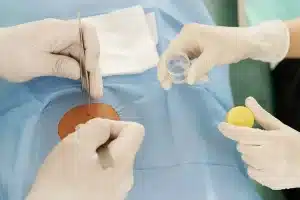
Preparation: The patient’s history and current condition are reviewed. Blood tests and imaging (X-ray, MRI, CT) define the tumor’s features.
Anesthesia: Local or general anesthesia is used depending on the biopsy type. Needle biopsy is usually done with local anesthesia; surgical biopsy may require general anesthesia.
Sampling: The doctor takes a sample with a needle, surgical instruments, or an endoscope. In needle biopsy, the needle is directed into the tumor. In surgical biopsy, the tumor or part of it is removed.
Pathology: The sample is sent to the pathology laboratory and examined under a microscope. Cell structure, growth rate, and other features are assessed.
Results and follow-up: Results are usually ready within a few days. The doctor reviews them in a tumor board and discusses the treatment plan with the patient.
Risks and Complications
Biopsy is generally safe, but risks include infection after sampling, pain and swelling at the site, bleeding (especially with surgical biopsy), and nerve or vessel injury if the needle or incision is misplaced.
Biopsy is critical for diagnosis, treatment planning, and assessing the course of bone and soft-tissue tumors. Needle and open surgical biopsy are usually performed safely, but every procedure has risks. The decision should be discussed in detail with the doctor. Results guide the treatment plan and help choose the right method.
Conclusion
A correctly planned biopsy is the foundation of bone and soft-tissue tumor care. Needle biopsy is often enough; open biopsy is used when a larger sample is needed. Results should be reviewed by an experienced orthopedic oncology team.
Frequently Asked Questions

Specialist Opinion
A correctly planned biopsy is the foundation of bone and soft-tissue tumor care. Needle biopsy is often enough; open biopsy is used when a larger sample is needed. Results should be reviewed by an experienced orthopedic oncology team.
Contact us to have your symptoms assessed and to learn about treatment options that may be right for you. Get in touch .
Frequently Asked Questions
A biopsy is the removal of a tissue sample from the tumor for diagnosis. It provides critical information on cell structure, growth rate, and whether the lesion is benign or malignant.
In a closed needle biopsy, a trucut needle may be used for soft tissue and a Jamshidi needle for bone. The procedure is usually done under local anesthesia.
An open (incisional or excisional) biopsy may be preferred when needle biopsy is insufficient or a larger sample is required.
Pathology results are usually available within a few days. Findings are discussed in a tumor board to plan treatment.
Infection, pain, swelling, and bleeding can occur. Nerve or vessel injury is assessed more carefully with open biopsy.
The treatment plan depends on the biopsy result. An incorrect or inadequate biopsy can delay diagnosis and treatment.
 WhatsApp
  Facebook
  Twitter
  Linkedin



 +90 505 398 34 34
 doctoryavuzarikan@gmail.com
 Book Appointment / Contact