

Swelling and Tightness Behind the Knee: Baker’s Cyst Treatment and Follow-up


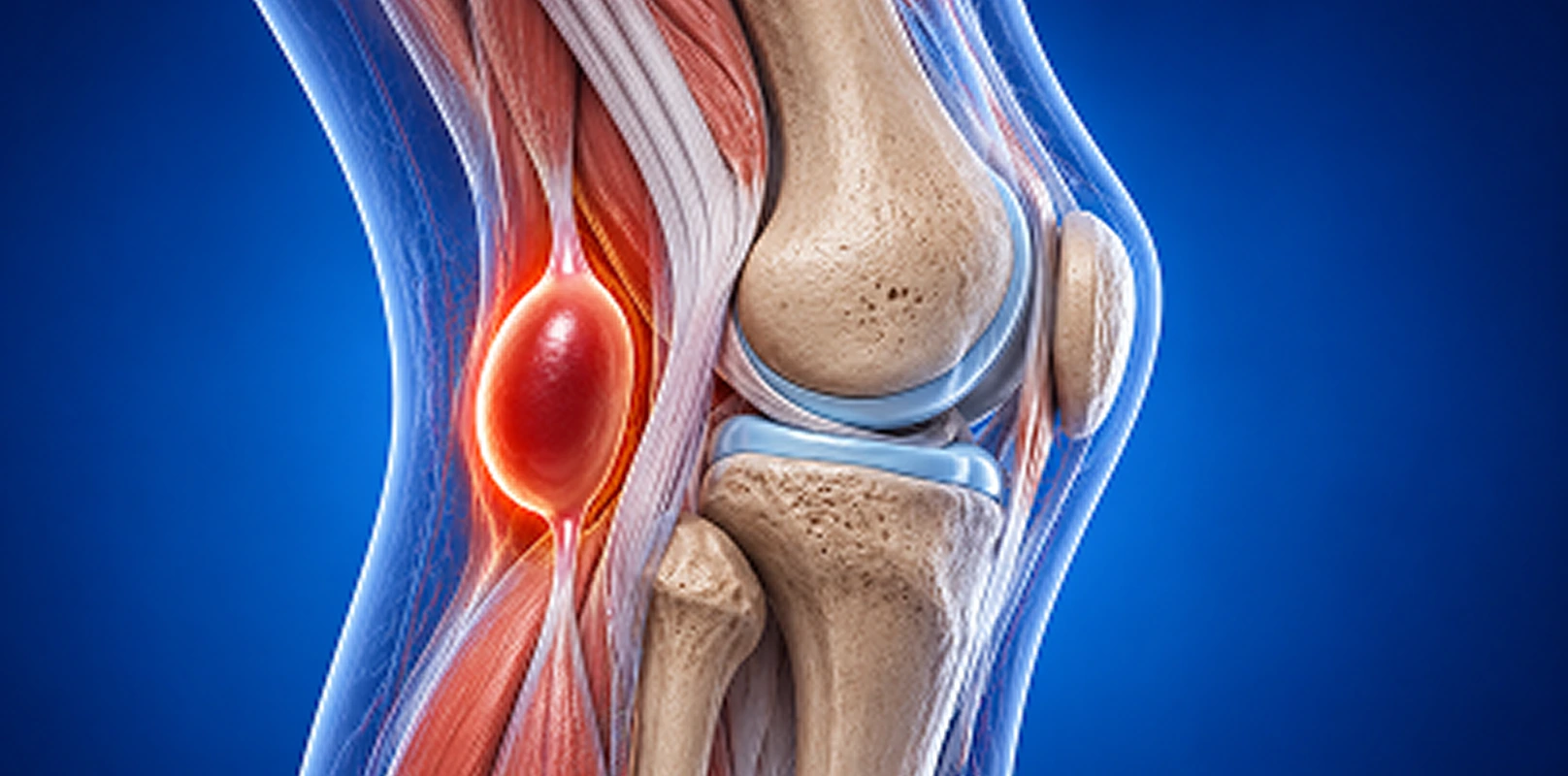
A feeling of swelling and tightness behind the knee is a complaint many people experience but often do not take seriously. If there is fullness, a pressure sensation, or tightness in the back of the knee, one of the first causes that comes to mind is a Baker’s cyst. A Baker’s cyst is a fluid-filled sac that forms behind the knee joint, in the popliteal region. It usually forms because a problem in the inner structure of the knee increases joint fluid and this fluid accumulates as a cyst.
This article covers why a Baker’s cyst forms, which symptoms it presents with, diagnostic methods, treatment options, and the follow-up process.
What Is a Baker’s Cyst?
A Baker’s cyst is a fluid-filled sac that forms in the popliteal fossa behind the knee joint. In medicine it is also called a “popliteal cyst.” If synovial fluid (joint fluid) inside the knee increases for various reasons, it can leak outward from a weak area at the back of the knee and lead to cyst formation. This cyst is often not a disease on its own; it is usually seen together with an underlying knee problem.
Why Does a Baker’s Cyst Form?
The most important factor in the formation of a Baker’s cyst is pathology inside the knee. When there is a problem inside the joint, joint fluid increases and this excess fluid accumulates at the back of the knee and forms a cyst. The most common causes are:
- Meniscus tears
- Knee osteoarthritis
- Rheumatic diseases (for example rheumatoid arthritis)
- Anterior cruciate ligament injuries
- Repeated strain or trauma to the knee
In these situations, inflammation and increased fluid in the knee joint cause the cyst to grow.
Symptoms: Swelling and Tightness Behind the Knee
A Baker’s cyst often does not cause obvious pain. The most common complaints are:
- Swelling behind the knee
- A feeling of tightness
- Fullness in the knee
- Pressure that increases especially when the knee is bent
- Discomfort that increases after sitting or standing for a long time
Sometimes when the cyst grows, especially in people who play sports or stand for long periods, the swelling becomes more noticeable and bothers the patient.
How Is a Baker’s Cyst Diagnosed?
Diagnosis of a Baker’s cyst usually starts with clinical examination. If there is obvious swelling and a feeling of tightness behind the knee, the doctor considers this possibility. Imaging methods are used, however, for a definitive diagnosis of the cyst.
Ultrasound is a fast, effective method for showing a Baker’s cyst. The contents and size of the cyst are seen clearly with ultrasound. MRI (magnetic resonance imaging) also reveals underlying problems inside the knee in addition to the cyst. MRI is especially important if a meniscus tear, cartilage damage, or ligament injury is suspected.
How Is a Baker’s Cyst Treated?
Treatment of a Baker’s cyst first targets the underlying knee problem that caused the cyst to form. Although the cyst may look like a problem on its own, it is often a reflection of an underlying knee pathology.
1. Medication and Physical Therapy
In small, painless cysts, the first approach is usually conservative treatment. These methods include:
- Rest and reducing load on the knee
- Ice
- Anti-inflammatory medication (under a doctor’s supervision)
- Physical therapy: strengthening the muscles around the knee, increasing joint range of motion
- Use of a knee brace or compression bandage
With these methods, the cyst can shrink and symptoms can decrease. Especially in chronic situations such as osteoarthritis or a meniscus tear in the knee, increasing joint stability with physical therapy can reduce the risk of the cyst recurring.
2. Fluid Aspiration (Emptying the Cyst)
When a Baker’s cyst sometimes grows and creates pain and a pressure sensation, the fluid inside the cyst can be emptied by the doctor with a needle. This method especially reduces the patient’s symptoms quickly. There is a risk, however, that the cyst will refill. For this reason, aspiration is usually used as a supportive method while the underlying knee problem is being treated.
3. Cortisone Injection
If there is inflammation around the cyst and symptoms are intense, your doctor may recommend a cortisone injection into the joint or around the cyst. Cortisone can bring pain and swelling under control by reducing inflammation. Long-term use of cortisone is not always ideal for joint health, however; it should therefore be applied under a doctor’s supervision.
4. Surgical Treatment
Surgery is usually considered as a last option. If the cyst is very large, keeps recurring, or the underlying knee problem (such as a meniscus tear or cartilage damage) requires surgery, the cyst can also be treated surgically at the same time. Today, with arthroscopic methods, the pathology inside the knee can be treated and the cyst can be addressed at the same time.
Baker’s Cyst Follow-up Process
In Baker’s cyst treatment, follow-up is important for determining treatment success and the risk of recurrence. The size of the cyst and the decrease in symptoms are followed with regular examination.
A decrease in symptoms is expected within the first 1–2 weeks. With a physical therapy program, the muscles around the knee are strengthened and joint range of motion is increased. If the cyst is obvious, a further evaluation is done after 4–6 weeks. If symptoms continue, advanced imaging methods such as MRI may be needed to show the underlying pathology more clearly.
If the cyst recurs, the treatment plan is reassessed. During this process, the patient’s weight control, reducing load on the knee, and a regular exercise program are important.
Is a Baker’s Cyst Dangerous?
Most Baker’s cysts are harmless and can be brought under control with treatment. In some situations, however, the cyst can cause complications. The most common complication is rupture of the cyst. When the cyst ruptures, the fluid behind the knee can spread toward the calf, and in this situation the patient may have severe pain, redness, and swelling. This picture can sometimes be confused with deep vein thrombosis (DVT); for this reason, if there is sudden-onset severe pain and obvious swelling in the leg, urgent evaluation is always needed.
If the cyst is very large, numbness, tingling, or circulation problems related to compression of nerves and vessels can also develop. For this reason, if symptoms increase, a doctor’s check is important.
Conclusion
Swelling and tightness behind the knee may be a sign of a commonly seen situation such as a Baker’s cyst. A Baker’s cyst is usually a reflection of a problem inside the knee, and identifying and treating the underlying cause is essential in treatment. In small, painless cysts, symptoms may decrease with conservative treatment. If symptoms continue or the cyst grows, aspiration, cortisone injection, or surgical treatment options may be considered.
If there is swelling, tightness, pain, or rapidly increasing symptoms behind the knee, evaluation by a specialist orthopedist is important. Early diagnosis and the right treatment both bring symptoms under control in a short time and protect knee health in the long term.
Frequently Asked Questions

Specialist Opinion
Swelling and tightness behind the knee may be a sign of a commonly seen situation such as a Baker’s cyst. A Baker’s cyst is usually a reflection of a problem inside the knee, and identifying and treating the underlying cause is essential in treatment. In small, painless cysts, symptoms may decrease with conservative treatment. If symptoms continue or the cyst grows, aspiration, cortisone injection, or surgical treatment options may be considered.
If there is swelling, tightness, pain, or rapidly increasing symptoms behind the knee, evaluation by a specialist orthopedist is important. Early diagnosis and the right treatment both bring symptoms under control in a short time and protect knee health in the long term.
Contact us to have your symptoms assessed and to learn about treatment options that may be right for you. Get in touch .
Frequently Asked Questions
A Baker’s cyst (popliteal cyst) is a sac formed by fluid accumulation behind the knee. It is usually not a disease on its own but is related to an underlying knee problem.
Meniscus tear, knee osteoarthritis, rheumatic diseases, anterior cruciate ligament injury, and repeated trauma are among the common causes.
Swelling, tightness, and a feeling of fullness behind the knee are typical. Symptoms may increase when the knee is bent or after sitting or standing for a long time; it may not always be painful.
Treatment targets the underlying cause. Rest, ice, medication, and physical therapy are the first options. Aspiration or cortisone injection is used if needed; surgery is rarely performed.
In most cases it is not dangerous. If the cyst ruptures, however, sudden pain and swelling spreading into the calf can occur; because this can be confused with a blood clot, urgent evaluation is needed.
If the underlying knee problem is not solved, the cyst can refill. For this reason, emptying the cyst alone may not provide a lasting solution.
 WhatsApp
  Facebook
  Twitter
  Linkedin





 +90 505 398 34 34
 doctoryavuzarikan@gmail.com
 Book Appointment / Contact