

Clicking and Popping Sounds from the Knee: Causes and Treatment Methods


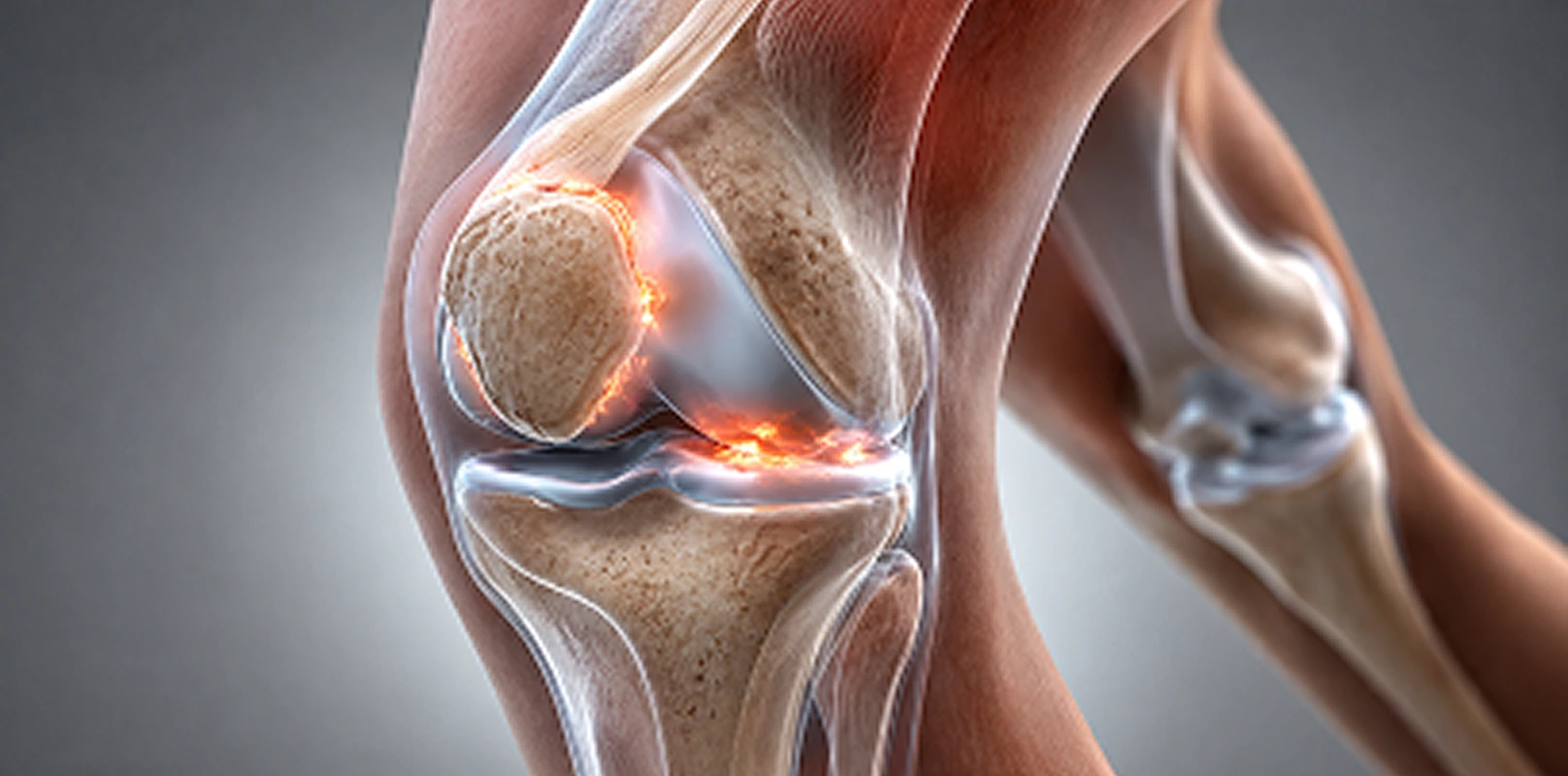
Sounds from the Knee
The knee is one of the most complex and most heavily loaded joints in the human body. During simple daily activities such as walking, running, climbing stairs, and sitting down and standing up, the load on the knee is balanced by the joint surfaces, menisci, ligaments, and surrounding muscles. When this balance is disrupted or the mechanical structure inside the joint changes, complaints such as clicking and popping sounds in the knee can appear. These sounds are often innocent and temporary, but they can sometimes be a sign of a pathological process in the joint.
Sounds from the knee can affect the patient’s quality of life and can also be an early warning of a progressive disease. For this reason, rather than ignoring them as “only sound,” they should be evaluated together with other findings that accompany the symptoms.
What Are Clicking and Popping Sounds in the Knee?
Clicking and popping sounds from the knee are usually defined as crepitation (sound formed by friction of joint surfaces) or cavitation (popping of gas bubbles inside the joint).
These sounds can form because structures inside the joint rub against each other during knee movement, gas bubbles pop, ligaments make sound as they pass over the joint surface, or there is deterioration of the meniscus and cartilage surface. In most situations these sounds are painless and harmless; in some situations, however, they may point to an underlying pathology.
The Most Common Causes
1. Popping of Gas Bubbles (Cavitation)
Gases in the joint fluid such as nitrogen, carbon dioxide, and oxygen can form small bubbles with a sudden pressure change during joint movement, and sound can form when these bubbles pop. This situation is usually harmless and does not cause any pain.
2. Cartilage Wear (Osteoarthritis)
Age-related or trauma-related wear of knee cartilage causes the joint surface to become rough. In this situation, friction increases during knee movement and crepitation sounds are heard. They are usually seen together with findings such as pain, swelling, and limited motion. As osteoarthritis progresses, stiffness and a “locking” sensation in the knee can also develop.
3. Meniscus Tears
The menisci are cartilage structures in the knee that act as shock absorbers. Sudden twisting movements, sports injuries, or age-related degeneration can lead to meniscus tears. With a meniscus tear, especially when the knee is bent, a click or popping sound may be heard; locking and pain may also accompany. Meniscus tears can cause a “catching” sensation and limited motion in the knee.
4. Patellofemoral Pain Syndrome (Maltracking / Sliding)
If the kneecap (patella) does not slide smoothly over the femoral surface, friction and sounds in the joint can occur. This is usually seen together with pain that increases when climbing stairs, squatting, or sitting for a long time. Patellofemoral pain syndrome is especially common in young, active people.
5. Friction of Ligaments and Tendons
Tendons and ligaments around the knee (especially the patellar tendon and the iliotibial band) can produce a friction sound as they slide over bone during knee movement. This is usually more common in athletes, especially runners. Inflammation or thickening of the tendons can make this sound more noticeable.
6. Loose Bodies Inside the Joint
Broken-off cartilage fragments, small bone pieces, or meniscus fragments can become free inside the knee. As these pieces move inside the joint, they can lead to signs such as popping, catching, and locking. Loose bodies can present especially with a “grinding” sensation and sudden pain attacks during knee movement.
When Should You Be Concerned?
Although sound from the knee is often harmless, a doctor should always be seen in the following situations:
- If pain accompanies it
- If there is swelling, increased warmth, or redness
- If the knee is locking or limited motion has developed
- If there is a feeling of instability (looseness) in the knee
- If there is a history of trauma together with the sound
- If pain lasts longer than 1–2 weeks
These signs may indicate pathologies such as a meniscus tear, ligament injury, osteoarthritis, or a loose body inside the joint.
Diagnostic Methods
In a patient with clicking and popping in the knee, the diagnostic process usually proceeds as follows:
1. History and Physical Examination
- Onset and duration of the complaint
- Presence of pain and locking
- History of trauma
- Knee range of motion
- Special tests (McMurray, Lachman, patellar apprehension, and similar)
2. Imaging Methods
- X-ray: Osteoarthritis, bone structure, joint-space narrowing
- MRI: Meniscus tear, ligament injuries, cartilage damage
- Ultrasound: Tendon and ligament pathologies, fluid accumulation
- Arthroscopic evaluation if needed: Direct visualization of pathologies inside the joint
Treatment Methods (Detailed)
Treatment of clicking and popping sounds from the knee depends on the underlying cause. In most cases, conservative treatment methods are preferred as the first option. In some situations, however, interventional or surgical methods may be needed. The treatment plan is individualized according to the patient’s age, activities, severity of symptoms, and diagnosis.
1. Conservative Treatment (First Step)
1.1. Activity Modification and Rest
If there is pain or swelling together with sound in the knee, activities that place load on the knee (running, jumping, squatting, going up and down stairs) should be reduced temporarily. During the rest period, the aim is to reduce inflammation and lower the load inside the joint.
Suggestions:
- Avoiding intense sports and heavy load-carrying activities for 1–2 weeks
- Limiting movements that increase pain
- Using support (a cane, a knee brace) in daily life for movements that load the knee
1.2. Ice and Cold Application
Cold application is useful especially for swelling and pain that form after trauma. Ice can be applied for 10–15 minutes, 2–3 times a day. Cold application helps control pain by reducing local inflammation.
1.3. Physical Therapy and Exercise Programs
One of the main causes of knee sounds is muscle imbalance and weakness. Physical therapy is one of the most effective methods for strengthening the muscles around the knee, increasing joint stability, and correcting movement patterns.
Main goals of the physical therapy program:
- Strengthening the quadriceps (front thigh muscle) and hamstrings
- Strengthening the hip muscles (gluteus medius and gluteus maximus)
- Increasing proprioception in the knee
- Preserving joint range of motion
- Developing balance and coordination
Example exercises:
- Isometric quadriceps contractions
- Mini squat (at a level that will not harm the knee)
- Balance board and single-leg stance
- Hip abduction exercises
- Hamstring stretching and strengthening
1.4. Use of Orthoses and Supports
A knee brace, taping, or special orthopedic supports can increase knee stability and reduce friction during movement. Especially in patients with patellofemoral pain syndrome or ligament insufficiency, use of support can ease symptoms.
Areas of use:
- Correcting kneecap alignment
- Reducing joint load
- Increasing joint stability during sports
1.5. Medication
Medication is usually used to control pain and reduce inflammation. Drugs should be chosen under a doctor’s supervision and considering the patient’s other health conditions.
Commonly used drug groups:
- Non-steroidal anti-inflammatory drugs (NSAIDs)
- Analgesic (pain-relieving) drugs
- Muscle relaxants when needed
Note: Long-term NSAID use can be risky because of stomach and kidney side effects. For this reason, medication use should be under a doctor’s supervision.
2. Supportive Methods Outside Physical Therapy (Intermediate Step)
2.1. Intra-Articular Injections
Intra-articular injections are effective in controlling symptoms especially in osteoarthritis and inflammatory processes. Injections can help reduce pain and improve joint function.
Common injection types:
-
Corticosteroid injection: Reduces inflammation quickly. Frequent use, however, can cause cartilage damage and is not recommended in the long term.
-
Hyaluronic acid injection: Increases the viscosity of joint fluid and provides a “lubricating” effect. It can make joint movement easier in osteoarthritis.
-
PRP (platelet-rich plasma): Growth factors obtained from your own blood can support tissue healing. It may be preferred especially in tendinopathies and early-period cartilage damage.
2.2. Ultrasound, Laser, and Electrotherapy
Physical therapy devices play a supportive role in reducing pain and inflammation.
- Ultrasound therapy: Provides heat and a micromassage effect to deep tissues
- Laser therapy: Can reduce pain and inflammation
- TENS (transcutaneous electrical nerve stimulation): Can be used for pain control
3. Interventional and Surgical Treatment (When Needed)
3.1. Arthroscopic Surgery
Arthroscopy is performed by entering the knee through small incisions with a camera and surgical instruments. It is used in situations such as a meniscus tear, a loose body, and smoothing of roughness on the cartilage surface.
Advantages of arthroscopy:
- Being minimally invasive
- Faster recovery
- Short hospital stay
Areas of application:
- Meniscus repair or partial resection
- Removal of loose bodies
- Smoothing of the cartilage surface (debridement)
3.2. Meniscus and Ligament Surgeries
Meniscus tears can be repaired or removed according to the type and location of the tear. In anterior cruciate ligament (ACL) tears, reconstruction may be needed.
Surgical goal:
- Providing joint stability
- Reducing the long-term risk of osteoarthritis
- Achieving functional recovery
3.3. Cartilage Restoration Methods
In patients with cartilage damage, cartilage repair or regeneration methods may be used.
- Microfracture
- Autologous chondrocyte implantation
- Osteochondral graft (OATS)
These methods are used especially in young, active patients with the aim of protecting the joint surface.
3.4. Knee Replacement (Arthroplasty)
In situations of advanced osteoarthritis or serious deterioration of the joint surface, knee replacement may be needed. Knee replacement is one of the most effective methods for eliminating pain and restoring function.
Goals after knee replacement:
- Pain-free walking
- Being able to go up and down stairs
- Independence in daily activities
Prevention and Lifestyle Suggestions
Suggestions for protecting knee health:
- Regular exercise and muscle strengthening
- Control of excess weight
- Correct sports techniques and appropriate footwear
- Rest after prolonged sitting or standing
- Avoiding activities that strain the knee
- Developing a habit of stretching and warming up
These measures can prevent sound formation and pain by reducing mechanical load on the knee.
Conclusion
Clicking and popping sounds from the knee can often be harmless and mechanical in origin. If signs such as pain, swelling, locking, and instability accompany them, however, underlying pathologies should be investigated. Accurate diagnosis and an appropriate treatment approach are important for preserving knee function and improving quality of life.
Frequently Asked Questions

Specialist Opinion
Clicking and popping sounds from the knee can often be harmless and mechanical in origin. If signs such as pain, swelling, locking, and instability accompany them, however, underlying pathologies should be investigated. Accurate diagnosis and an appropriate treatment approach are important for preserving knee function and improving quality of life.
Contact us to have your symptoms assessed and to learn about treatment options that may be right for you. Get in touch .
Frequently Asked Questions
No. Sounds from the knee are often harmless and can form from popping of gas bubbles or movement of tendons. If pain, swelling, or locking accompanies them, however, a doctor should be seen.
Sound may be heard in people with cartilage wear (osteoarthritis), but this is not the case in everyone. The presence of sound is not directly related to the degree of cartilage damage; some patients may have pain without sound.
No. Meniscus tears can sometimes heal with conservative treatment. Surgery is evaluated according to the type of tear, the patient’s age, the severity of symptoms, and loss of function.
Forcing the knee joint to crack can lead to joint damage in the long term. This habit is not recommended. If the cause of the sound is a mechanical pathology, cracking can increase symptoms.
Sound from the knee during exercise can sometimes be normal. If there is pain, swelling, or locking in the knee, however, exercise should be paused and specialist evaluation should be obtained.
A knee brace provides support in some situations, but continuous and unnecessary use can reduce muscle strength. Use of a brace should be limited to a doctor’s or physiotherapist’s recommendation.
 WhatsApp
  Facebook
  Twitter
  Linkedin




 +90 505 398 34 34
 doctoryavuzarikan@gmail.com
 Book Appointment / Contact