

Sharp Pain Inside the Knee After Sports: Treatment Options


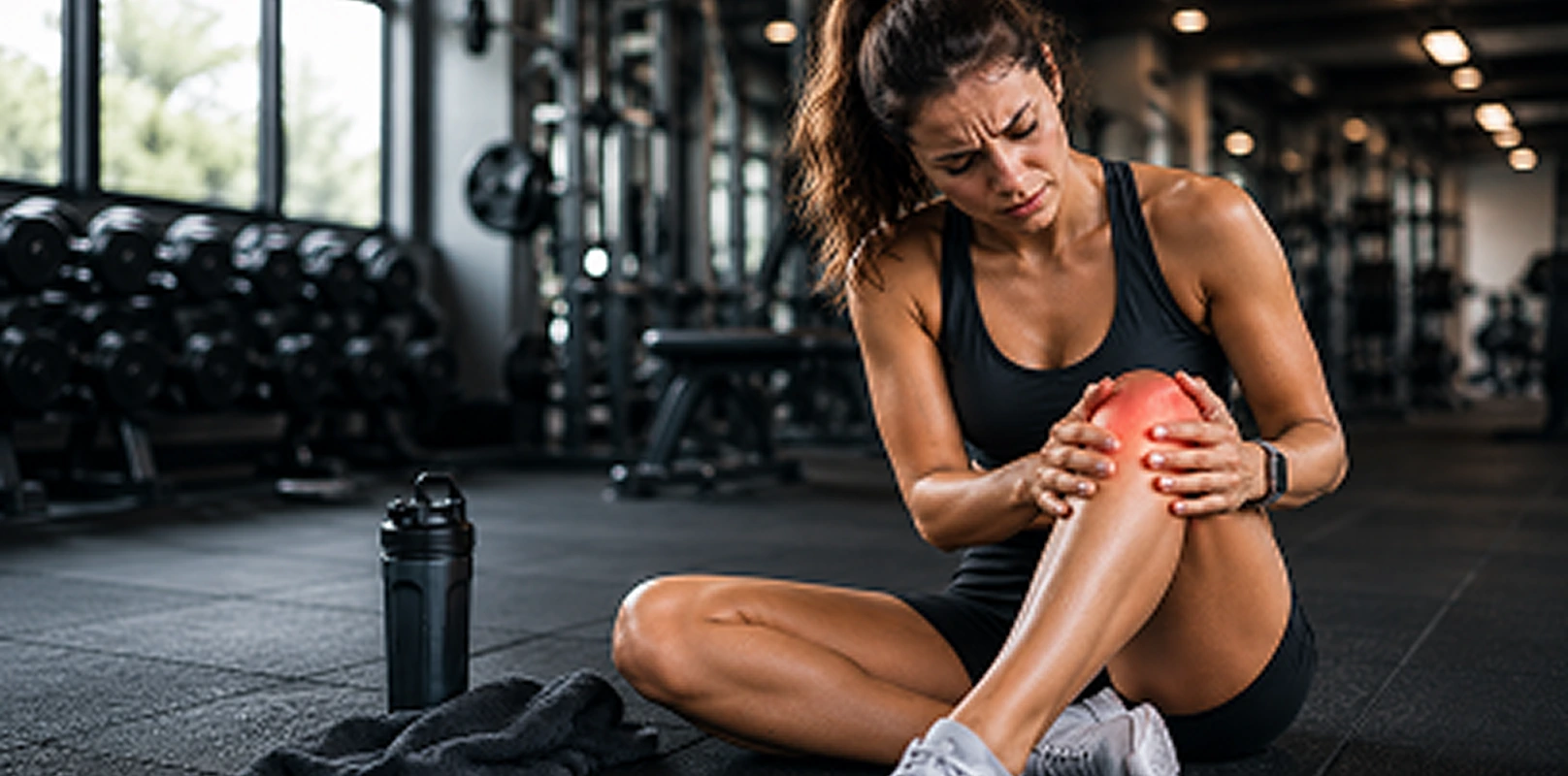
Among people who play sports, knee pain and especially a sharp, stabbing sensation inside the knee after sports is one of the most common complaints. This often signals irritation, a tear, or inflammation from overload in the knee joint. If sharp pain inside the knee after sports is not assessed correctly, it can later lead to more serious problems such as a meniscus tear, cartilage damage, or chronic patellofemoral pain syndrome.
This article covers the causes of sharp pain inside the knee after sports, diagnostic methods, treatment options, and what to watch for.
What Is Sharp Pain Inside the Knee After Sports?
Sharp pain inside the knee after sports is described as a “stabbing,” “sharp pain,” or “burning” sensation at one point inside the joint. This pain usually appears when the knee is under load or during the rest period after training. A stabbing sensation often points to irritation of the meniscus, cartilage, or synovial tissue.
Pain inside the knee after sports may not be limited to a single cause; the kneecap, meniscus, ligaments, cartilage, and surrounding soft tissues can each contribute.
1. Meniscus Tear: A Common Cause in Athletes
Meniscus tears occur especially in athletes during sudden twisting, squatting, and change of direction. A stabbing sensation and pain inside the knee after sports may be a sign of a meniscus tear. In athletes with a meniscus tear, the following are common:
- Stabbing and sharp pain inside the knee
- A catching or locking sensation
- Swelling in the knee (especially within 24–48 hours)
- Pain that increases when going up or down stairs
If a meniscus tear is diagnosed correctly in the early period, it can be managed successfully with arthroscopic repair or conservative treatment.
2. Patellofemoral Pain Syndrome: Stabbing Under the Kneecap
Another common cause of sharp pain inside the knee after sports is patellofemoral pain syndrome. When excessive pressure develops on the joint surface between the kneecap and the thigh bone, stabbing and pain around the kneecap are felt especially after running, squats, and jumping.
In this situation patients often present with:
- Pain that increases when going down stairs
- Stabbing in the knee after standing up from prolonged sitting
- Pain with movements such as squats and lunges
- Tenderness around the kneecap
Muscle imbalance, poor kneecap tracking, and overload play an important role in patellofemoral pain syndrome.
3. Tendon Problems: Patellar Tendinopathy and Quadriceps Tendinopathy
Sharp pain inside the knee after sports can also result from overload of the patellar tendon or the quadriceps tendon. Especially in running, jumping, squats, and high-intensity interval training, repeated microtrauma occurs in the tendons. This leads to degeneration and irritation of tendon tissue.
Patellar tendinopathy usually presents with stabbing and pain below the kneecap. These symptoms typically increase during training and tend to decrease with rest.
4. Cartilage Damage and Increased Intra-Articular Pressure
Another important cause of sharp pain inside the knee after sports is cartilage damage. Roughening and microcracks on the cartilage surface lead to inflammation inside the joint. This can present as a stabbing and painful sensation after sports. Cartilage damage is a progressive process, and early diagnosis is important.
In athletes with cartilage damage:
- Pain increases especially during loading
- Aching and stabbing in the knee
- Sometimes locking and catching
- Prolonged swelling
may be seen.
5. Knee Ligament Injuries: Even Mild Injuries Can Cause Stabbing Pain
Serious ligament injuries such as an anterior cruciate ligament tear are usually obvious after trauma. In athletes, however, mild ligament strains can also cause stabbing and pain. In this situation, instability, a giving-way sensation, or weakness may also be present. Swelling and limited motion may accompany ligament injuries.
Diagnostic Process: How Is Stabbing Knee Pain After Sports Evaluated?
Evaluation of athletes with sharp pain inside the knee after sports starts with history and physical examination. How the injury occurred, the location of pain, which movements increase it, and whether there is swelling are very important for diagnosis. Physical examination includes meniscus tests, ligament stability tests, and patellofemoral pain tests.
Imaging methods help with diagnosis:
- X-ray: A basic method for assessing fracture, arthritis, and bone structure.
- MRI (magnetic resonance imaging): The most effective method for evaluating meniscus tears, cartilage damage, and ligament injuries.
- Ultrasound: Useful for soft-tissue problems such as tendon issues and bursitis.
Treatment Options: The First Step Is Conservative Treatment
The first step in treating sharp pain inside the knee after sports is usually a conservative approach. The aim is to reduce inflammation, increase muscle strength, and prevent recurrent injury.
Conservative treatment approaches:
- Rest and load reduction: Pausing sports activity or reducing intensity
- Ice: 15–20 minutes, 2–3 times a day
- Compression and elevation: If there is swelling
- Physical therapy: Strengthening the quadriceps and hamstrings, kneecap-tracking exercises, balance and proprioception
- Orthotics and knee braces: If there is a kneecap-tracking problem
- Short-term anti-inflammatory medication if needed: Under a doctor’s supervision
With this treatment, many athletes achieve clear improvement in symptoms within a few weeks.
Advanced Treatment Options: Surgery and Injections
If symptoms continue despite conservative treatment, advanced options are considered. If there are mechanical problems such as a meniscus tear, cartilage damage, or a loose body, arthroscopic surgery may be needed. Procedures such as arthroscopic meniscus repair or partial meniscus resection, cartilage debridement, and removal of loose bodies may be performed.
In athletes with cartilage damage, cartilage repair options (such as microfracture, osteochondral graft, and cellular methods) may be considered. This decision is based on the patient’s age, activity level, and the size of the lesion.
In tendinopathies, an eccentric exercise program is one of the most effective treatments. When needed, PRP or other injection methods may also be considered.
Prevention: How Do You Prevent Stabbing Knee Pain After Sports?
To prevent recurrence of sharp pain inside the knee after sports, some preventive steps matter:
- Warm-up and cool-down: Warm up before exercise and cool down afterward
- Muscle balance: Strengthen the quadriceps, hamstrings, and hip muscles
- Correct technique: Proper form in movements such as squats and lunges
- Load management: Increase training intensity gradually
- Footwear and surface: Choose appropriate shoes and a balanced surface
- Kneecap tracking: Corrective exercises if the kneecap tracks to the side
These steps reduce the load on the knee joint and lower injury risk.
When Should You See a Doctor?
Athletes with sharp pain inside the knee after sports need specialist evaluation in the following situations:
- Pain lasts longer than 2–3 weeks
- There is swelling, locking, or catching in the knee
- Pain increases when going up or down stairs
- There is a giving-way sensation or instability
- There is sudden swelling and pain after trauma
These signs may indicate a mechanical problem such as a meniscus tear, cartilage damage, or a ligament injury.
Conclusion
Sharp pain inside the knee after sports is a shared complaint of different pathologies in the knee joint. Meniscus tear, patellofemoral pain syndrome, tendon problems, cartilage damage, and ligament injuries are among the most common causes. With accurate diagnosis and appropriate treatment, most athletes can return to normal training.
If your knee stabs, hurts, or catches after sports, do not postpone it hoping it will “go away.” Early evaluation and appropriate treatment both reduce pain and protect your knee health in the long term.
Frequently Asked Questions

Specialist Opinion
Sharp pain inside the knee after sports is a shared complaint of different pathologies in the knee joint. Meniscus tear, patellofemoral pain syndrome, tendon problems, cartilage damage, and ligament injuries are among the most common causes. With accurate diagnosis and appropriate treatment, most athletes can return to normal training.
If your knee stabs, hurts, or catches after sports, do not postpone it hoping it will “go away.” Early evaluation and appropriate treatment both reduce pain and protect your knee health in the long term.
Contact us to have your symptoms assessed and to learn about treatment options that may be right for you. Get in touch .
Frequently Asked Questions
Meniscus tear, patellofemoral pain, tendinopathy, cartilage damage, and mild ligament strains are the most common causes.
Rest, ice for 15–20 minutes 2–3 times a day, compression, elevation, physical therapy, and short-term anti-inflammatory medication are the first step.
If there is swelling, locking, catching, or pain lasting longer than 2–3 weeks, imaging (usually MRI) may be needed.
No. Many patients improve with conservative treatment. Arthroscopy may be considered for recurrent locking, a meniscus tear, or cartilage problems.
Warm-up and cool-down, muscle balance, correct technique, gradual load increase, and appropriate footwear reduce risk.
 WhatsApp
  Facebook
  Twitter
  Linkedin


 +90 505 398 34 34
 doctoryavuzarikan@gmail.com
 Book Appointment / Contact