

What Is Chordoma? Treatment of Spine and Sacrum Tumors


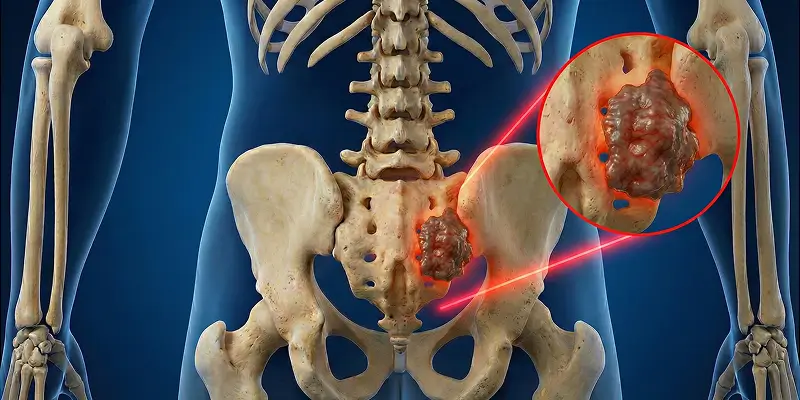
Chordoma
Chordoma is a rare tumor that develops in the bones that form the body’s main support. It usually involves the vertebral column and sacrum. Although it grows slowly, it can invade nearby tissues.
Chordoma is a rare malignant tumor that originates from the embryonic notochord.
The exact causes are unknown. Genetic and environmental factors may play a role. Chordoma can appear at any age but is more common between 30 and 60. It is slightly more frequent in men than in women. Familial clustering or genetic factors may contribute.
Symptoms depend on the tumor’s location and size. General signs may include:
- Pain: Spinal chordoma often causes pain by compressing nerves. The pain is usually constant and may not respond to painkillers.
- Limited motion: Chordomas that affect structures around the spine can restrict movement.
- Neurologic symptoms: Because nerves may be involved, patients can have numbness, weakness, or balance problems.
- Urinary and bowel problems: Chordomas in the sacral region can affect pelvic organs and cause these issues.
Diagnosis is made with clinical examination, imaging, and biopsy. Methods used in the diagnostic process include these studies.
Treatment depends on tumor size, location, and the patient’s overall health. General treatment options are planned accordingly.
Prognosis of Chordoma
Prognosis depends on many factors, including tumor size, location, and response to treatment. Although chordoma may be described as relatively slow-growing, it has a high recurrence risk. Early diagnosis and effective treatment can improve the course of disease. Long-term follow-up is important.
Chordoma is rare, but its effects and treatment are complex. Awareness of risk factors, symptoms, and diagnostic methods makes earlier diagnosis and treatment easier. Current options can improve quality of life. More research is needed, and alternative treatments may be developed in the future. Multidisciplinary evaluation of chordoma patients offers the best chance of a good result.
Frequently Asked Questions
Frequently Asked Questions
Chordoma is a rare malignant tumor that arises from remnants of the embryonic notochord. It usually involves the spine and sacrum.
It is most common between ages 30 and 60 and slightly more frequent in men. Familial or genetic predisposition is uncommon.
Persistent spine pain that does not respond to painkillers, limited motion, numbness, weakness, and balance problems can occur. Sacral tumors may cause urinary or bowel problems.
Diagnosis is based on clinical evaluation, imaging, and biopsy. The treatment plan depends on tumor size, location, and the patient’s overall condition.
No. Even though it grows slowly, it can invade nearby tissues and has a high recurrence risk. Long-term follow-up is therefore essential.
Surgery and additional treatments when needed are planned after multidisciplinary evaluation. Follow-up at an experienced center is recommended.
 WhatsApp
  Facebook
  Twitter
  Linkedin






 +90 505 398 34 34
 doctoryavuzarikan@gmail.com
 Book Appointment / Contact