

Shoulder Looseness and Fear of Recurrent Shoulder Dislocation


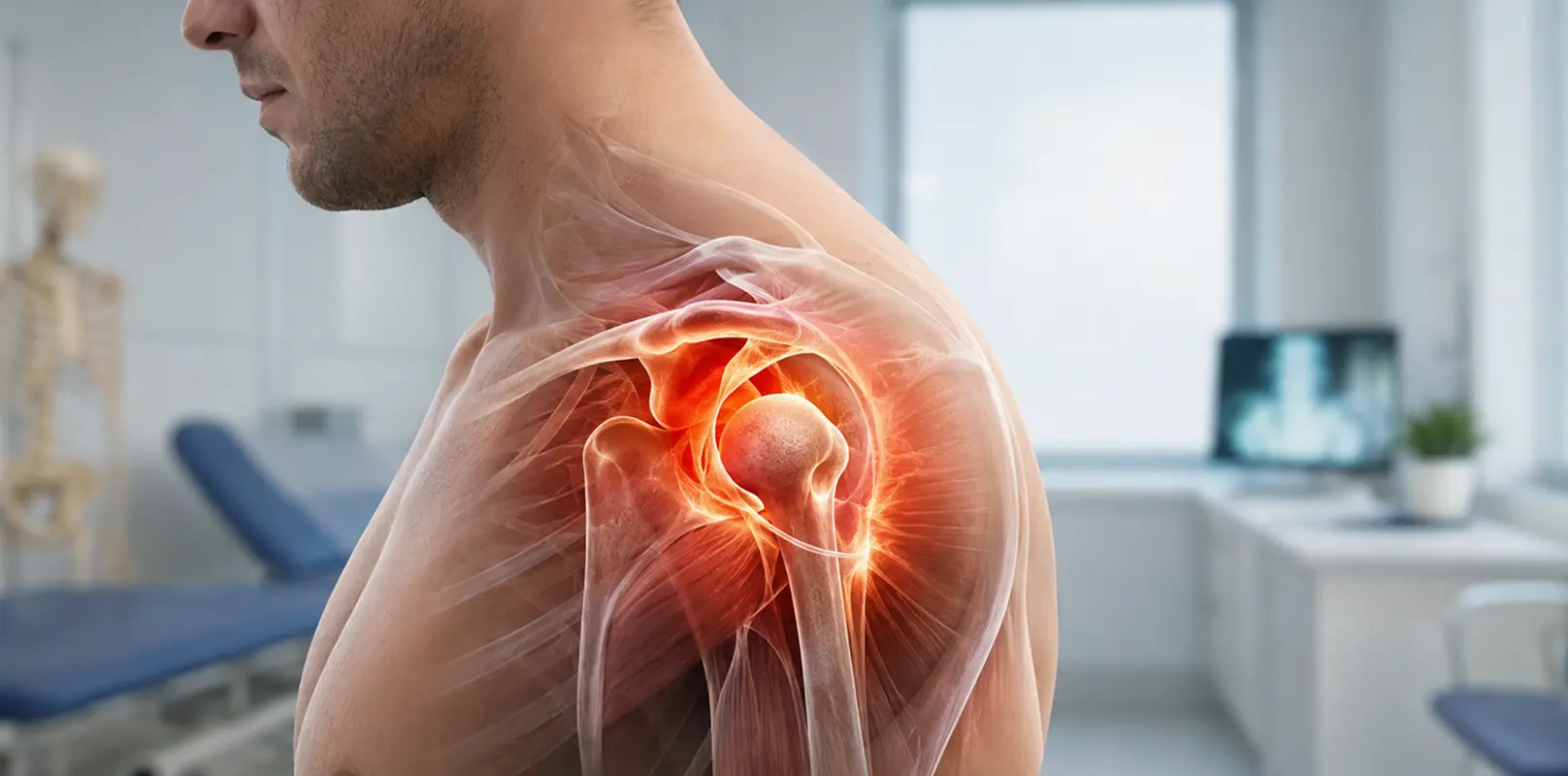
If you sometimes feel as though your shoulder is about to slip out of place, hesitate to use your arm in certain positions, or fear that a previous dislocation will happen again, you may be dealing with shoulder instability. Common in young, active people and athletes, untreated instability can significantly affect daily life and sports performance.
Because the shoulder is the most mobile joint in the body, it is also one of the most prone to dislocation. After a first dislocation some people recover fully, while others develop a sense of insecurity, recurrent dislocations, or a feeling that the shoulder will give way. This is not only physical — psychologically it can also make people avoid movement.
This article explains why the shoulder can feel loose, why dislocations recur, how the problem is diagnosed, and current treatment options.
What Is a Feeling of Looseness in the Shoulder?
A feeling of looseness means the joint feels looser than normal or insufficiently secure during motion. Patients may describe it as:
- “My shoulder feels like it is about to come out.”
- “When I take my arm to a certain angle, the shoulder gives way.”
- “When I reach for something, my shoulder feels unsafe.”
- “It feels as if my shoulder is not sitting in its socket.”
This sensation does not always mean a true dislocation. It can, however, signal a problem in the ligaments, capsule, or surrounding muscles that stabilize the shoulder.
What Is a Shoulder Dislocation?
A shoulder dislocation occurs when the head of the upper arm bone (humerus) comes completely out of the shoulder socket. The most common type is an anterior shoulder dislocation, in which the bone shifts forward.
Dislocations often happen with:
- Falls
- Sports injuries
- Traffic accidents
- Sudden, forceful backward movement of the arm
- Contact sports
If the first dislocation is not treated appropriately, the risk of recurrence can increase.
Why Does Shoulder Dislocation Recur?
During the first dislocation, the ligaments that hold the shoulder in place, the joint capsule, and the cartilage rim called the labrum can be damaged.
If these tissues do not heal fully, the shoulder may lose its former stability.
Factors that raise recurrence risk include:
- First dislocation at a young age
- Active sports participation
- Ligamentous laxity
- Inadequate rehabilitation
- Returning to sport too early
- Repeated trauma
In people under 20, the chance of another dislocation after the first is higher.
What Is Shoulder Instability?
Shoulder instability means the joint has lost normal stability and creates a sense of insecurity during movement.
Instability may appear as:
- True shoulder dislocation
- Partial dislocation (subluxation)
- A feeling that dislocation is imminent
- Recurrent giving-way sensations
Not every patient develops a full dislocation. Some only feel the shoulder slip during specific movements.
Symptoms of Shoulder Looseness
People with shoulder instability may notice:
- A sensation of the shoulder giving way
- Insecurity when lifting the arm overhead
- Avoidance of certain movements
- A “click” from the shoulder
- Pain
- Weakness
- Recurrent dislocations or near-dislocations
- Loss of shoulder control during sport
These symptoms can also interfere with daily activities.
What Is a Bankart Lesion?
One of the most common injuries after shoulder dislocation is a Bankart lesion.
In this injury the labrum around the socket tears and shoulder stability decreases.
Patients with a Bankart lesion more often have:
- Recurrent dislocation
- A feeling of looseness
- Insecurity
- A sense that the shoulder will dislocate during sport
Hill-Sachs Lesion
A bone impression on the humeral head formed during dislocation is called a Hill-Sachs lesion.
It can increase recurrence risk and is especially important in young, active people.
Who Is Affected More Often?
Shoulder instability is seen more often in:
- Volleyball players
- Handball players
- Swimmers
- Basketball players
- Fitness athletes
- People in contact sports
- Young men
- People with ligamentous laxity
In these groups, strengthening the muscles around the shoulder is especially important.
How Is the Diagnosis Made?
Diagnosis starts with a detailed history.
Your doctor will:
- Ask about prior dislocations
- Assess shoulder range of motion
- Perform stability tests
- Check muscle strength
When needed, imaging may include:
- X-ray
- Magnetic resonance imaging (MRI)
- MR arthrography
- Computed tomography (CT)
MRI is particularly important for assessing ligament and labral injuries.
How Are Shoulder Dislocation and Instability Treated?
Treatment is planned according to age, activity level, number of dislocations, and the degree of structural damage.
Physiotherapy and Rehabilitation
After a first dislocation or in mild instability, physiotherapy plays a major role.
Goals:
- Strengthen the muscles around the shoulder
- Improve movement control
- Reduce recurrence risk
- Restore safe performance of daily activities
Activity Modification
During treatment it may be advisable to avoid movements that stress the shoulder. Overhead repetitive activities and contact sports may be limited for the period recommended by the doctor.
Surgical Treatment
Surgery may be considered when there is:
- Recurrent shoulder dislocation
- A Bankart lesion
- Significant bone loss
- Instability that continues despite physiotherapy
- High demand in athletes or highly active individuals
Today, arthroscopic (keyhole) techniques can be used for many patients.
What Can Help Prevent Shoulder Dislocation?
Suggestions that support shoulder stability:
- Strengthen the muscles around the shoulder regularly.
- Do not skip warm-up before exercise.
- Avoid sudden, uncontrolled movements.
- Do not take shoulder injuries lightly.
- Follow your physiotherapy program consistently.
- Do not return to sport early without medical clearance.
These steps can help reduce the risk of another dislocation.
When Should You See a Doctor?
See an orthopedics and traumatology specialist if you have any of the following:
- Persistent looseness in the shoulder
- Recurrent shoulder dislocations
- Frequent feeling that the shoulder is about to come out
- Insecurity when raising the arm
- Shoulder weakness
- Loss of shoulder control during sport
- Clearly limited shoulder motion
Early assessment can help prevent further damage and allow an appropriate treatment plan.
Conclusion
A feeling of looseness in the shoulder and fear of recurrent dislocation are more than a physical nuisance — they affect daily life and freedom of movement. Ligament and labral injuries after a first dislocation can lead to instability and a higher chance of recurrence if left untreated.
If you constantly feel insecure in the shoulder, avoid certain movements, or worry that a previous dislocation will happen again, see an orthopedics and traumatology specialist for a detailed evaluation. With early diagnosis and appropriate treatment, stability can often be restored, recurrence risk reduced, and a safer return to daily life achieved.

Specialist Opinion
A feeling of looseness in the shoulder and fear of recurrent dislocation are more than a physical nuisance — they affect daily life and freedom of movement. Ligament and labral injuries after a first dislocation can lead to instability and a higher chance of recurrence if left untreated.
If you constantly feel insecure in the shoulder, avoid certain movements, or worry that a previous dislocation will happen again, see an orthopedics and traumatology specialist for a detailed evaluation. With early diagnosis and appropriate treatment, stability can often be restored, recurrence risk reduced, and a safer return to daily life achieved.
Contact us to have your symptoms assessed and to learn about treatment options that may be right for you. Get in touch .
Frequently Asked Questions
A feeling that the shoulder is loose or about to dislocate can relate to reduced joint stability. Prior dislocations, ligament and capsule injuries, labral damage, or ligamentous laxity may cause it. If symptoms recur, evaluation by an orthopedics and traumatology specialist is important.
Yes. After a first dislocation, some people develop further dislocations. Recurrent instability is more common in those who first dislocate at a young age, play sport actively, or have ligament, capsule, or labral damage. Appropriate rehabilitation and, when needed, surgery can help reduce recurrence risk.
Yes. In shoulder instability a full dislocation does not always occur. Some people experience partial dislocation (subluxation), slipping, a sense of giving way, or a feeling that dislocation is imminent during certain movements. These symptoms may require assessment of shoulder stability.
Treatment depends on age, activity level, number of dislocations, and structural damage. For some patients, physiotherapy and strengthening around the shoulder are enough. With recurrent dislocation, a Bankart lesion, or significant bone loss, surgery may be considered.
Surgery may be considered for recurrent dislocations, instability that continues despite physiotherapy, a Bankart lesion, or clear bone loss. Especially in athletes and highly active people, the decision is individualized to patient needs and the degree of shoulder damage.
 WhatsApp
  Facebook
  Twitter
  Linkedin






 +90 505 398 34 34
 doctoryavuzarikan@gmail.com
 Book Appointment / Contact