

What Is a Lipoma (Fatty Lump)? Causes, Symptoms, and Treatment



What Is a Lipoma (Fatty Lump)?
A lipoma (fatty lump) is a usually slow-growing, benign soft-tissue tumor caused by abnormal multiplication of fat cells. It is most often noticed as a soft, mobile, painless mass under the skin. Medically, lipomas are not cancer; however, they can sometimes be confused with a bone tumor or other soft-tissue tumors, so careful evaluation is needed.
In orthopedic oncology practice, lipomas become more important when they sit inside muscle or near bone. Deep lipomas can push on bone and change its shape on imaging, which may raise suspicion of bone infarct, fibrous dysplasia, or a bone tumor. Every lipoma, especially growing or hardening masses, should therefore be examined by a specialist.
According to the clinical approach emphasized by Prof. Dr. Yavuz Arıkan, although most lipomas are harmless, not every fat-tissue mass should be accepted as “just a simple fatty lump.” In rapidly growing, painful, deep, or hard masses, malignant soft-tissue tumors such as liposarcoma should be excluded.
Lipomas may appear in one area or, in some people, in multiple regions of the body. The neck, shoulder, back, arm, thigh, and abdomen are the most common sites. Most lipomas may stay the same size for years, while some grow over time and cause both cosmetic problems and discomfort from pressure on surrounding tissues.
In short, a lipoma is usually a benign fat-tissue tumor, but it must be distinguished from a bone tumor and other soft-tissue masses for a correct diagnosis. Fatty lumps with suspicious features should therefore be evaluated by a specialist experienced in orthopedic oncology.
Why Does a Lipoma (Fatty Lump) Form?
The exact cause of lipoma (fatty lump) is not fully known, but scientific studies show that more than one factor plays a role in this benign soft-tissue tumor. In orthopedic oncology, lipoma development is accepted as related to genetic predisposition, metabolic structure, and tissue-level change.
According to clinical observations emphasized by Prof. Dr. Yavuz Arıkan, although lipomas often look like simple fat-tissue growth, irregularities in the body’s cell-renewal mechanisms play a role in their formation.
1. Genetic Predisposition
One of the most important causes is hereditary predisposition. People with a family history of multiple lipomas have a higher risk. Some people may also have genetic syndromes that cause many lipomas in different parts of the body.
2. Uncontrolled Multiplication of Fat Cells
Lipomas form when normal fat cells multiply in an uncontrolled way. This is not cancer, but it shows that the local cell-growth mechanism is disturbed. Lipomas can therefore reach sizes that may be confused with a bone tumor or other soft-tissue masses.
3. Trauma and Tissue Injury
The chance of lipoma development is higher in areas that have previously been struck or injured. Microscopic damage in fat tissue after trauma can set the stage for abnormal growth of fat cells over time.
4. Metabolic and Hormonal Factors
Diabetes, high cholesterol, and hormonal irregularities can affect fat-tissue structure. This may make lipoma formation easier in some people.
5. Age
Lipomas are most common between ages 40 and 60. As age advances, cell renewal slows and the chance of irregular multiplication in fat tissue increases.
6. Lipomas Near Bone and Muscle
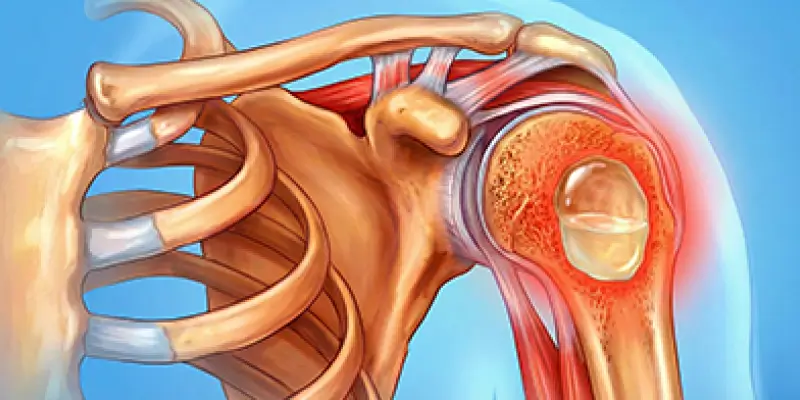
Some lipomas develop inside muscle or near bone. These lipomas require special evaluation because they can be confused on imaging with bone infarct, fibrous dysplasia, or a bone tumor.
Summary
A lipoma (fatty lump) is a benign soft-tissue tumor that forms from a combination of genetic predisposition, trauma, metabolic factors, and irregular cell growth. Although most lipomas are harmless, growing, hardening, or deep-seated masses should be evaluated from an orthopedic oncology perspective.
Where Do Lipomas Occur?
A lipoma (fatty lump) is a benign soft-tissue tumor that can appear in almost any region that contains fat tissue. It is more common in some areas, and its effects vary by location. In orthopedic oncology, location is important for diagnosis and treatment planning, because lipomas in some regions can be confused with a bone tumor or other serious masses.
According to clinical observations emphasized by Prof. Dr. Yavuz Arıkan, deep lipomas and those near bone should always be evaluated in detail.
1. Neck and Nape
The neck is a common site. Fatty lumps here usually grow slowly, but because they are close to nerves and vessels they can cause pain, a feeling of hardness, or limited motion when they enlarge.
2. Shoulders and Back
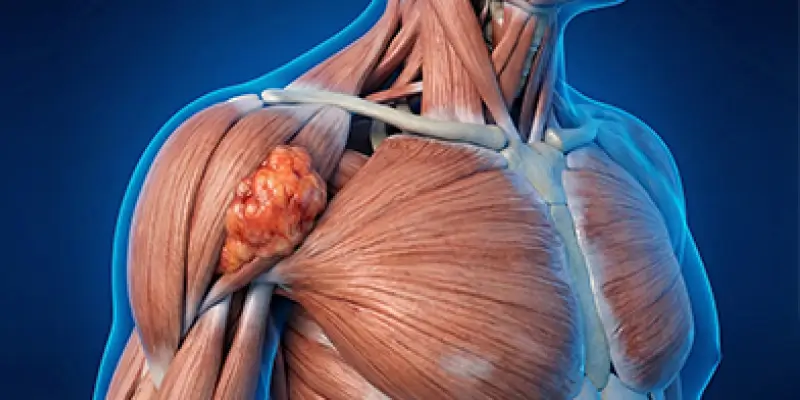
The back and shoulders contain a large amount of fat tissue, so they are among the most common sites. Lipomas here can sometimes reach quite large sizes.
3. Arms and Thighs
Lipomas are common in the arms and legs, especially the upper arm and thigh. Intramuscular lipomas can over time cause pain during movement, reduced muscle strength, and swelling, and they can be confused with bone infarct or a bone tumor.
4. Abdomen and Trunk
Lipomas of the abdominal wall and trunk are usually superficial. Deep ones can press on internal organs and, when they grow, create a noticeable swelling.
5. Lipomas Near Bone and Inside Muscle
Some lipomas develop around bone or inside muscle. These can give findings similar to fibrous dysplasia, bone infarct, or a bone tumor on imaging. Evaluation by an orthopedic oncology specialist is therefore very important.
Symptoms of Lipoma (Fatty Lump)
A lipoma (fatty lump) is usually a slow-growing soft-tissue tumor that causes no symptoms at first. Many people notice it by chance as a soft mass under the skin. As it grows or sits in deep tissues, it can cause various complaints. In orthopedic oncology, some lipomas can be confused with a bone tumor or intramuscular masses.
According to the clinical approach emphasized by Prof. Dr. Yavuz Arıkan, symptoms vary with size, location, and relationship to surrounding tissues.
1. A Soft Mass Under the Skin
The most typical sign is a soft, rubbery, mobile, usually painless swelling. It is not attached to the skin and can be moved with the fingers.
2. Slow but Ongoing Growth
Lipomas grow slowly over months or years. Accelerated growth, however, raises the possibility of a tumor other than lipoma and must be evaluated.
3. Pain and Tenderness
Most lipomas are painless. If they press on a nerve, sit inside muscle, or lie near a joint, pain, a stabbing sensation, or aching may occur. These lipomas can sometimes be confused with bone infarct or a bone tumor.
4. Limited Motion
Lipomas around the shoulder, arm, thigh, or knee can restrict muscle and tendon movement as they grow. This can make daily activities harder.
5. Change in Shape and Appearance
Superficial lipomas create a noticeable swelling. They can cause asymmetry in the neck, back, or arm.
6. Hardness or Irregular Structure
Typical lipomas are soft. Hard, irregular, or rapidly growing masses raise the possibility of a different soft-tissue tumor or, rarely, a malignant tumor.
Difference Between Lipoma and Bone Tumor
Lipoma (fatty lump) and bone tumor are often confused because both can form a mass. Their origin, behavior, risk, and treatment are completely different. Correct distinction in orthopedic oncology prevents both unnecessary anxiety and wrong treatment.
According to the clinical approach emphasized by Prof. Dr. Yavuz Arıkan, although lipomas are simple fat-tissue growths, they can in some cases create images similar to a bone tumor.
1. Tissue of Origin
Lipoma: Lipomas develop from fat tissue under the skin or inside muscle. They are a tumor of soft tissue and do not arise from bone itself.
Bone tumor: Bone tumors arise directly from bone tissue. They may develop from bone marrow, the bone surface, or the inner structure of bone.
2. Behavior and Growth Pattern
Lipomas usually grow slowly, do not damage surrounding tissues, and do not spread.
Bone tumors can grow rapidly, weaken bone structure, cause fractures, and may be benign or malignant.
3. Pain and Loss of Function
Most lipomas are painless. Pain usually appears only if there is pressure on a nerve or muscle. In bone tumors, bone pain that increases at night, limited motion, swelling, and fracture risk are more common.
4. Imaging Findings
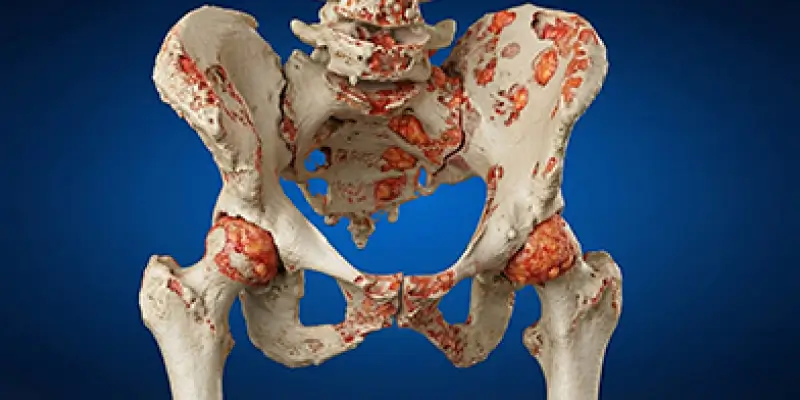
Lipomas show fat-tissue character on MRI and ultrasound. Bone tumors appear as bone destruction, hardening, or irregular growth. Some deep lipomas or those very close to bone can be confused with bone infarct, fibrous dysplasia, or a bone tumor. Advanced imaging and specialist interpretation are therefore needed.
5. Treatment Approach
Lipoma treatment is usually limited to observation and, if needed, surgical removal.
Bone tumor treatment may require much more extensive approaches such as surgery, chemotherapy, radiotherapy, and reconstruction.
How Is a Lipoma (Fatty Lump) Diagnosed?
Although lipoma (fatty lump) can often be suspected from a simple examination, a detailed evaluation is needed for a definite diagnosis and especially to distinguish it from a bone tumor or other soft-tissue tumors. In orthopedic oncology, correct diagnosis is the basis for avoiding unnecessary surgery and wrong treatment.
According to the clinical approach used by Prof. Dr. Yavuz Arıkan, lipoma diagnosis is made in a staged, systematic way.
1. Clinical Examination
The first step is to assess softness, mobility, relationship to the skin, and whether the mass causes pain. A typical lipoma is felt as a soft, mobile mass under the skin. Hard, irregular, deep, or rapidly growing masses raise the possibility of a different soft-tissue tumor or a bone tumor.
2. Ultrasound
In superficial lipomas, ultrasound is effective in showing whether the mass belongs to fat tissue. Simple lipomas appear homogeneous and well defined on ultrasound.
3. Magnetic Resonance Imaging (MRI)
MRI is the most valuable method for deep, intramuscular, or peri-osseous masses. It clearly shows whether the mass contains fat, its relationship to muscle and bone, and whether it could be confused with bone infarct, fibrous dysplasia, or a bone tumor.
4. Computed Tomography (CT)
In some cases CT is used to see whether bone is affected. Especially in lipomas near the bone surface, pressure on bone or change in shape can be assessed.
5. Biopsy
If imaging is not clear or the mass has suspicious features, biopsy is done. A small sample is taken and examined under a microscope. Lipoma and malignant tumors are thereby distinguished with certainty.
Treatment Methods for Lipoma (Fatty Lump)
Because a lipoma (fatty lump) is usually a harmless, slow-growing soft-tissue tumor, not every patient needs active treatment. Some lipomas, however, grow and cause pain, cosmetic problems, or pressure on surrounding tissues. Deep or hard lipomas can also be confused with a bone tumor or other malignant masses, so they must be evaluated correctly.
In the orthopedic oncology approach adopted by Prof. Dr. Yavuz Arıkan, lipoma treatment is planned according to symptoms, size, location, and imaging findings.
1. Observation (Follow-up)
For small, painless, slow-growing lipomas, regular follow-up is usually enough. Size, hardness, and growth rate are checked. If there is no change, surgery is not needed.
2. Medication or Injection Treatments
There is no definite drug treatment that shrinks lipomas. Some injection methods have been tried, but they do not completely eliminate the lipoma. The lasting solution is therefore usually surgery.
3. Surgery (Removal of the Lipoma)
The most effective and definitive method is complete surgical removal. Surgery is recommended if the mass is growing rapidly, causing pain, pressing on nerves, muscles, or vessels, creating a cosmetic problem, or if a bone tumor or liposarcoma is suspected.
The procedure is usually done under local or general anesthesia, and the lipoma is removed completely with its capsule. Recurrence risk is thereby minimized.
4. Deep and Peri-osseous Lipomas
Intramuscular or peri-osseous lipomas require more careful planning. Because these masses can be confused with bone infarct, fibrous dysplasia, and bone tumor, MRI and necessary imaging must be used before surgery.
5. After Surgery
Recovery after lipoma surgery is usually rapid. The patient can return to daily life within a few days. Pathology confirms that the mass is truly a benign lipoma.
Can a Lipoma Turn Into Cancer?
This is one of the most common questions from patients with a fatty lump. The short, clear answer is:
Classic lipomas do not turn into cancer. A lipoma is a benign soft-tissue tumor and, by its cellular structure, does not have the property of transforming into a malignant tumor.
There is, however, a very important clinical distinction: there are malignant fat-tissue tumors called liposarcoma. Liposarcoma is not a lipoma that has turned into cancer; it is a different tumor that is malignant from the start. Because it can look like a lipoma, the public perception that “the lipoma turned into cancer” arises, but medically this is not correct.
In the orthopedic oncology approach used by Prof. Dr. Yavuz Arıkan, the most important point is to distinguish lipoma from liposarcoma correctly. Some masses may look like a simple fatty lump from the outside but differ on imaging and in growth rate.
When Should Suspicion Arise?
If the following features are present, the mass may not be a simple lipoma: rapid growth, hard and irregular structure, deep location (inside muscle or near bone), pain or nerve compression, attachment to surrounding tissues, or pushing on bone or muscle on imaging.
These masses should sometimes be evaluated together with a bone tumor, bone infarct, or other soft-tissue tumors.
Can a Lipoma Be Confused With a Bone Tumor?
Yes. Especially large lipomas near bone can look like a bone tumor on imaging. The diagnosis should therefore be clarified with MRI and, if needed, biopsy.
Conclusion
A lipoma (fatty lump) is usually a benign soft-tissue tumor, but it is not correct to accept every fat-tissue mass as simple. Lipomas can appear in different parts of the body and, depending on size, location, and growth rate, can cause cosmetic problems, pain, or limited motion. Lipomas inside muscle, near bone, or growing rapidly can create images that may be confused with bone tumor, bone infarct, and fibrous dysplasia.
Physical examination alone is therefore not enough; ultrasound, MRI, and, if needed, biopsy should clarify the structure of the mass. In the orthopedic oncology approach used by Prof. Dr. Yavuz Arıkan, the aim is to distinguish lipoma from malignant soft-tissue tumors and offer the patient the most correct and safest treatment.
Most lipomas can be followed without treatment, while surgical removal is the most effective solution for masses that cause pain, grow, harden, or create loss of function. When removed with the correct technique, recurrence risk is low and patients can return to normal life quickly.
In summary, lipomas are usually harmless, but every mass should be evaluated seriously. Early and correct diagnosis prevents unnecessary anxiety, and possible serious diseases can be treated in time so that health and quality of life are preserved.
Frequently Asked Questions
Frequently Asked Questions
A lipoma is a usually slow-growing, benign soft-tissue tumor made of fat cells. It is commonly known as a fatty lump.
Most lipomas are harmless and do not require treatment. Rapidly growing, hardening, or deep-seated masses should always be evaluated.
No. Classic lipomas do not turn into cancer. There are, however, malignant fat-tissue tumors called liposarcoma, which can sometimes be mistaken for lipoma.
Yes. Lipomas near bone or inside muscle can look like a bone tumor on imaging. MRI and, if needed, biopsy may therefore be required.
Superficial lipomas are usually painless. Lipomas that press on a nerve, muscle, or vessel can cause pain and discomfort.
No. Lipomas do not disappear by themselves. They usually stay the same size or grow slowly.
It is diagnosed with physical examination, ultrasound, and MRI. Biopsy may be done in suspicious cases.
Small lipomas may not cause problems. Growing lipomas can lead to pain, limited motion, and cosmetic deformity.
Most lipoma operations are a simple surgical procedure. The patient is usually discharged the same day or after a short stay.
The risk of recurrence is low when a lipoma is completely removed. Some people, however, may develop new lipomas.
 WhatsApp
  Facebook
  Twitter
  Linkedin



 +90 505 398 34 34
 doctoryavuzarikan@gmail.com
 Book Appointment / Contact