

What Is Synovial Sarcoma? Symptoms, Diagnosis, and Treatment


What Is Synovial Sarcoma?
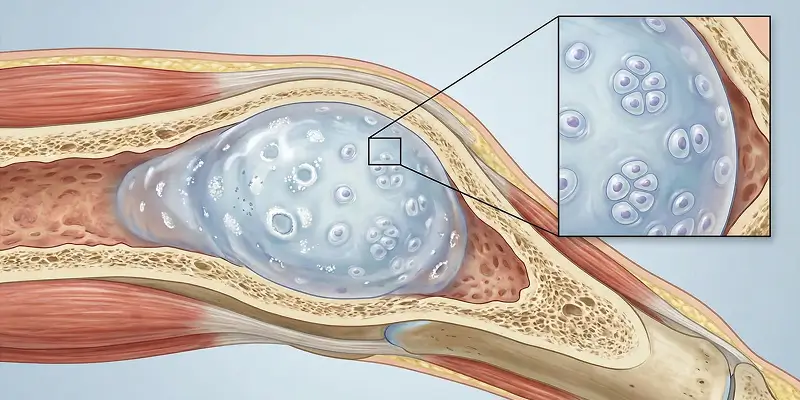
Synovial sarcoma is a malignant soft-tissue tumor that arises from soft tissues around joints and can follow an aggressive course. Although the name includes “synovial,” it usually does not arise directly from the joint lining; it develops from cells among structures such as muscle, tendon, connective tissue, and nerve sheaths. For this reason it has a special place in both orthopedic oncology and soft-tissue cancers.
Synovial sarcoma is usually seen in young and middle-aged people between 15 and 40. It most often appears near joints such as around the knee, ankle, foot, calf, and forearm. Because the tumor often grows slowly, it can at first be perceived as a simple swelling, a sports injury, or a benign mass. This can delay the diagnosis of synovial sarcoma.
The most important feature of this disease is that it results from a specific genetic disorder at the cellular level. An abnormal fusion between certain chromosomes in synovial sarcoma cells causes uncontrolled cell growth and tumor formation. Synovial sarcoma is therefore not a problem caused by classic trauma or strain; it is a disease with cancer biology.
Clinically, synovial sarcoma most often presents as a firm, deep mass that grows over time. Pain may be mild at first or absent; as the tumor grows it can press on nerves and muscles and cause pain, limited motion, and loss of function. Every swelling around a joint that has been present for a long time, is growing, or has become painful must therefore be evaluated for synovial sarcoma.
In summary, synovial sarcoma is a serious soft-tissue cancer that can progress if not noticed early, but that can be controlled with the right imaging, biopsy, and multidisciplinary treatment. Early diagnosis both increases surgical success and clearly raises the chance of long-term survival.
Why Does Synovial Sarcoma Form?
The cause of synovial sarcoma is a specific, distinctive disorder in the genetic structure of cells. This disease does not result from an environmental blow, a sports injury, or muscle strain; it forms because of a chromosomal abnormality that develops in the cell nucleus. In this respect synovial sarcoma is a soft-tissue cancer completely different from classic traumatic masses.
The most common mechanism in synovial sarcoma is an abnormal gene fusion between chromosomes X and 18. The faulty gene that results from this fusion sends a continuous growth signal to cells. Cells that should stop dividing continue to multiply in an uncontrolled way, and over time a synovial sarcoma tumor develops. This genetic change is not present from birth; it occurs randomly in cells during life.
Some people have a higher risk of developing synovial sarcoma. Young age, male sex, and previous radiation exposure can increase the chance of this tumor. In most cases, however, synovial sarcoma results from a completely unexplained genetic error. An important point is this: even if synovial sarcoma is noticed after a blow, that blow is not the cause of the tumor; it only leads to recognition of a mass that was already there.
In summary, the cause of synovial sarcoma is chromosomal disorders that make cells lose genetic control. Early diagnosis and correct evaluation are the most critical factors in minimizing the harm this complex process can cause the patient.
Where Does Synovial Sarcoma Occur?
Although the name suggests the joint lining, synovial sarcoma is a soft-tissue cancer that actually arises from soft tissues around joints. It is therefore seen most often in areas where muscle, tendon, connective tissue, and nerves are dense.
The most common sites of synovial sarcoma are:
- Around the knee and the lower thigh: The most frequent site. Slow-growing firm masses behind or beside the knee should be evaluated carefully for synovial sarcoma.
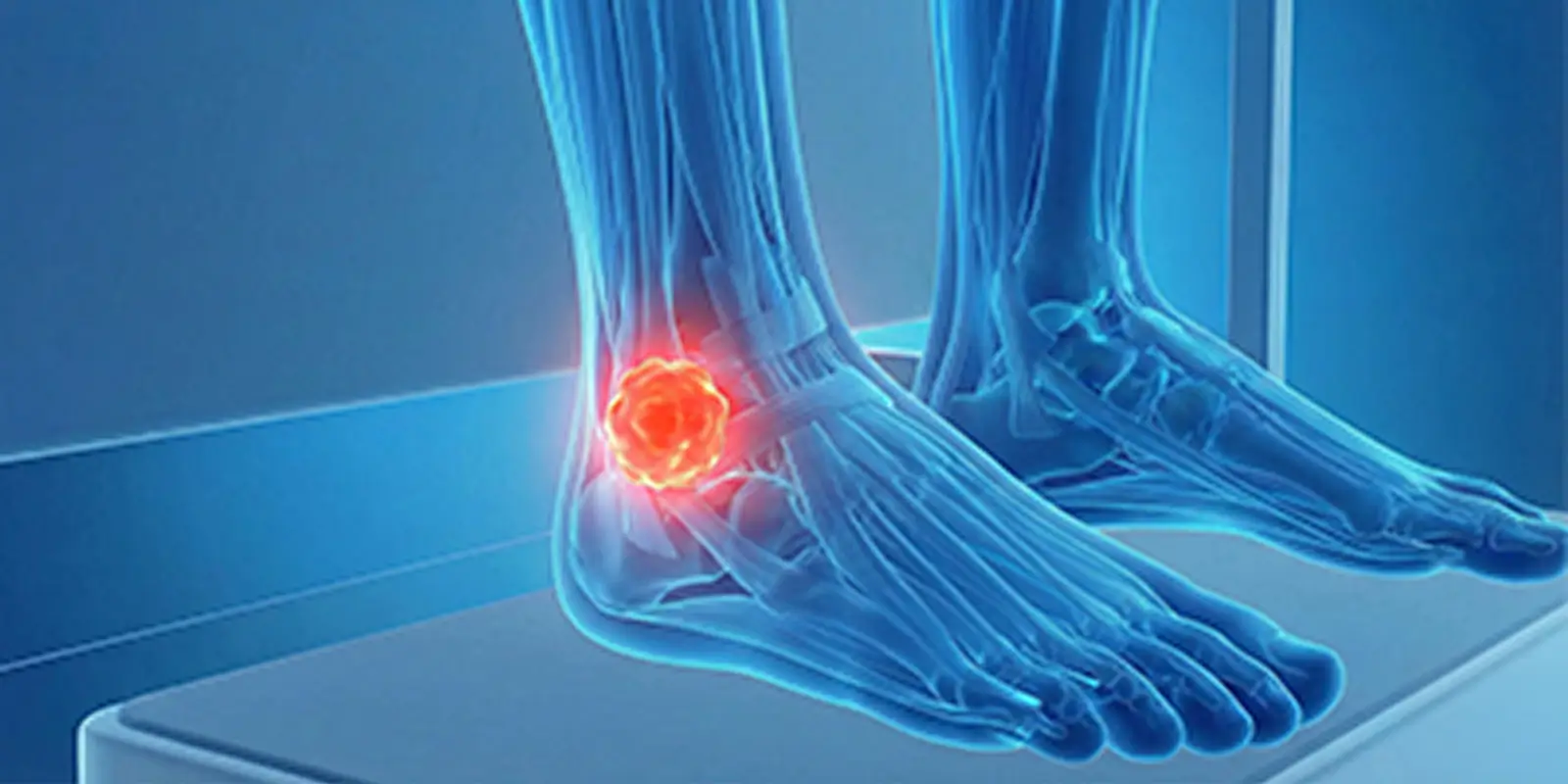
- Ankle and foot: Especially in this tendon-rich region, synovial sarcoma can be mixed with swelling after a shoe-related injury or a sprain.
- Calf and lower leg: It can grow deep among the muscles and be noticed late.
- Forearm and around the elbow: When it sits near nerves and tendons it can cause pain, numbness, and limited motion.
- Shoulder and upper arm: Less common, but it can form masses that affect arm movement.
More rarely, synovial sarcoma can also appear in unusual sites such as the chest wall, neck, head, or lung. Because synovial sarcoma often sits in deep tissues, it is not easily noticed under the skin. Every mass around a joint that grows over time should be evaluated with the possibility of synovial sarcoma in mind.
What Are the Symptoms of Synovial Sarcoma?
Synovial sarcoma symptoms can vary with the tumor’s location, size, and the pressure it places on nearby tissues. Because this disease often grows slowly, it can at first be perceived as an innocent swelling. As it progresses, however, it creates a serious soft-tissue cancer picture that causes both pain and loss of function.
1. A Slow-Growing Firm Mass
The most typical finding is a firm, deep swelling around a joint or among muscles. This mass usually grows slowly over weeks or months. Unlike fatty lumps under the skin, it usually cannot be moved and is fixed.
2. Pain
There may be no pain at first. As the tumor grows it presses on nerves, muscles, or the joint capsule and causes gradually increasing dull or stabbing pain. Pain that increases at night is a warning finding for synovial sarcoma.
3. Limited Motion
Synovial sarcoma near joints such as the knee, ankle, elbow, or shoulder can restrict joint movement. The patient feels strain when bending, straightening, or loading.
4. Numbness and Tingling
If the tumor presses on a nerve, numbness, tingling, and weakness can develop in the hand, foot, or related area. This may indicate that the synovial sarcoma sits close to nerve tissue.
5. Hardening of the Swelling and Deformity
Over time the mass grows and a visible shape change appears. This swelling usually becomes painful and is firm to the touch.
6. General Symptoms (Advanced Stage)
When the disease progresses, general cancer symptoms such as fatigue, weight loss, and shortness of breath (if there is lung spread) can appear.
Synovial sarcoma symptoms can be confused with sports injuries, muscle tears, or benign masses, so they are often noticed late. Every swelling around a joint that grows, hardens, or becomes painful over weeks must be evaluated in detail for synovial sarcoma.
How Is Synovial Sarcoma Diagnosed?
Diagnosing synovial sarcoma requires a very careful, multi-step process because this tumor can easily be confused with other benign soft-tissue masses. Early and correct diagnosis directly affects both treatment success and the patient’s survival.
1. Clinical Evaluation
Diagnosis begins with a detailed review of the patient’s complaints. A firm mass growing around a joint, long-lasting pain, night pain, or limited motion are warning signs for synovial sarcoma. The physician examines the size and firmness of the mass and whether it is attached to deep tissues.
2. Magnetic Resonance Imaging (MRI)
MRI is the most important imaging method for diagnosing synovial sarcoma. It shows in detail the tumor’s relationship to muscle, tendon, nerve, and joint. On MRI, synovial sarcoma is usually seen as a heterogeneous, irregularly bordered mass that extends into nearby tissues.
3. Computed Tomography (CT)
CT is used especially to assess the tumor’s relationship to bone and whether there is spread (metastasis) to the lungs. Synovial sarcoma most often spreads to the lungs.
4. Biopsy
Biopsy is the only method that confirms a synovial sarcoma diagnosis. After imaging, a tissue sample is taken from the mass with specialized techniques. The sample is examined in the pathology laboratory to determine whether the tumor is truly synovial sarcoma. Genetic analysis can also detect the chromosomal change specific to synovial sarcoma.
5. Staging
After diagnosis, the size of the synovial sarcoma, spread to lymph nodes, and metastasis to the lungs or other organs are assessed. This process is called staging and determines the treatment plan.
Treatment Methods
Synovial sarcoma treatment is a multi-stage process planned according to tumor size, location, spread, and the patient’s overall health. Because this disease is a soft-tissue cancer that can follow an aggressive course, treatment must be led by an experienced orthopedic oncology and sarcoma team.
1. Surgery
Surgery is the foundation of synovial sarcoma treatment. The aim is to remove the tumor completely together with surrounding healthy tissues. This is called wide surgical resection. If the tumor is not cleared together with its capsule, the risk of synovial sarcoma coming back increases substantially. With advanced surgical techniques today, the limb can be preserved in most patients.
2. Radiotherapy (Radiation Therapy)
Radiotherapy is often used to increase the success of surgery in synovial sarcoma. It is given to shrink the tumor before surgery, to destroy microscopic cancer cells that may remain after surgery, and to reduce recurrence risk. Radiotherapy is especially effective for large tumors or those with unclear borders.
3. Chemotherapy
Synovial sarcoma is one of the sarcoma types that is sensitive to chemotherapy. Chemotherapy is added to the plan especially in young patients, large tumors, and when there is spread to the lung. Chemotherapy suppresses hidden cancer cells in the body and reduces the risk of metastasis.
4. Targeted and Smart Therapies
In recent years, new drugs that target the genetic features of tumor cells have begun to be used in synovial sarcoma. These treatments are more selective than classic chemotherapy, have fewer side effects, and are promising especially in recurrent or spread disease.
5. Follow-up After Treatment
Synovial sarcoma is a cancer that can come back even years later. After treatment is completed, patients are therefore followed regularly with MRI, chest CT, and clinical examination. Recurrences caught early can be controlled with further surgery or additional treatments.
Conclusion
Synovial sarcoma is a soft-tissue cancer that arises from muscle, tendon, and connective tissue around joints and can follow an aggressive course. Because it often presents as a slow-growing swelling, it can at first be confused with a harmless mass or a sports injury. If it is not noticed early, however, synovial sarcoma can lead to serious results such as pain, limited motion, and even spread to distant organs. Every growing, hardening, or deep mass around a joint must therefore be evaluated for synovial sarcoma.
The main cause of synovial sarcoma is a distinctive genetic disorder that develops in cells. It is most common around mobile joints such as the knee, ankle, foot, calf, and forearm. Diagnosis of synovial sarcoma is made with MRI, CT, and always biopsy. Treatment of synovial sarcoma is a multidisciplinary approach that uses surgery, radiotherapy, and chemotherapy together. Because this disease has a tendency to spread to the lungs, regular follow-up and lung imaging are very important.
In summary, synovial sarcoma is a serious soft-tissue cancer that can be controlled when diagnosed at the right time and treated appropriately. Early diagnosis, correct surgery, and regular follow-up are the strongest elements in the fight against synovial sarcoma.
Frequently Asked Questions
Frequently Asked Questions
Synovial sarcoma is a malignant soft-tissue tumor that develops from muscle, tendon, and connective tissue around joints. It is usually seen around the knee, ankle, and arm.
Synovial sarcoma usually presents as a firm, deep mass that grows over time. Benign masses are soft, mobile, and slow-growing. Imaging and biopsy are required for suspicious masses.
It is most common in young and middle-aged people between 15 and 40. It is slightly more frequent in men.
It may be painless at first. As it grows it can press on nerves and muscles and cause pain, numbness, and limited motion.
Yes. Synovial sarcoma tends to spread especially to the lungs. Chest CT is therefore very important during diagnosis and follow-up.
MRI and CT are used to assess the extent of the tumor, and biopsy confirms the diagnosis. Genetic tests can also detect a chromosome change specific to synovial sarcoma.
Yes. Surgery, radiotherapy, and chemotherapy used together can treat synovial sarcoma successfully. Early diagnosis substantially increases treatment success.
Synovial sarcoma can recur. Patients should therefore be followed for a long time with regular MRI and lung imaging.
Long-term survival is possible when synovial sarcoma is diagnosed at an early stage and treated correctly. The risk is higher in late-stage and spread disease.
This tumor requires complex surgical and oncologic planning. The approach of experienced sarcoma teams and physicians specialized in this field, such as Prof. Dr. Yavuz Arıkan, directly affects both treatment success and limb preservation.
 WhatsApp
  Facebook
  Twitter
  Linkedin





 +90 505 398 34 34
 doctoryavuzarikan@gmail.com
 Book Appointment / Contact