

What Is Spondylolisthesis? Symptoms, Grades, and Treatment


What Is Spondylolisthesis?
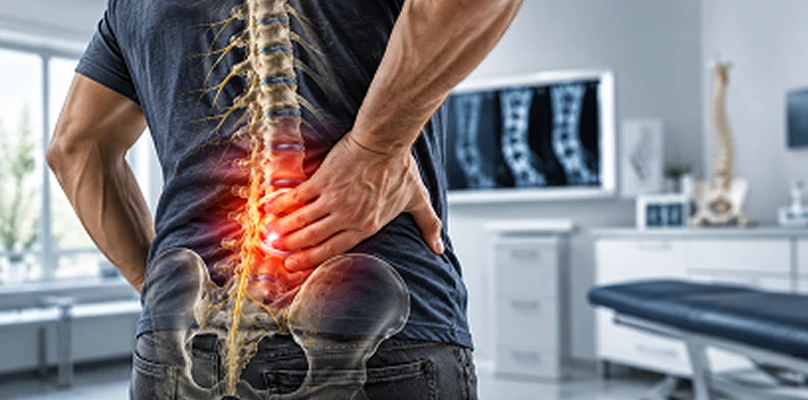
Spondylolisthesis is the slipping of one vertebra forward or backward relative to the vertebra below it. It is most common in the lumbar spine. When stability between vertebrae is lost, the slip can compress nerve roots and cause pain, numbness, and weakness in the back and legs. The loss of spinal stability creates both pain and mechanical problems.
Spondylolisthesis is especially common at L4–L5 and L5–S1. The direction and degree of slip determine symptoms and treatment. In general there are two types of slip:
Anterolisthesis: The vertebra slips forward (the most common type)
Retrolisthesis: The vertebra slips backward (less common)
Spondylolisthesis can occur in both young people and older adults. Prof. Dr. Yavuz Arıkan emphasizes that in younger people it is more often related to stress fracture and sports, while in older people types related to disc degeneration and joint-surface wear require different treatment approaches.
Types and Causes of Spondylolisthesis
Spondylolisthesis can develop for different reasons, and treatment varies by type. The most common classification is:
1. Isthmic Spondylolisthesis
This type results from a stress fracture or crack in the back of the vertebra (pars interarticularis). It usually appears in adolescence and is more common in athletes. Risk is higher in sports that repeatedly strain the low back, such as gymnastics, weightlifting, football, and wrestling. Because this type appears at a young age, early diagnosis and protective treatment are important.
2. Degenerative Spondylolisthesis
With aging, disc tissue and joint surfaces deteriorate. The disc’s load-bearing capacity falls and the spinal segment loses stability. This often causes slip at L4–L5. It is usually seen in people aged 50 and older. Lumbar disc herniation or spinal canal stenosis may accompany the slip.
3. Congenital Spondylolisthesis
Congenital anomalies of the spine alter vertebral shape and lead to loss of stability. Slip starts from birth and may progress with growth. Genetic predisposition plays an important role.
4. Traumatic Spondylolisthesis
Direct trauma to the spine (fall, accident) causes fracture or dislocation between vertebrae. The slip is usually sudden and marked. Traumatic spondylolisthesis can be a serious condition requiring urgent evaluation and treatment.
5. Pathologic Spondylolisthesis
Infection, tumor, or bone loss disrupts spinal structure and slip occurs. In this type, treatment of the underlying disease is equally important.
Risk Factors for Spondylolisthesis
Many risk factors play a role, including:
- Genetic predisposition
- Stress fracture in the spinal bones
- Intense sports (gymnastics, weightlifting, football)
- Repeated low-back strain and heavy lifting
- Disc degeneration and aging
- Obesity and excess weight
- Congenital spinal anomalies
- Trauma and accidents
- Osteoporosis
- Poor posture and prolonged sitting
When one or more of these combine, risk increases. Young athletes with early low-back pain should be evaluated.
Symptoms of Spondylolisthesis
Symptoms vary. In some patients they are mild; in others there is severe pain and neurologic findings. Severity and neurologic signs help determine treatment. The most common symptoms are:
1. Low Back Pain
The main symptom is low back pain. It is usually felt in the lower back and increases with prolonged standing, walking, and bending. Patients often describe it as “my back is breaking” or “my back hurts.”
2. Leg Pain and Sciatica
If the slip compresses nerve roots, pain, numbness, and tingling may occur in the legs. Pain often starts in the hip and travels down the thigh and calf. Leg pain can be more severe than back pain and seriously affect quality of life.
3. Muscle Weakness and Difficulty Walking
In patients with nerve compression, leg muscles may weaken. Walking distance may decrease, and fatigue and limping may occur. In advanced cases, foot drop (dropping of the ankle or toes) may appear.
4. Postural Change
People with spondylolisthesis may develop hyperlordosis (excessive inward curve of the low back). This disturbs the spine’s natural balance and increases muscle fatigue.
5. Rarely, Bladder and Bowel Control Problems
With severe nerve compression or marked narrowing of the spinal canal, bladder and bowel control may be impaired. This requires emergency care.
How Is Spondylolisthesis Diagnosed?
Diagnosis is made with clinical examination and imaging. The aim is to determine the degree of slip and nerve compression and to plan treatment.
1. History
Onset of symptoms, character of pain, sports and work history, trauma, and family history are assessed. How low-back pain affects daily life is also asked.
2. Physical Examination
The examination assesses:
- Low-back range of motion
- Tender points
- Muscle strength
- Reflexes
- Nerve-root tests
Pain increase during forward, backward, and side bending is noted. The SLR (Straight Leg Raise) test is used to assess nerve-root compression.
3. Imaging
- X-ray: Shows the degree of slip and vertebral alignment. The amount of slip is measured on the lateral view.
- MRI: Important for nerve roots, discs, and soft tissue. Nerve compression and disc herniation are clarified with MRI.
- CT: Used especially to assess pars interarticularis defect (stress fracture) and bone structure.
- EOS system: Allows 3D assessment of the spine with less radiation.
Grading of Spondylolisthesis (Meyerding Classification)
The degree of slip is classified by how far the vertebra has moved. The most used system is the Meyerding classification:
- Grade 1: 0–25% slip
- Grade 2: 25–50% slip
- Grade 3: 50–75% slip
- Grade 4: 75–100% slip
- Grade 5 (spondyloptosis): Complete slip of the vertebra
As grade increases, symptoms and treatment need usually increase. According to Prof. Dr. Yavuz Arıkan’s clinical assessment in orthopedic oncology and bone disease, grade does not always match severity exactly; some Grade 2 patients live with mild symptoms, while some Grade 1 patients have severe pain.
Treatment Approach
The main goals of treatment are:
- Reducing pain
- Increasing spinal stability
- Relieving nerve compression
- Preserving function and quality of life
The plan is individualized according to the degree of slip, age, symptom severity, and whether nerve compression is present.
Conservative Treatment (Nonsurgical)
The first step is often conservative care. Methods include:
1. Activity Modification
During painful periods, heavy lifting, sudden bending, and strenuous movements should be avoided. Prolonged bed rest is not recommended because it can cause muscle weakness.
2. Physical Therapy and Rehabilitation
The program aims to strengthen the back and abdominal muscles, improve posture, and increase spinal stability. It may include:
- Core (abdominal and low-back) strengthening
- Pelvic tilt and bridge exercises
- Balance and proprioceptive work
- Nerve mobilization if neurologic symptoms are present
Example exercises
- Pelvic tilt
- Bridge
- Bird-dog
- Plank (short duration)
- Knee-to-chest
These should be arranged by a specialist physiotherapist and tailored to the patient.
3. Medication
Short-term medication is used for pain control.
- NSAIDs (ibuprofen, naproxen, and similar)
- Paracetamol (acetaminophen)
- Muscle relaxants (short term)
- Gabapentin or pregabalin for nerve pain (if nerve compression is present)
4. Lumbar Brace
In young patients, especially with isthmic type, a lumbar brace may reduce progression of the slip and ease pain. Long-term use can cause muscle weakness, so it should be under medical supervision.
5. Injection Treatments
In patients with nerve-root compression, epidural steroid injection can reduce inflammation. This may reduce or delay the need for surgery.
Surgical Options
Surgery is considered in patients who do not respond to conservative care, have progressive neurologic findings, or have advanced slip.
1. Fusion (Spinal Fusion)
Fusion stabilizes the slipped segment. Bone graft is placed between the vertebrae and a screw-rod system provides stability. The aim is to stop motion in that segment, reduce pain, and halt progression of the slip.
2. Decompression (Relieving Nerve Compression)
Disc material or bone compressing the nerve roots is removed. This is usually done together with fusion because opening the nerve space can reduce spinal stability.
3. Minimally Invasive Surgery
In some cases, stabilization and decompression can be done through smaller incisions. This can mean faster recovery and less tissue damage.
4. Growing Rod and Vertebral Body Tethering
If slip and deformity progress while a child is still growing, growing rods or tethering may be used. These techniques aim to control deformity while allowing spinal growth.
Recovery After Surgery
Recovery depends on age, general condition, and the extent of surgery. The general course is:
- Pain control and early mobilization in the first days
- Gait training with physical therapy
- Return to daily activities in 6–12 weeks
- Full recovery between 6 months and 1 year
Postoperative rehabilitation is critical for preserving spinal stability and regaining muscle strength.
Complications of Spondylolisthesis
If spondylolisthesis is not treated or is poorly managed, the following may develop:
- Chronic low back pain
- Permanent weakness in the legs
- Sensory loss
- Bladder/bowel control problems
- Spinal deformity and postural disturbance
- Psychological effects (depression, sleep disturbance)
- A serious drop in quality of life
Lifestyle and Sports Advice for Patients
Lifestyle adjustment is important for treatment success.
Safe Activities
- Swimming and water exercise
- Low-pace walking
- Cycling (low resistance)
- Pilates (under specialist supervision)
- Core strengthening exercises
Activities to Avoid
- Weightlifting
- Prolonged running
- Sports that require sudden turns and jumping
- Activities that strain the low back, such as gymnastics and weightlifting
Conclusion
Spondylolisthesis is a spinal stability problem caused by slipping of the vertebrae. With early diagnosis and appropriate treatment, most patients can preserve quality of life with conservative methods. In advanced slip and nerve compression, surgery can restore spinal stability. Prof. Dr. Yavuz Arıkan emphasizes that people with suspected spondylolisthesis should be evaluated by a specialist and given an individualized plan.
Frequently Asked Questions

Specialist Opinion
Spondylolisthesis is a spinal stability problem caused by slipping of the vertebrae. With early diagnosis and appropriate treatment, most patients can preserve quality of life with conservative methods. In advanced slip and nerve compression, surgery can restore spinal stability. Prof. Dr. Yavuz Arıkan emphasizes that people with suspected spondylolisthesis should be evaluated by a specialist and given an individualized plan.
Contact us to have your symptoms assessed and to learn about treatment options that may be right for you. Get in touch .
Frequently Asked Questions
No. Athletes are at higher risk, but it can occur at any age due to aging, disc degeneration, and obesity.
It depends on the type. In isthmic type, improvement may be achieved with appropriate early treatment, but the usual goal is to control symptoms and preserve stability.
Every operation carries risk. With correct patient selection and an experienced team, risks are minimized.
Yes, most women with spondylolisthesis can become pregnant. Low back pain may increase during pregnancy, so follow-up is important.
Treatment is individualized. Conservative methods are enough in mild cases; surgery may be needed in advanced cases.
 WhatsApp
  Facebook
  Twitter
  Linkedin



 +90 505 398 34 34
 doctoryavuzarikan@gmail.com
 Book Appointment / Contact