

What Is Amputation and When Is It Done?


What Is Amputation?
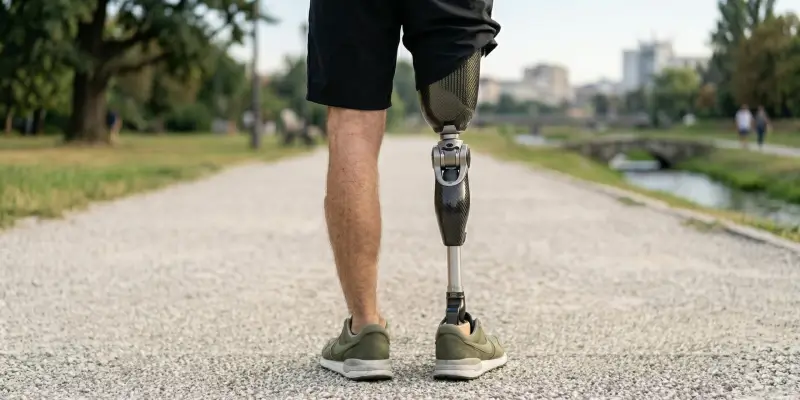
Amputation is the procedure of surgically cutting or removing a limb of the body (such as a hand, arm, leg, or finger). This procedure is usually applied in situations such as serious trauma, infections, circulation disorders, or malignant tumors that create a vital risk. The basic aim of amputation is to save the patient’s life, prevent serious complications, and reduce pain.
In modern orthopedics and trauma surgery, amputation is not seen only as a “limb-loss” procedure; it is also a treatment method planned in a way that will protect limb function as far as possible, supported by advanced surgical techniques and rehabilitation. Especially today, with robotic surgery, microsurgery, and prosthesis technologies, patients’ quality of life after amputation is greatly increased.
Amputation can be applied in different ways depending on its cause:
- Traumatic amputation: Applied when the limb is seriously damaged as a result of an accident or crush injury.
- Medical amputation: Applied when tissue necrosis develops because of diabetes, vessel blockage, or gangrene.
- Oncologic amputation: Done in bone or soft-tissue tumors to completely remove cancerous tissue.
With correct planning, a specialist surgical team, and a rehabilitation process, this procedure not only saves life, but also makes it possible for patients to live independently and return to daily activities using a prosthesis.
When Is Amputation Done?
Amputation is a surgical procedure applied as a last resort and is done only in situations where the limb or tissue is damaged in a way that creates a vital risk, or in irreversible situations. This decision depends on many factors such as the patient’s general health, tissue integrity in the limb, circulation, and infection risk. The main situations in which amputation can be applied are:
Trauma and Serious Injuries
- In situations such as traffic accidents, workplace accidents, falls from a height, or crush injuries, limb tissue can be seriously damaged.
- If bone fractures and vessel and nerve injuries prevent the limb from becoming functional again, amputation may be needed.
- In such situations, surgery is planned quickly in order to prevent vital risk and stop the spread of infection.
Infections and Necrosis
- Diabetes, vascular diseases, or advanced infections can lead to necrosis (tissue death) by causing inadequate oxygen and nutrients in the tissues.
- If gangrene, osteomyelitis, or deep soft-tissue infections do not respond to other treatments, amputation can become inevitable.
- In this situation, spread of infection is prevented with surgery and the patient’s life is protected.
Peripheral Vascular Diseases and Circulation Disorders
- If there is a chronic wound, ulcer, or serious circulation disorder in the tissues of the limb, amputation may be needed.
- In patients with advanced diabetes or arterial blockage, limb tissue does not heal because it is not nourished enough, and infection risk increases.
- Amputation prevents life-threatening complications in the region where circulation is inadequate.
Oncologic Causes (Tumors)
- In bone or soft-tissue tumors, amputation can be applied if the cancer has progressed regionally or has not responded to other treatments.
- The aim is to completely remove tumor tissue and prevent spread of cancer.
- Especially in osteosarcoma and soft-tissue sarcomas, correctly planned amputation provides control of the disease.
Recurrent Infections and Chronic Problems
- In some rare situations, amputation may be needed because of congenital limb malformations or recurrent infections.
- In such cases, surgery aims to optimize the function of the limb and increase quality of life.
Types and Methods of Amputation
Amputation surgery is not only cutting of the limb; it is a comprehensive procedure planned in a way that will protect the patient’s function, make prosthesis use easier, and increase quality of life. Amputation is therefore divided into different types according to the level at which it is done, which technique is used, and the underlying cause.
Types According to Amputation Level
Where the amputation is done is determined by taking into account the patient’s circulation status, the extent of infection, the tumor’s boundaries, and prosthesis fit.
1. Finger and Partial Hand–Foot Amputations
- Done most often because of trauma, tumors, or infections.
- The aim is for the hand or foot to remain as usable as possible by protecting maximum tissue and function.
- Protection of grip, balance, and fine motor skills in particular is targeted.
2. Below-Knee (Transtibial) Amputation
- This is one of the most frequently applied lower-limb amputations.
- Because the knee joint is protected, walking with a prosthesis is easier and more natural.
- It is frequently preferred in diabetes, vascular diseases, and trauma.
3. Above-Knee (Transfemoral) Amputation
- Applied when the knee joint cannot be protected.
- Prosthesis use is possible, but the rehabilitation process is more difficult than below-knee.
- It is done in advanced tumors, widespread infections, and serious vascular failure.
4. Hip- and Shoulder-Level Amputations
- Usually applied in advanced-stage bone and soft-tissue tumors.
- They are rarer but life-saving.
Types According to the Cause of Amputation
1. Traumatic Amputation
- Done after an accident, crush injury, explosion, or severe injuries.
- The aim is to stop blood loss, prevent infection, and keep the patient alive.
2. Vascular (Circulation-Related) Amputation
- Applied because of death of tissue as a result of diabetes, vessel blockage, and chronic wounds.
- It is one of the most common causes.
3. Oncologic Amputation
- Done in bone tumors and soft-tissue sarcomas for complete removal of cancerous tissue.
- Stopping spread of the tumor and extending life are targeted.
Types of Amputation According to Surgical Method
1. Classic Amputation
- Damaged tissues are removed, the bone is shaped, and the skin is closed.
- Today it is applied more in emergency situations.
2. Functional (Prosthesis-Compatible) Amputation
- Bone, muscle, and skin are shaped specially.
- The aim is to create a smooth, painless stump that makes prosthesis use easier.
3. Reconstructive-Supported Amputation
- Muscle, skin, and bone tissues are arranged with special techniques.
- With advanced surgical techniques, more comfortable, stable prosthesis use is provided.
The Modern Amputation Approach
Today, amputation is not only taking the limb; it is surgery planned in a way that will provide maximum movement, balance, and quality of life with a prosthesis.
Thanks to an amputation done at the correct level and well shaped, patients:
- Can walk without pain
- Can continue daily activities independently
- Can return to sport and social life
Rehabilitation and the Prosthesis Process After Amputation
The period after amputation is a process at least as critical as the operation, not only for the patient’s healing, but also for being able to move independently again, live without pain, and return to social life. This period consists of several stages: wound healing, physiotherapy, prosthesis preparation, and psychological adaptation.
The First Period After Surgery (0–4 Weeks)
The basic goal of this period is:
- Healthy healing of the wound
- Prevention of infection
- Control of swelling and pain
In this process:
- The stump (the end of the cut limb) is shaped with special bandages.
- Blood circulation and tissue healing are followed closely.
- Muscle wasting and joint stiffness are prevented with light exercises started in the early period.
If correct care is not done, a painful, misshapen stump that makes prosthesis fit difficult later can form.
Physiotherapy and Muscle Strengthening
The foundation of rehabilitation after amputation is physiotherapy.
In this stage the aim is:
- To strengthen the hip, knee, shoulder, and trunk muscles
- To regain balance and coordination
- To prepare the body for the prosthesis
With exercises specific to the patient:
- Walking mechanics are developed
- Load distribution in the spine and joints is balanced
- Fit with the prosthesis is made easier
The Prosthesis Preparation Process
After wound healing is complete, the prosthesis process starts. In this stage:
- Stump measurements are taken
- The patient’s weight, activity level, and expectations are assessed
- An individualized prosthesis plan is made
Thanks to modern prostheses:
- Movement very close to natural walking is possible in below-knee and above-knee amputations
- Functional holding and gripping can be provided for hands and arms
Walking With a Prosthesis and Return to Daily Life
After the prosthesis is applied, the patient is taken into special rehabilitation for walking training and daily activities.
In this process:
- Standing up
- Establishing balance
- Climbing stairs
- Daily movements
are taught again step by step.
The aim is not only to walk, but to provide a pain-free, safe, independent life.
Psychological and Social Rehabilitation
Amputation is not only physical, but a psychological trauma.
Therefore:
- Body image
- Depression
- Anxiety and loss of self-confidence
must definitely be addressed.
Patients who receive psychological support:
- Adapt to the prosthesis more quickly
- Return to social life more strongly
- Are more successful in rehabilitation
Advantages and Aims of Amputation
Amputation is often a difficult but life-saving decision that increases quality of life. In modern medicine, the aim of amputation is not only to take the damaged limb; it is to free the patient from pain, infection, and life-threatening risks and return them to a functional life.
Saving Life
The most basic aim of amputation is to protect life.
In the following situations, amputation offers a benefit that no other treatment can provide:
- Widespread infection (gangrene, osteomyelitis)
- Uncontrolled tissue death (necrosis)
- Severe trauma and crush injuries
- Advanced-stage bone and soft-tissue tumors
In these situations, amputation eliminates spread of infection into the blood, organ failure, and the risk of death.
Eliminating Severe Pain
Damaged limbs whose blood supply is disrupted or that contain tumor usually cause severe, continuous pain.
Thanks to amputation:
- The source is eliminated
- Nerve pressure and tissue death end
- Patients are freed from the chronic pain they have lived with for a long time
This directly improves the patient’s sleep quality, mobility, and mental health.
Preventing Infection and Complications
Especially in diabetes and vascular diseases:
- Open wounds
- Ulcers
- Bone infections
can spread rapidly in the body. Amputation prevents sepsis and multiple organ failure by eliminating these foci.
Providing Return to a Functional Life
Thanks to modern prosthesis technologies, amputation:
- Does not mean being confined to a wheelchair
- On the contrary, many patients walk better with their prosthesis, experience less pain, and are more active
Especially:
- Below-knee amputations
- Planned amputations done with functional surgery
give the person high mobility.
Preventing Spread of Cancer
In bone and soft-tissue tumors, the aim of amputation is:
- Complete removal of tumor tissue
- Prevention of spread of cancer to surrounding tissues and vital organs
This directly increases the patient’s life span and treatment success.
Increasing Quality of Life in the Long Term
After a correctly done amputation:
- Constant hospital admissions end
- Infections do not recur
- Social problems such as pain and bad odor disappear
The patient:
- Can work
- Returns to social life
- Can look after themselves
Conclusion
In modern medicine, amputation is approached not only as loss of a limb, but as a treatment method that protects life, stops disease, and restores function to the person.
In situations such as trauma, advanced infections, serious circulation disorders, and bone or soft-tissue tumors, amputation can be the most effective way to stop a process that threatens the patient’s life. The amputation decision is therefore made by taking into account both medical necessities and long-term quality of life.
The level at which and the method with which amputation is done are planned according to many factors such as blood circulation, the extent of infection, tumor boundaries, bone structure, and prosthesis fit.
Modern surgical approaches applied today aim to create a functional stump by protecting as much tissue as possible and to enable the patient to reach the best mobility with a prosthesis. Thanks to this, after amputation people not only survive, but can also return to an active, independent life.
The rehabilitation and prosthesis process after amputation is one of the most important parts of treatment. Thanks to wound care and muscle-protecting exercises in the early period, and later physiotherapy and individualized prosthesis applications, patients learn again to walk, establish balance, and continue daily activities. This process, conducted together with psychological support, provides the patient’s physical and mental recovery.
The basic aims of amputation are to save life, eliminate pain, prevent spread of infection, bring cancer under control, and give the person a functional life. Thanks to advanced prosthesis technologies today, many amputation patients can reach a level at which they can play sport, work, and take part actively in social life.
In conclusion, although amputation may seem like a difficult decision, when applied in the right patient, at the right time, and with the right surgical planning, it is a powerful treatment option that clearly increases quality of life and offers the person a new life. Thanks to modern medicine and rehabilitation opportunities, amputation is no longer an end, but the beginning of standing up again.
Frequently Asked Questions

Specialist Opinion
In modern medicine, amputation is approached not only as loss of a limb, but as a treatment method that protects life, stops disease, and restores function to the person.
In situations such as trauma, advanced infections, serious circulation disorders, and bone or soft-tissue tumors, amputation can be the most effective way to stop a process that threatens the patient’s life. The amputation decision is therefore made by taking into account both medical necessities and long-term quality of life.
The level at which and the method with which amputation is done are planned according to many factors such as blood circulation, the extent of infection, tumor boundaries, bone structure, and prosthesis fit.
Modern surgical approaches applied today aim to create a functional stump by protecting as much tissue as possible and to enable the patient to reach the best mobility with a prosthesis. Thanks to this, after amputation people not only survive, but can also return to an active, independent life.
The rehabilitation and prosthesis process after amputation is one of the most important parts of treatment. Thanks to wound care and muscle-protecting exercises in the early period, and later physiotherapy and individualized prosthesis applications, patients learn again to walk, establish balance, and continue daily activities. This process, conducted together with psychological support, provides the patient’s physical and mental recovery.
The basic aims of amputation are to save life, eliminate pain, prevent spread of infection, bring cancer under control, and give the person a functional life. Thanks to advanced prosthesis technologies today, many amputation patients can reach a level at which they can play sport, work, and take part actively in social life.
In conclusion, although amputation may seem like a difficult decision, when applied in the right patient, at the right time, and with the right surgical planning, it is a powerful treatment option that clearly increases quality of life and offers the person a new life. Thanks to modern medicine and rehabilitation opportunities, amputation is no longer an end, but the beginning of standing up again.
Contact us to have your symptoms assessed and to learn about treatment options that may be right for you. Get in touch .
Frequently Asked Questions
It is done to save life and prevent spread of disease in situations such as advanced infection, circulation disorder, wounds that cannot be brought under control, trauma, and bone or soft-tissue tumors.
Yes. Amputation is usually applied when all other treatment options have been exhausted or when protecting the limb puts the patient’s life at risk.
Most patients can walk again with an appropriate prosthesis and physiotherapy. Thanks to advanced prosthesis technologies today, patients can return to an active life.
Short-term surgical pain after the operation is normal. Phantom-limb pain can be seen in some patients, but it can be brought under control with medications and rehabilitation.
After the wound has healed and the stump has taken shape, a temporary prosthesis is usually applied within a few weeks, then a permanent prosthesis.
With the right rehabilitation and an appropriate prosthesis, many patients can return to daily life, work, and social activities.
In bone or soft-tissue cancers, amputation can sometimes be the safest and most effective method for completely removing the tumor.
Yes. With special sports prostheses, many activities such as swimming, running, and cycling can be done.
Yes. Limb loss can be psychologically demanding. Psychological support and rehabilitation are an important part of the process.
Thanks to advanced prostheses and physiotherapy, amputation does not prevent the person from living an independent, productive life.
 WhatsApp
  Facebook
  Twitter
  Linkedin


 +90 505 398 34 34
 doctoryavuzarikan@gmail.com
 Book Appointment / Contact