

What Is Scoliosis? Symptoms, Diagnosis, and Treatment


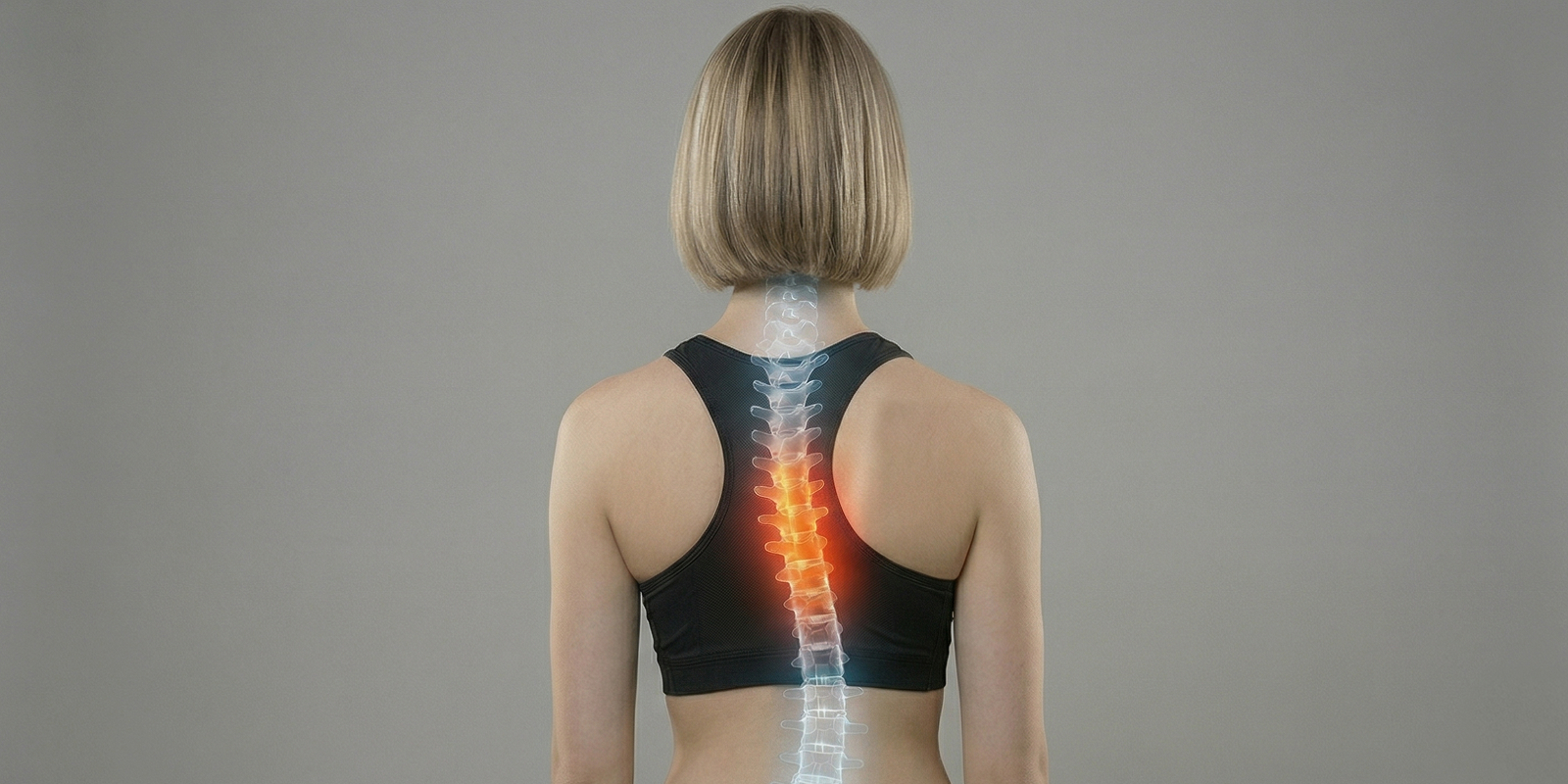
Scoliosis is a deformity in which the spine curves sideways and also rotates. Normally the spine looks like a straight line from the front. In scoliosis it curves in an S or C shape, and rotation of the vertebrae can cause a rib prominence, shoulder asymmetry, or a curve at the waist.
Scoliosis is more than an aesthetic problem. Progressive deformity can affect lung function and cause chronic pain and limited motion. It should therefore be detected early and followed appropriately. Scoliosis is more common in growing children, but congenital, neuromuscular, and degenerative types mean it can appear at any age.
1. Types and Classification of Scoliosis
Treatment is planned according to the type and degree of the curve. Types include:
1.1. Idiopathic Scoliosis
This is the most common type and means the cause is unknown. Idiopathic scoliosis usually appears in adolescence and is more common in girls. The curve may progress as growth speed increases. It may not cause symptoms early, so regular checks are important.
1.2. Congenital Scoliosis
This develops from congenital spinal anomalies. Structural problems such as fused vertebrae or a hemivertebra cause the spine to curve. In congenital scoliosis the curve usually becomes clear early and progression risk is high. Early diagnosis and follow-up are therefore critical.
1.3. Neuromuscular Scoliosis
This develops from diseases of the brain, spinal cord, or muscle system. In conditions such as cerebral palsy, myopathy, spinal muscular atrophy, and spinal cord injury, spinal stability is lost and scoliosis forms. Neuromuscular scoliosis usually progresses rapidly and treatment requires a multidisciplinary approach.
1.4. Degenerative Scoliosis
This forms in later life from disc degeneration and wear of joint surfaces. Degenerative scoliosis may be diagnosed especially in curves of the lumbar region. Pain, pain radiating into the legs, and neurologic complaints may be more prominent.
2. What Causes Scoliosis? (Risk Factors)
The cause depends on the type. In idiopathic scoliosis there is no clear cause, but genetic predisposition, growth rate, hormonal factors, and impaired neuromuscular control are thought to play a role. In congenital scoliosis, congenital anomalies of the spine are the main cause. In neuromuscular scoliosis, diseases of the muscle and nerve system disrupt spinal stability and cause curvature.
In degenerative scoliosis, wear of discs and joint surfaces, reduced disc height on one side, and muscle imbalance create the curve. Osteoporosis in later life may also play a role.
Risk Factors
- Family history of scoliosis
- Periods of rapid growth (adolescence)
- More common in girls
- Spinal injuries
- Neuromuscular diseases
- Congenital spinal anomalies
- Osteoporosis and disc degeneration
3. What Are the Symptoms of Scoliosis?
Symptoms depend on the degree, location, and speed of progression. Early on there may be no clear complaint, so scoliosis is often found at routine checks or through family awareness.
Common Symptoms
- Asymmetric shoulders (one shoulder higher)
- A rib prominence or a bulge on one side of the back
- One side of the waist more prominent
- Asymmetric hips
- Clothes shifting to one side
- Disturbed balance while walking
- Low back pain after standing for a long time
- Shortness of breath (in advanced thoracic scoliosis)
Symptoms in Adolescence
- One shoulder higher than the other
- Asymmetry in the waist crease
- One side of the trunk appearing more forward
- A rib prominence on one side of the back
4. How Is Scoliosis Diagnosed?
Diagnosis is made with detailed physical examination and imaging. The most used clinical method is the Adams forward bend test. A rib or lumbar prominence when the patient bends forward is a sign of scoliosis.
4.1. Physical Examination
The examination assesses:
- Shoulder and hip asymmetry
- Rib prominence
- Curve of the waist and trunk
- Neurologic examination (strength, sensation, reflexes)
- Posture analysis
4.2. Imaging
X-ray is used to confirm the diagnosis and measure the curve. The curve is measured with the Cobb angle. A Cobb angle of 10 degrees or more establishes the diagnosis of scoliosis.
When needed, MRI is used to assess the spinal cord and nerve structures. MRI is important especially in congenital scoliosis or when neurologic signs are present. Some centers also use the EOS system, which uses a lower radiation dose.
5. Staging and Growth Potential
Growth potential is one of the most important factors in treatment decisions, because the curve can progress rapidly during growth. Growth is therefore followed and staged.
5.1. Cobb Angle
The Cobb angle is the basic measure of curve size:
- 10–20 degrees: Mild scoliosis
- 20–40 degrees: Moderate scoliosis
- 40–50 degrees and above: Severe scoliosis (surgery is considered)
5.2. Risser Score
The Risser score shows how far the growth plates have closed and is used to estimate remaining growth. It is scored from 0 to 5. Patients with a low Risser score (0–2) still have growth remaining, so progression risk is higher.
5.3. Growth Potential and Risk
Progression risk increases during growth. Regular follow-up, bracing, and exercise are therefore important, especially in adolescence.
6. Treatment Options
Treatment is planned according to curve size, age, growth potential, and symptoms.
6.1. Observation (Follow-up)
If the curve is small (Cobb angle 10–20 degrees) and growth is continuing, observation is often recommended. The curve is checked with X-rays at intervals. Regular exercise, posture training, and preserving muscle balance are important during follow-up.
6.2. Brace Treatment (Orthosis)
If the curve is moderate (Cobb angle 20–40 degrees) and growth is continuing, brace treatment is considered. The brace supports the spine from outside and aims to stop progression. Success is directly related to adherence and regular use.
Common brace models include:
- Boston brace
- Milwaukee brace
- Cheneau brace
A brace aims to stop progression rather than fully correct the curve. Treatment usually continues until growth is complete.
6.3. Physical Therapy and Scoliosis-specific Exercises
Physical therapy and exercise have an important place, especially early on. Scoliosis-specific programs strengthen spinal muscles, improve posture, and may reduce pain. Programs such as the Schroth method may help slow progression.
What Is the Schroth Method?
Schroth is a physical therapy approach designed for people with scoliosis. It aims at three-dimensional correction of the spine. Exercises, breathing techniques, and posture correction are used to hold the spine in a better position.
Example Exercises
- Exercises that activate the deep abdominal muscles
- Strengthening of hip and low-back muscles
- Balance and proprioceptive exercises
- Breathing control and chest-expansion exercises
6.4. Surgical Treatment
If the curve is severe (Cobb angle 40–50 degrees and above) or progressing rapidly, surgery is considered. The main aims are to correct the spine, reduce the curve, and stop progression.
The most common methods are spinal fusion and stabilization with rod-screw systems. Age, growth potential, location and shape of the curve, neurologic findings, and general health are considered.
Surgical Methods
- Posterior spinal fusion
- Anterior spinal fusion
- Growing rod
- Vertebral body tethering (VBT)
7. Quality of Life and Rehabilitation
Correcting the curve is not enough. Rehabilitation after treatment is important to improve quality of life and preserve spinal function. A rehabilitation program can be used after surgery or during brace treatment.
Goals of Rehabilitation
- Increasing muscle strength
- Improving posture
- Reducing pain
- Speeding return to daily activities
- Supporting respiratory function
8. What Happens If Scoliosis Is Not Treated?
If untreated, progression risk increases, especially during growth. As the curve advances, deformity becomes more obvious and complications may develop. In severe scoliosis, chest deformity can reduce lung capacity and cause shortness of breath. Disturbed load distribution on the spine can also lead to chronic pain and muscle spasm.
Psychological effects may also appear in advanced scoliosis. In adolescence, visible asymmetry can cause loss of self-confidence and social withdrawal. People with suspected scoliosis should therefore be evaluated early by a specialist.
9. How Is Scoliosis Prevented?
Some types cannot be prevented, but early diagnosis and appropriate follow-up can reduce progression risk. Families and schools should be aware of spinal health. Regular checks, good posture habits, and balanced exercise help detect scoliosis early.
Prevention Advice
- Regularly checking children’s posture
- Controlling the weight of school bags
- Avoiding prolonged one-sided load carrying
- Regular physical activity and sport
- Regular health checks during growth
- Taking part in scoliosis screening programs
10. Frequently Asked Questions
Does scoliosis only occur in children?
No. Scoliosis is often detected in adolescence, but congenital, neuromuscular, and degenerative types can occur at any age.
What causes scoliosis?
In idiopathic scoliosis the cause is unknown. Genetic predisposition, growth rate, and hormonal factors may play a role. In congenital, neuromuscular, and degenerative scoliosis the cause is clearer.
Does a brace correct scoliosis?
A brace aims to stop progression rather than fully correct the curve. It can be effective when used early and regularly.
Is scoliosis surgery risky?
Like any operation, scoliosis surgery carries risk. With correct patient selection and an experienced team, risks are minimized. Surgery can substantially improve quality of life in progressive and severe deformities.
Do scoliosis exercises work?
Correct, individualized exercise programs help in scoliosis treatment. Methods such as Schroth can increase spinal stability and slow progression.
Conclusion
Scoliosis is a deformity in which the spine curves sideways and rotates. It may not cause symptoms early, but as it progresses it can lead to aesthetic, functional, and respiratory problems. The treatment plan is based on curve size, age, and growth potential. The choice among observation, bracing, physical therapy, and surgery is individualized. With early diagnosis and regular follow-up, progression can be stopped and quality of life preserved. In growing patients especially, regular follow-up and well-timed intervention improve long-term results.
Frequently Asked Questions

Specialist Opinion
Scoliosis is a deformity in which the spine curves sideways and rotates. It may not cause symptoms early, but as it progresses it can lead to aesthetic, functional, and respiratory problems. The treatment plan is based on curve size, age, and growth potential. The choice among observation, bracing, physical therapy, and surgery is individualized. With early diagnosis and regular follow-up, progression can be stopped and quality of life preserved. In growing patients especially, regular follow-up and well-timed intervention improve long-term results.
Contact us to have your symptoms assessed and to learn about treatment options that may be right for you. Get in touch .
Frequently Asked Questions
No. Scoliosis is often detected in adolescence, but congenital, neuromuscular, and degenerative types can occur at any age.
In idiopathic scoliosis the cause is unknown. Genetic predisposition, growth rate, and hormonal factors may play a role. In congenital, neuromuscular, and degenerative scoliosis the cause is clearer.
A brace aims to stop progression rather than fully correct the curve. It can be effective when used early and regularly.
Like any operation, scoliosis surgery carries risk. With correct patient selection and an experienced team, risks are minimized. Surgery can substantially improve quality of life in progressive and severe deformities.
Correct, individualized exercise programs help in scoliosis treatment. Methods such as Schroth can increase spinal stability and slow progression.
 WhatsApp
  Facebook
  Twitter
  Linkedin



 +90 505 398 34 34
 doctoryavuzarikan@gmail.com
 Book Appointment / Contact