

Pathologic Fracture: Causes, Treatment, and Prevention


Pathologic Fracture: Causes, Treatment, and Prevention
What Is a Pathologic Fracture?
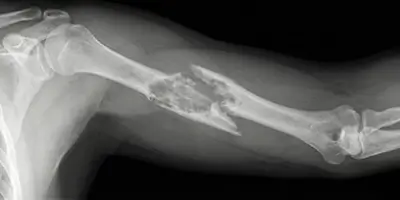
A pathologic fracture is a fracture that occurs with an impact too light to break a healthy bone, or sometimes with no trauma at all, because of an underlying bone disease. A healthy bone is quite resistant to simple falls or bumps in daily life. In a pathologic fracture, however, bone tissue has been weakened by disease, so even very low-intensity strain can cause a fracture.
Pathologic fractures most often result from diseases such as bone metastases, bone tumors, osteoporosis (bone thinning), bone cysts, and bone infections. In cancer patients especially, metastases that spread to bone disrupt the inner structure of bone, seriously reduce its strength, and greatly increase pathologic fracture risk.
These fractures usually give warning signs beforehand. Weeks or months before the fracture, patients may feel bone pain that increases at night, tenderness, and weakness in that region. These symptoms are important signs that the bone has weakened and fracture risk is approaching.
Unlike ordinary traumatic fractures, pathologic fractures are not limited to the bone breaking. They also indicate a serious underlying disease. When a pathologic fracture is diagnosed, the main cause that weakened the bone must therefore be investigated and a comprehensive treatment plan created.
Causes of Pathologic Fracture
The basic cause of pathologic fractures is that the bone loses its normal strength. A healthy bone can easily carry the loads placed on it; in pathologic fractures, bone tissue is weakened by an underlying disease and can break with a very small impact or even with no trauma. This is the most important feature that distinguishes pathologic fractures from ordinary fractures.
The most common cause of pathologic fractures is bone metastases. Cancers such as breast, lung, prostate, kidney, and thyroid often spread to bone. Cancer cells disrupt bone structure, causing it to dissolve or become fragile. This seriously reduces the bone’s load-bearing capacity.
Another important cause is bone tumors. Benign or malignant bone tumors destroy the inner tissue of bone and weaken it. Pathologic fracture risk is much higher especially in malignant bone tumors.
Osteoporosis (bone thinning) is one of the most common causes of pathologic fractures, especially in later life. Reduced bone density makes bone spongy and fragile. A simple fall, a sudden movement, or even coughing can therefore lead to a fracture.
Bone cysts and bone infections (osteomyelitis) also disrupt the inner structure of bone and increase pathologic fracture risk. Infection destroys and weakens bone tissue; cysts empty the inside of the bone and reduce its strength.
Some metabolic bone diseases, long-term corticosteroid use, vitamin D deficiency, and some genetic diseases also impair bone quality and set the stage for pathologic fractures.
Symptoms of Pathologic Fracture
Because pathologic fractures often appear not after sudden trauma but because the bone has been weakened by disease, their symptoms can differ from ordinary fractures. In many patients, warning signs are seen weeks or months before the fracture. Early recognition of pathologic fracture symptoms is therefore very important for preventing serious complications.
The most common symptom is bone pain. This pain is usually deep, dull, and constant. Pain that increases especially at night and does not go away with rest is the most important warning sign of a pathologic fracture. Pain intensifies over time and the patient begins to have difficulty with daily activities.
Tenderness and swelling are common findings in the region of a pathologic fracture. Increased warmth, redness, and tenderness may be present in the tissues over the bone. This becomes more noticeable especially when bone metastasis or infection is present.
After the fracture develops, sudden severe pain, inability to use that limb, inability to bear weight, or inability to move appear. Deformity and clear loss of function may be seen in the fracture region.
In some patients, weakness, unsteadiness, and a feeling of being unable to carry load develop before the fracture. This is an important sign that the bone has structurally weakened.
In pathologic fractures related to cancer or systemic disease, general symptoms such as weight loss, fatigue, loss of appetite, and night sweats may also be seen.
How Is a Pathologic Fracture Diagnosed?
Diagnosis of pathologic fractures aims not only to confirm the fracture but also to identify the underlying disease that weakened the bone. The diagnostic process is therefore more comprehensive and detailed than for classic fractures. Early, correct diagnosis is vital both for fracture healing and for treatment of the underlying disease.
The first evaluation is usually done with X-ray. X-ray shows the location and shape of the fracture and disruption of bone structure. In pathologic fractures, areas of bone destruction, cavities, or abnormal formations may be seen. These findings suggest that the fracture occurred in a diseased bone, not from ordinary trauma.
For more detailed examination, magnetic resonance imaging (MRI) and computed tomography (CT) are used. MRI shows the inner structure of bone, bone marrow, and surrounding soft tissues in detail and reveals tumor, metastasis, or infection. CT clearly assesses the fracture line, degree of fragmentation, and bone loss.
If a tumor or metastasis is suspected in the bone, bone biopsy is done to confirm the diagnosis. A small sample is taken from the bone and pathologic examination determines whether the lesion is benign or malignant.
In patients with a cancer history or suspected metastasis, PET-CT, bone scintigraphy, and blood tests are also added to the diagnostic process. These tests show whether there is involvement of other bones and how widespread the disease is.
How Is a Pathologic Fracture Treated?
Unlike ordinary fractures, pathologic fracture treatment aims not only to repair the fracture but also to control the underlying disease that weakened the bone. The process is therefore planned with a multidisciplinary approach, with orthopedics, oncology, and radiology specialists working together.
The first goal is to reduce the patient’s pain and stabilize the fractured bone safely. In most pathologic fracture cases, surgical treatment is needed. During surgery the fracture region is fixed with special metal systems such as plates, screws, or an intramedullary nail. To support weakened bone tissue, bone cement is used in some cases to strengthen the inside of the bone. This method, especially in patients with bone metastasis, both reduces pain and helps prevent the bone from fracturing again.
If the cause of the pathologic fracture is a bone tumor or metastasis, oncologic treatments such as radiotherapy and chemotherapy are applied after surgery. These treatments suppress tumor cells in the bone and contribute to more solid healing of the fracture.
In pathologic fractures due to osteoporosis, medicines that increase bone density and calcium and vitamin D supplements are added to the plan. Bone-strengthening drugs such as bisphosphonates or denosumab play an important role in reducing the risk of new fractures.
An important part of treatment is also physical therapy and rehabilitation. Appropriate exercise programs preserve muscle strength, prevent joint stiffness, and help the patient return to daily life more quickly.
Recovery After a Pathologic Fracture
Recovery after a pathologic fracture is a period that requires longer and more careful follow-up than ordinary fractures. Not only the bone but also the underlying disease that disrupted bone structure must be treated. Success of healing is directly related to the quality of surgical intervention and the patient’s adherence to rehabilitation.
After surgery or fixation, the first goal is pain control and safe movement. The patient is usually allowed to sit and stand in a controlled way in a short time. This both prevents muscle loss and reduces complications such as clot formation.
Bone healing time in pathologic fractures varies with the underlying disease. In situations such as bone metastasis or osteoporosis, healing may be slower. Regular X-ray checks therefore closely follow the bone’s healing process.
Physical therapy and rehabilitation are among the most important stages of recovery. Exercises done with a specialist increase muscle strength, prevent joint stiffness, and enable a safe return to daily activities. Physical therapy started early substantially reduces the risk of long-term loss of motion.
Nutrition and lifestyle also play a critical role. Adequate protein intake and calcium and vitamin D support speed renewal of bone tissue. Smoking and alcohol delay bone healing and must be stopped.
How Is a Pathologic Fracture Prevented?
Because pathologic fractures appear when bone is structurally weakened, they can largely be prevented with early diagnosis and protective treatments. The aim is to preserve bone strength and control diseases that could lead to fracture in time.
The most important step in prevention is early diagnosis and treatment of underlying bone diseases. Early detection of bone metastases in cancer patients especially reduces pathologic fracture risk substantially. Regular bone scans, bone scintigraphy, and imaging methods are therefore very important.
Osteoporosis (bone thinning) is one of the most common causes of pathologic fractures. People at risk can be identified early with bone density measurements (DEXA). Regular use of calcium, vitamin D, and bone-strengthening medicines protects bone tissue and lowers fracture likelihood.
Nutrition and lifestyle also play a critical role. A diet rich in protein, calcium, and vitamin D supports bone health. Smoking and alcohol weaken bone structure and must be limited.
Preventing falls is also very effective in reducing pathologic fracture risk. Especially in later life, home arrangements, non-slip floors, good lighting, and appropriate shoes substantially reduce fracture risk.
In people with cancer or bone disease, if bone weakness is found, protective surgical fixation can be done before a fracture occurs. The bone is thereby supported and a pathologic fracture is prevented.
Why Is a Pathologic Fracture Serious?
Pathologic fractures are considered much more serious than ordinary bone fractures because they are not only the result of trauma but also a sign of a serious underlying disease that has weakened the bone. A pathologic fracture is therefore often evaluated as the first warning sign of a larger health problem in the body.
One of the most important reasons is that pathologic fractures are mostly related to serious diseases such as cancer, bone metastasis, bone tumor, or advanced osteoporosis. In patients with bone metastasis especially, development of a fracture shows that the disease has progressed and bone structure has been seriously disrupted. This both makes treatment harder and reduces quality of life.
In pathologic fractures, the bone’s healing capacity is also lower than in healthy bones, because the fracture occurs in already damaged, weakened bone. This increases the risk of delayed union, nonunion, and another fracture. Permanent deformity and limited motion can also develop from malunion.
Another important risk is that pathologic fractures can cause severe pain, loss of motion, and dependence. Pathologic fractures of the hip, spine, and long bones especially can seriously restrict walking and daily activities.
Pathologic fractures can also delay treatment of the underlying disease. For example, a bone fracture in a patient receiving cancer treatment can interrupt chemotherapy or radiotherapy.
Conclusion
A pathologic fracture is a serious orthopedic problem that appears not from an ordinary fall or trauma but because the bone has been weakened by an underlying disease. Bone metastases, bone tumors, osteoporosis, bone cysts, and infections are among the most common causes. This shows that pathologic fractures are not only a fracture but also a sign of an important health problem in the body.
Symptoms of a pathologic fracture usually start before the fracture, with bone pain that increases especially at night, tenderness, and weakness. When these symptoms are taken seriously in time, necessary measures can be taken before a fracture occurs. Use of advanced tests such as X-ray, MRI, CT, and, if needed, biopsy in the diagnostic process plays a critical role in determining both the cause of the fracture and the most appropriate treatment.
The aim of pathologic fracture treatment is not only to fix the bone but also to control the disease that weakened it. Surgical fixation, bone cement applications, radiotherapy, chemotherapy, and bone-strengthening medicines are used together to both reduce pain and lower the risk of another fracture. After surgery, physical therapy, regular checks, and healthy lifestyle habits form the basis of recovery.
This type of fracture is considered serious because of the risk of delayed healing, another fracture, permanent loss of motion, and a serious drop in quality of life. With early diagnosis, correct treatment, and disciplined rehabilitation, however, these risks can be substantially reduced.
In summary, a pathologic fracture can be managed successfully with early diagnosis, an individualized plan, and regular follow-up. When symptoms such as bone pain, a sudden fracture, or unexplained tenderness appear, seeing an orthopedic specialist without delay is the most effective way to protect both the bone and general health.
Frequently Asked Questions
Frequently Asked Questions
A pathologic fracture is a fracture that occurs with a very light impact or spontaneously because the bone has been weakened by an underlying disease.
The most common causes are bone metastases, bone tumors, osteoporosis, bone cysts, and bone infections.
In pathologic fractures, long-lasting bone pain before the fracture, night pain, and fracture without trauma are typical.
They are most often seen as a result of bone metastasis in breast, lung, prostate, kidney, and thyroid cancers.
It is diagnosed with X-ray, MRI, CT, bone scintigraphy, and, if needed, biopsy.
In most cases yes. Because the bone is weak, surgical fixation is usually needed.
Healing time depends on the underlying disease. It usually takes 3–6 months or longer.
If the underlying disease is not controlled, the risk of another fracture is high.
Yes. It can be prevented with osteoporosis treatment, regular bone scans in cancer patients, and bone-strengthening treatments.
If not treated correctly, it can lead to permanent loss of motion and deformity. With timely intervention, this risk can be substantially reduced.
 WhatsApp
  Facebook
  Twitter
  Linkedin





 +90 505 398 34 34
 doctoryavuzarikan@gmail.com
 Book Appointment / Contact