

Total Hip Replacement


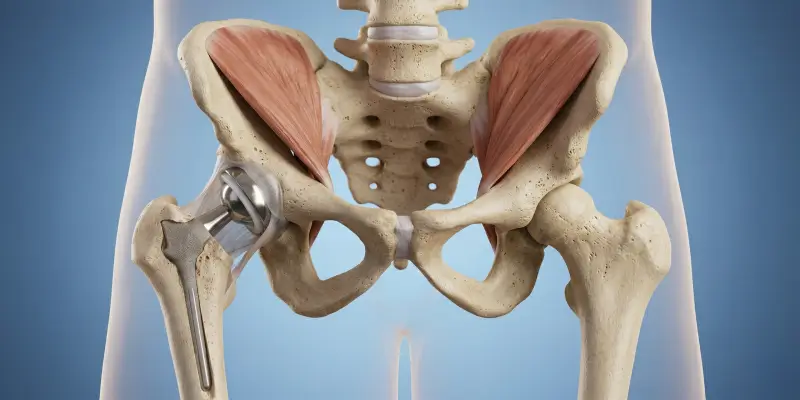
What Is Total Hip Replacement?
Total hip replacement (THR) is a surgical treatment for patients with advanced damage or deformity of the hip joint. In this operation, worn or damaged hip joint surfaces are removed and replaced with metal, ceramic, or polyethylene components. The prosthesis restores joint motion, substantially reduces pain, and improves quality of life.
Because the hip is one of the body’s most load-bearing joints, correct angle and alignment of the prosthesis are critical for long-term success. Modern surgical techniques and robot-guided placement help restore joint balance and make the implant longer-lasting and safer.
Total hip replacement is usually used in the following situations:
- Joint damage due to advanced osteoarthritis or rheumatoid arthritis
- Traumatic hip fractures or deformities
- Chronic hip pain that has not responded to conservative treatments (medication, physical therapy)
- Limited hip motion and serious difficulty with daily activities
This surgery enables patients to move with less pain, continue daily activities independently, and use a long-lasting implant with a low complication risk. With robotic or computer-assisted techniques, postoperative joint function is preserved close to natural movement dynamics.
When Is Total Hip Replacement Used?
Total hip replacement (THR) is an effective surgical method for patients with serious hip damage or loss of function. It offers the best solution for people with hip pain, limited motion, and reduced quality of life. When applied with modern techniques and robotic support, long-lasting and safe implant use is achieved.
Advanced Osteoarthritis
- Serious wear of hip cartilage and bone-on-bone rubbing lead to severe pain and limited motion.
- Total hip replacement reduces pain and restores joint function by replacing worn surfaces.
Rheumatoid Arthritis and Inflammatory Joint Diseases
- Rheumatoid arthritis causes chronic inflammation and cartilage loss in the joint.
- When serious hip damage occurs, conservative methods become insufficient.
- THR relieves inflammation-related pain and increases joint mobility.
Traumatic Fractures and Deformities
- Hip fractures or congenital/acquired deformities can disrupt joint structure.
- Total hip replacement restores normal load distribution by replacing damaged bone and joint surfaces with a prosthesis.
- It is a critical solution for functional recovery after fracture, especially in older patients.
Chronic Pain That Does Not Respond to Conservative Treatment
- THR is used when hip pain cannot be controlled with physical therapy, medication, joint injections, or lifestyle changes.
- Surgery enables the patient to continue daily activities independently and improves quality of life.
Limited Motion and Loss of Function
- Serious limitation of hip motion makes daily activities such as climbing stairs, sitting and standing, and walking difficult.
- With total hip replacement, joint function is restored and walking and daily activities can be done safely.
Evaluation Before Total Hip Replacement
Successful total hip replacement (THR) is directly related to comprehensive preoperative evaluation and planning. This process is critical for correct implant placement, long-term use, and prevention of postoperative complications. In modern orthopedic practice, robotic and computer-assisted planning determine the most suitable implant and surgical strategy for the individual patient.
Clinical Examination and Functional Assessment
- Muscles, tendons, and range of motion around the knee and hip are examined in detail.
- Pain level, gait pattern, and capacity for daily activities are assessed.
- Leg-length difference, joint deformity, or joint stability is checked.
- This evaluation provides the basic data for correct postoperative implant alignment.
Imaging
- X-ray: Bone structure, cartilage loss, and deformities of the hip are examined.
- Computed tomography (CT): Used for detailed assessment of bone structure and shape abnormalities, especially in difficult cases.
- Magnetic resonance imaging (MRI): Provides information about soft tissues, muscles, and tendons.
- These imaging methods play a critical role in robotic and precise implant-placement planning.
General Health and Risk Assessment
- Blood tests: Done to detect anemia, infection, or clotting problems.
- Heart and lung checks: Important for reducing surgical risk, especially in older patients or those with accompanying diseases.
- Other health conditions: Diabetes, hypertension, and osteoporosis are taken into account in surgical planning.
Surgical Planning and Implant Selection
- The most suitable implant type and size are chosen according to the patient’s bone structure and deformity.
- Robotic or computer-assisted systems plan implant angle, depth, and alignment precisely.
- This planning supports postoperative joint balance, natural motion, and long-term implant use.
Patient Information and Preparation
- The surgical process, possible risks, rehabilitation, and lifestyle advice are explained in detail.
- Psychological and physical preparation before surgery helps the patient adapt more quickly afterward.
- Movement limitations, pain, and quality-of-life expectations are discussed so that realistic goals are set.
The Surgical Process of Total Hip Replacement
Total hip replacement (THR) is an advanced operation performed to reduce pain and restore joint function in hips damaged by advanced osteoarthritis, rheumatoid arthritis, hip fractures, or joint deformities. Modern techniques and robot-guided systems enable precise placement, long-term use, and reduced complication risk.
Surgical Preparation and Anesthesia
- General or spinal anesthesia is given before the operation.
- The surgical field is sterilized and access is provided.
- Body position and range of motion are optimized so that a safer, more effective intervention can be made.
Access to the Hip and Removal of Damaged Tissue
- The surgeon chooses an appropriate approach (posterior, lateral, or anterior).
- The damaged femoral head and acetabular surfaces are removed.
- Cartilage around the joint is cleaned and bone surfaces are prepared for the implant.
Placement of Prosthetic Components
- A metal or ceramic component is placed in place of the femoral head.
- The acetabulum (hip socket in the pelvis) is replaced with a polyethylene or ceramic surface.
- Robotic or computer-assisted surgery adjusts implant angle, depth, and alignment precisely.
- This precise placement preserves joint balance and natural motion.
Checking Joint Stability and Range of Motion
- After placement, the surgeon tests range of motion and stability.
- Optimal fit and balance of the femoral and acetabular components are confirmed.
- Robotic guidance helps keep the implant in the correct position and supports long-term durability.
Closure and Drainage
- The surgical field is closed carefully and a drain may be used when needed.
- Drainage reduces postoperative blood accumulation and swelling and speeds recovery.
- Sterile dressing after surgery minimizes infection risk.
Advantages of the Operation
- Substantial reduction in pain
- Restoration of range of motion
- Independence in daily activities
- Long-lasting, safe implant use with robotic and precise surgery
Rehabilitation After Total Hip Replacement
Success of total hip replacement (THR) is related not only to surgical technique but also to postoperative rehabilitation. A well-planned, disciplined program supports long-term implant use, increases joint function, and improves quality of life.
Early Rehabilitation (0–2 Weeks After Surgery)
- Most patients stand in a controlled way and start short-distance walking on day 1–2.
- Drain and dressing checks are done; swelling and pain are managed.
- Simple leg exercises activate the knee and hip muscles and reduce thrombosis (blood clot) risk.
- This early movement is critical for preventing joint stiffness and muscle weakness.
Intermediate Rehabilitation (2–6 Weeks)
- Patients gradually adapt to daily activities (sitting, standing, short walks).
- Muscle strengthening, balance, and coordination exercises are done with a physical therapist.
- An implant placed with robotic or precise surgery preserves natural joint motion and stability in this period.
- The aim is independent movement and walking safety.
Late Rehabilitation (6 Weeks – 3 Months)
- Patients can walk longer distances and do daily activities such as climbing stairs and driving.
- Low-impact aerobic exercise (swimming, cycling) can be started.
- Advanced balance and resistance exercises are used to increase muscle strength and joint stability.
- This period is important for extending implant life and maximizing joint function.
Long-term Rehabilitation and Lifestyle
- Regular exercise and light physical activity help prevent implant wear and loosening.
- High-impact sports (running, football, basketball) should be limited; low-impact activities should be preferred.
- Weight control and balanced nutrition reduce load on the hip and extend implant life.
- Annual checks monitor implant status and allow early intervention for possible complications.
Benefits of Rehabilitation
- Reduced pain and restored range of motion
- Independence in daily activities
- Increased muscle strength and joint stability
- Long-lasting, safe implant use
Advantages of Total Hip Replacement
Total hip replacement (THR) is a surgical intervention for severely damaged hips and offers patients a less painful, functional, high-quality life. THR done with modern techniques and robotic support not only reduces joint pain but also restores function and substantially improves quality of life.
Clear Reduction in Pain
- Pain from osteoarthritis, rheumatoid arthritis, or trauma is substantially reduced after implant placement.
- Pain control during daily activities is achieved and quality of life rises.
- Reduced pain supports independent walking and movement.
Restoration of Joint Function
- Total hip replacement restores load balance between the knee and hip and increases range of motion.
- Robotic and precise surgery place implant angle and alignment optimally so that natural joint motion is achieved.
- Patients can climb stairs, bend, and sit and stand independently and safely.
Improved Quality of Life
- Reduced pain and restored mobility allow patients to take a more active role in social life, work, and hobbies.
- After total hip replacement, patients can resume activities previously limited by pain.
- Regular rehabilitation and physical therapy extend implant life and provide long-term independence and quality of life.
Long-lasting, Safe Implant Use
- Modern implant materials and robotic surgery reduce wear and loosening risk.
- Long-term implant use lowers the risk of needing another operation.
- When placement is correct, joint balance and stability are preserved and complication risk is minimized.
Physical Activity and Functional Advantages
- After THR, patients can safely do low-impact sports and walking.
- Muscle strength and joint stability are supported by regular rehabilitation and exercise.
- This allows patients to use the implant at maximum performance and preserve joint function for a long time.
Life After Total Hip Replacement and Long-term Follow-up
The period after total hip replacement (THR) is critical for improving quality of life, preserving joint function, and extending implant life. Modern techniques, robotic support, and disciplined rehabilitation allow patients to live with less pain and more independence.
Early Life (0–6 Weeks)
- Patients start controlled walking on day 1–2 after surgery.
- Short walks and simple daily activities (sitting and standing, toilet use) are recommended.
- Pain and swelling are managed with dressing and drain checks.
- This period is critical for activating muscles and preventing joint stiffness.
Intermediate Life (6 Weeks – 3 Months)
- Patients can do longer walks, climb stairs, and light daily activities.
- Physical therapy programs increase range of motion, muscle strength, and balance.
- Robot-assisted implant placement preserves joint function close to natural movement dynamics in this period.
- Patients largely regain independence and can do daily activities safely.
Long-term Life and Activity Pattern
- Regular low-impact exercise (swimming, cycling, walking) preserves joint function.
- High-impact sports (running, football, basketball) should be limited or done only with a physician’s advice.
- Weight control and balanced nutrition reduce load on the joint and increase implant life.
- Regular annual checks monitor implant status so that possible loosening, wear, or complications are detected early.
Psychosocial and Functional Gains
- Reduced pain and restored mobility make patients more active in social life and hobbies.
- Daily activities (shopping, housework, short trips) can be done independently.
- Long-term implant use and regular rehabilitation make quality of life sustainable for many years.
Conclusion
Total hip replacement (THR) is an effective, safe surgical treatment for patients whose quality of life has fallen because of advanced hip damage, osteoarthritis, rheumatoid arthritis, traumatic fractures, or deformities. Replacement surgery done with modern techniques and robotic support substantially reduces pain, restores joint function, and increases independence in daily activities.
With comprehensive preoperative evaluation, correct implant selection, and surgical planning, the prosthesis is placed precisely, joint balance is achieved, and long-term use is supported. The postoperative rehabilitation process is supported by early mobilization, muscle strengthening, and balance and movement exercises so that patients can return to daily activities in a short time.
Thanks to total hip replacement, patients gain less painful movement, a more active social life, and long-term quality of life. Regular follow-up and controlled physical activity extend implant life and minimize complication risk. Patients can thereby improve quality of life both functionally and psychologically.
Frequently Asked Questions

Specialist Opinion
Total hip replacement (THR) is an effective, safe surgical treatment for patients whose quality of life has fallen because of advanced hip damage, osteoarthritis, rheumatoid arthritis, traumatic fractures, or deformities. Replacement surgery done with modern techniques and robotic support substantially reduces pain, restores joint function, and increases independence in daily activities.
With comprehensive preoperative evaluation, correct implant selection, and surgical planning, the prosthesis is placed precisely, joint balance is achieved, and long-term use is supported. The postoperative rehabilitation process is supported by early mobilization, muscle strengthening, and balance and movement exercises so that patients can return to daily activities in a short time.
Thanks to total hip replacement, patients gain less painful movement, a more active social life, and long-term quality of life. Regular follow-up and controlled physical activity extend implant life and minimize complication risk. Patients can thereby improve quality of life both functionally and psychologically.
Contact us to have your symptoms assessed and to learn about treatment options that may be right for you. Get in touch .
Frequently Asked Questions
It is suitable for patients with advanced osteoarthritis, rheumatoid arthritis, traumatic hip fractures, or serious hip deformity and pain who have not responded to conservative treatments.
Most patients stand in a controlled way and walk a short distance on day 1–2 after surgery. Independent walking is usually possible within 4–6 weeks with regular rehabilitation.
Mild to moderate pain may occur in the first days, but it is controlled with pain management. Full function and pain-free movement are achieved through rehabilitation.
With modern implants and robot-assisted surgery, implant life may be 15–20 years or longer. Regular follow-up and low-impact activities extend implant life.
Low-impact activities such as walking, swimming, and cycling are recommended. High-impact sports such as running, football, or basketball should be limited.
As with every operation, there are risks such as infection, implant loosening, blood clots, or rare nerve and vessel injury. Robotic support and experienced surgery minimize these risks.
Most daily activities can be done safely within 6–12 weeks. Full independent living and functional activities can be achieved in 3–6 months depending on the rehabilitation program.
Yes, especially in overweight patients, weight control is recommended to reduce load on the hip and extend implant life.
 WhatsApp
  Facebook
  Twitter
  Linkedin



 +90 505 398 34 34
 doctoryavuzarikan@gmail.com
 Book Appointment / Contact