

High Tibial Osteotomy (Leg Realignment)


High Tibial Osteotomy (Leg Realignment)
What Is High Tibial Osteotomy?
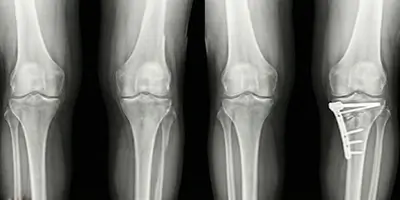
High tibial osteotomy (HTO) is an advanced orthopedic surgical method used to correct load imbalance in the knee and reduce knee osteoarthritis and knee pain caused by bow-leg deformity. The operation aims to preserve the natural structure of the knee and keep the joint healthy for longer, especially in patients with cartilage wear from excessive load on the inner side of the knee.
In people with bow-leg deformity (O-shaped legs or varus deformity), most of the body weight falls on the inner side of the knee. Over time this leads to cartilage wear, bone-on-bone rubbing, and progressive knee osteoarthritis. In high tibial osteotomy, the tibia is cut in a controlled way, the angle of the leg is corrected, and load is shifted from the damaged inner knee to the healthier outer side. Knee pain decreases and progression of osteoarthritis is slowed.
This method is especially advantageous for patients who are young for knee replacement, want to remain active, and have intact knee ligaments. High tibial osteotomy allows the person to continue using their own knee without fully replacing the joint. Patients can therefore continue sport, walking, and daily activities more naturally.
Modern high tibial osteotomy uses titanium plate and screw systems to fix the bone securely. When performed by experienced orthopedic specialists, especially Prof. Dr. Yavuz Arıkan, who is experienced in knee surgery, it gives very successful results for both pain control and long-term knee health.
High tibial osteotomy is a modern knee treatment that offers an alternative to replacement in bow-leg deformity and knee osteoarthritis by correcting joint biomechanics and improving quality of life.
Who Is High Tibial Osteotomy For?
High tibial osteotomy is a specific knee treatment for patients in whom bow-leg deformity overloads one side of the knee and leads to knee osteoarthritis and knee pain. It is not for everyone; it is planned for selected patient groups.
The most suitable candidates are usually people with bow legs (varus deformity). This deformity causes faster wear of cartilage on the inner side of the knee. In patients with osteoarthritis on the inner side but a still-healthy outer side, high tibial osteotomy can balance load distribution and substantially reduce pain.
The operation is especially suitable for patients aged 40–60 who lead an active life and want to continue walking, sport, and daily activities. In this age group, knee replacement is considered early, so joint-preserving surgery comes to the fore. Experienced knee surgeons such as Prof. Dr. Yavuz Arıkan prefer high tibial osteotomy instead of replacement in younger and middle-aged patients in order to preserve the joint for longer.
Patients with intact ligaments, good range of motion, and no widespread advanced osteoarthritis are also considered suitable. Successful results are obtained especially when damage is limited to the inner side of the knee.
The operation also offers an effective solution for patients with long-standing knee pain, difficulty climbing stairs, and a burning sensation on the inner knee while walking. With correct patient selection, high tibial osteotomy both reduces pain and can delay the need for replacement for many years.
High tibial osteotomy is therefore one of the most important joint-preserving methods of modern orthopedic surgery in bow-leg deformity and knee osteoarthritis, planned individually.
Why Is High Tibial Osteotomy Done?
High tibial osteotomy is a specific orthopedic surgical procedure to correct load imbalance in the knee and control knee osteoarthritis and knee pain caused by bow-leg deformity. The main aim is to reduce excessive load on the damaged part of the knee so the joint stays healthy for longer.
In people with bow legs (varus deformity), most of the body weight falls on the inner side of the knee. This causes inner cartilage to wear over time and knee osteoarthritis to progress. Patients develop increasing pain while walking, difficulty climbing stairs, and limited motion. High tibial osteotomy changes the angle of the tibia, realigns the leg, and shifts load from the worn inner knee to the stronger outer side.
Pressure on the knee is thereby balanced and knee pain decreases clearly. Progression of cartilage damage is slowed and the joint is preserved. High tibial osteotomy is therefore considered one of the most important knee treatments that delay the need for replacement.
In younger and active patients, joint-preserving solutions are preferred instead of replacement. Specialist knee surgeons such as Prof. Dr. Yavuz Arıkan aim both to preserve natural knee structure and to improve quality of life with high tibial osteotomy in suitable patients.
The operation also corrects the visible deformity of the leg. A more even alignment is achieved both functionally and aesthetically. In the long term, mechanical stress on the knee decreases and wear of the joint is substantially slowed.
High tibial osteotomy is a modern orthopedic surgical approach that reduces pain, increases mobility, and delays the path to replacement in patients with bow-leg deformity and knee osteoarthritis.
How Is High Tibial Osteotomy Performed?
High tibial osteotomy is an advanced orthopedic surgical method for patients in whom bow-leg deformity overloads one side of the knee and leads to knee osteoarthritis and knee pain. The main aim is to restore load-bearing balance, reduce pain, and extend the life of the knee.
Before surgery the patient is evaluated in detail. X-rays, long-axis films, and MRI when needed are used to measure load distribution. These analyses allow the amount of correction to be planned in millimeters.
Surgery is usually done under general or spinal anesthesia. The surgeon makes a small incision on the tibia just below the knee. The bone is then cut in a controlled way, opened, and the angle of the leg is corrected. The bone gap is fixed with special plates and screws so the new alignment is maintained and the bone can heal properly.
In some patients the gap may be filled with graft or synthetic bone material. This helps the bone heal faster and more strongly. All of these steps aim to take load off the damaged inner part of the knee and transfer it to the healthier outer part. Knee pain decreases and progression of knee osteoarthritis is slowed.
Surgery usually lasts 1–2 hours. Afterward the patient is followed in hospital for a few days. Controlled movement and physiotherapy are started early to preserve knee function.
When correctly planned and performed by an expert orthopedic surgical team, high tibial osteotomy offers a highly successful long-term solution in bow-leg deformity and knee osteoarthritis.
Recovery After High Tibial Osteotomy
Recovery is one of the most important stages for surgical success. It is essential for making the correction of bow-leg deformity and knee osteoarthritis lasting and for a lasting reduction in knee pain. A well-planned rehabilitation program allows a safe and comfortable return to daily life.
Immediately after surgery the patient is usually followed in hospital for a few days. Swelling and tenderness around the knee in the first 24 hours are normal. Pain is controlled with medication and the joint is moved in a controlled way early on.
For the first 4–6 weeks the patient usually walks with crutches or a walker. Load on the operated leg is increased gradually. The aim is to allow the bone to heal in the correct position without overloading the knee. Physical therapy in this period strengthens the knee muscles and helps preserve alignment.
After about 6–8 weeks, bone healing becomes clearer and the patient can begin to bear weight more comfortably. Range of motion increases, knee pain decreases substantially, and walking becomes more balanced. Success of knee treatment depends largely on adherence to physiotherapy.
After the third month, most patients can return to daily activities, light sport, and longer walks. Correction of bow-leg deformity balances load on the knee and slows progression of knee osteoarthritis. This can delay the need for replacement by years.
Correct care, regular follow-up, and specialist-supervised rehabilitation after high tibial osteotomy increase orthopedic surgical success and help the patient achieve a less painful, more mobile life.
Advantages of High Tibial Osteotomy
High tibial osteotomy is one of the most effective knee treatments for bow-leg deformity and related knee osteoarthritis. Its greatest advantage is that it preserves the knee joint so the patient continues life with their own natural joint.
One of the most important advantages is that it delays knee replacement. In younger and middle-aged patients, early replacement may later require another operation. High tibial osteotomy balances load on the knee, slows cartilage wear, and postpones the need for replacement for many years.
Another important advantage is a clear reduction in knee pain. When alignment is corrected, pressure on the damaged part of the knee is removed. Patients feel much less pain while walking, climbing stairs, and standing for a long time.
High tibial osteotomy also corrects bow-leg deformity. This is an important improvement not only functionally but also aesthetically. A straighter leg line makes walking more balanced and reduces mechanical stress on the joints.
After surgery, knee mobility is preserved and in most patients it increases. Because the joint is not fully replaced and its natural structure is kept, the person can move more comfortably and perform daily activities such as squatting and using stairs more easily.
This orthopedic surgical method also slows progression of cartilage damage. This helps control knee osteoarthritis and provides a healthier joint structure in the long term.
For all these reasons, when applied in the right patient, high tibial osteotomy is a highly effective option that both reduces pain and protects knee health for many years.
Risks of High Tibial Osteotomy
High tibial osteotomy is a highly effective orthopedic surgical method for bow-leg deformity and related knee osteoarthritis and knee pain. As with every operation, there are some risks and possible complications. Knowing these risks helps both patient and physician manage the process more safely.
One of the most common risks is infection. Redness, swelling, increased warmth, or discharge at the surgical site may be signs of infection. If recognized early, it can be controlled with antibiotics.
Another important risk is delayed union or nonunion. Healing of the tibial cut takes time. Smoking, diabetes, and poor nutrition can impair bone healing. Prof. Dr. Yavuz Arıkan therefore evaluates these risks carefully before surgery.
Knee stiffness and limited motion may also occur after surgery. Neglecting physical therapy increases this risk. Regular exercise and rehabilitation preserve range of motion and make knee treatment more successful.
In some patients, implant discomfort related to plates and screws may develop. Especially in thin people, metal plates may be felt under the skin and cause pain. In that case the implants may need to be removed after the bone has fully healed.
Rarely there is a risk of under- or over-correction of alignment. This can prevent load from being distributed as intended. The operation should therefore be performed by a specialist knee surgeon.
Despite these risks, with appropriate patient selection and an experienced team, high tibial osteotomy offers a safe and effective solution in knee osteoarthritis and bow-leg deformity. Correct planning and regular follow-up can substantially reduce complication risk.
Points to Watch After Surgery
The period after high tibial osteotomy directly affects success. Following recommendations in this period both allows the bone to heal correctly and helps prevent recurrence of knee pain, bow-leg deformity, and knee osteoarthritis.
Swelling and tenderness around the knee in the first days are normal. Keeping the leg slightly above heart level and applying cold at regular intervals help reduce swelling. Painkillers and protective medicines prescribed by the physician should be used regularly.
In the first weeks, full weight should not be placed on the operated leg. Using crutches or a walker supports healing in the correct position. Early overload can displace plates and screws or delay bone healing.
Physical therapy and an exercise program are an essential part of recovery. Exercises given by the physiotherapist should be done regularly to preserve range of motion, strengthen muscles, and regain walking balance. This process makes knee treatment lasting.
Nutrition after surgery is also very important. A diet rich in protein, calcium, and vitamin D speeds bone healing. Smoking and alcohol impair bone healing and should be stopped if possible.
Suture sites should be kept clean and dry. If infection signs such as redness, discharge, or fever appear, a physician should be contacted without delay. Regular visits and X-ray follow-up are important to confirm that the bone is healing correctly.
Patience and care during recovery play a critical role in preserving alignment, slowing progression of knee osteoarthritis, and achieving a pain-free life in the long term.
Is High Tibial Osteotomy Permanent?
High tibial osteotomy is a permanent bone-realignment operation for bow-leg deformity and related knee osteoarthritis and knee pain. During the procedure the angle of the tibia is changed and alignment is reset. After the bone heals, this new alignment becomes permanent and the mechanical structure of the leg is corrected.
Once bone healing is complete, the correction does not reverse. The alignment obtained with high tibial osteotomy is preserved in the long term. Excessive load on the damaged part of the knee is thereby removed and progression of knee osteoarthritis is clearly slowed. This can postpone the need for replacement for many years.
The important point is that the operation does not completely eliminate the underlying osteoarthritis. High tibial osteotomy reduces pressure on the osteoarthritic area so the knee stays healthy for longer. Aging and joint wear may continue, so some patients may still need replacement years later. Even so, this period is much longer than in patients who do not have the operation.
Permanence is directly related to correct patient selection, performing the surgery at the correct angle, and adherence during recovery. Regular follow-up, weight control, muscle-strengthening exercises, and avoiding activities that overload the joint help preserve the correction for many years.
In summary, high tibial osteotomy is a long-term, effective knee treatment that permanently corrects bow-leg deformity, reduces knee pain, and slows progression of knee osteoarthritis.
High Tibial Osteotomy or Knee Replacement?
One of the most common questions from patients with bow-leg deformity, knee osteoarthritis, and knee pain is whether high tibial osteotomy or knee replacement is more appropriate. These two methods differ substantially in aim and patient profile.
High tibial osteotomy is used in patients whose knee joint is not yet fully destroyed. It is an ideal knee treatment especially for people with osteoarthritis on only the inner side, intact ligaments, and an active lifestyle. The joint is preserved; only the angle of the leg is corrected and load distribution is reset. The patient continues to use their own natural joint and the life of the knee is extended.
Knee replacement is preferred when the joint is severely damaged, most of the cartilage is gone, and motion is seriously limited. The joint is replaced with an artificial joint. Replacement is more suitable especially in older patients with limited daily activities and osteoarthritis on both sides of the knee.
High tibial osteotomy is a solution that delays replacement especially in younger and middle-aged patients. Replacement done at a young age wears over time and may require another operation. In early or moderate knee osteoarthritis, osteotomy is therefore preferred to preserve the joint.
In short, if only one part of the knee is damaged, bow-leg deformity is present, and the patient leads an active life, high tibial osteotomy is the more appropriate choice. If the entire knee is severely worn and pain seriously affects daily life, replacement comes to the fore.
Which treatment is appropriate should be decided by an orthopedic specialist after detailed examination, X-rays, and imaging. This individualized assessment directly determines the success of knee treatment.
Conclusion
High tibial osteotomy is a modern, effective knee treatment for patients with bow-leg deformity, knee osteoarthritis, and related knee pain. Instead of fully replacing the joint, it corrects the mechanical axis of the leg and rebalances load. Pressure on the osteoarthritic area decreases, pain eases, and the natural structure of the knee is preserved.
The operation offers a major advantage especially in patients with osteoarthritis on only one side, intact ligaments, and an active lifestyle. It helps the knee work more healthily both functionally and structurally. Its ability to delay knee replacement by years also makes it highly valuable for younger and middle-aged patients.
With correct patient selection, detailed surgical planning, and appropriate rehabilitation, the obtained alignment is permanent. Progression of knee osteoarthritis is slowed, mobility is preserved, and knee pain in daily life decreases substantially. Care, physical therapy, and lifestyle adjustments after surgery help this benefit last for many years.
In summary, high tibial osteotomy is not only a bone-realignment operation; it is a long-term orthopedic solution that protects knee health, increases freedom of movement, and improves quality of life. When applied at the right time in the right patient, it is one of the most important knee treatments that safely and effectively delay the path to replacement.
Frequently Asked Questions
Frequently Asked Questions
High tibial osteotomy is suitable especially for patients with bow-leg deformity (O-shaped legs), osteoarthritis on only one side of the knee, and an active lifestyle. It is usually preferred in younger and middle-aged people.
After surgery, load on the damaged part of the knee is reduced, so knee pain decreases substantially. In most patients, pain felt in daily life recedes clearly.
Partial weight-bearing with crutches is usually used in the first weeks. Within about 6–8 weeks, most patients begin to bear weight and walk more comfortably.
High tibial osteotomy can delay the need for knee replacement by years. If osteoarthritis progresses over time, replacement may still be needed later.
Yes. After the bone heals, the corrected leg alignment is permanent. Load on the knee is thereby balanced.
After recovery is complete, walking, cycling, and swimming can usually be resumed. Sports that overload the knee should be avoided.
This depends entirely on the condition of the knee. If the joint is not yet fully destroyed and osteoarthritis is on one side, high tibial osteotomy is more advantageous. In advanced osteoarthritis, knee replacement is preferred.
Pain and swelling may occur in the first few weeks, but they decrease rapidly with regular medication and physical therapy.
When performed by experienced orthopedic surgeons, it is a safe procedure. Risks such as infection and delayed bone healing are uncommon.
Yes. High tibial osteotomy corrects bow-leg deformity and provides more balanced walking.
 WhatsApp
  Facebook
  Twitter
  Linkedin



 +90 505 398 34 34
 doctoryavuzarikan@gmail.com
 Book Appointment / Contact