

What Is Kyphosis (Hunchback)? Symptoms and Treatment


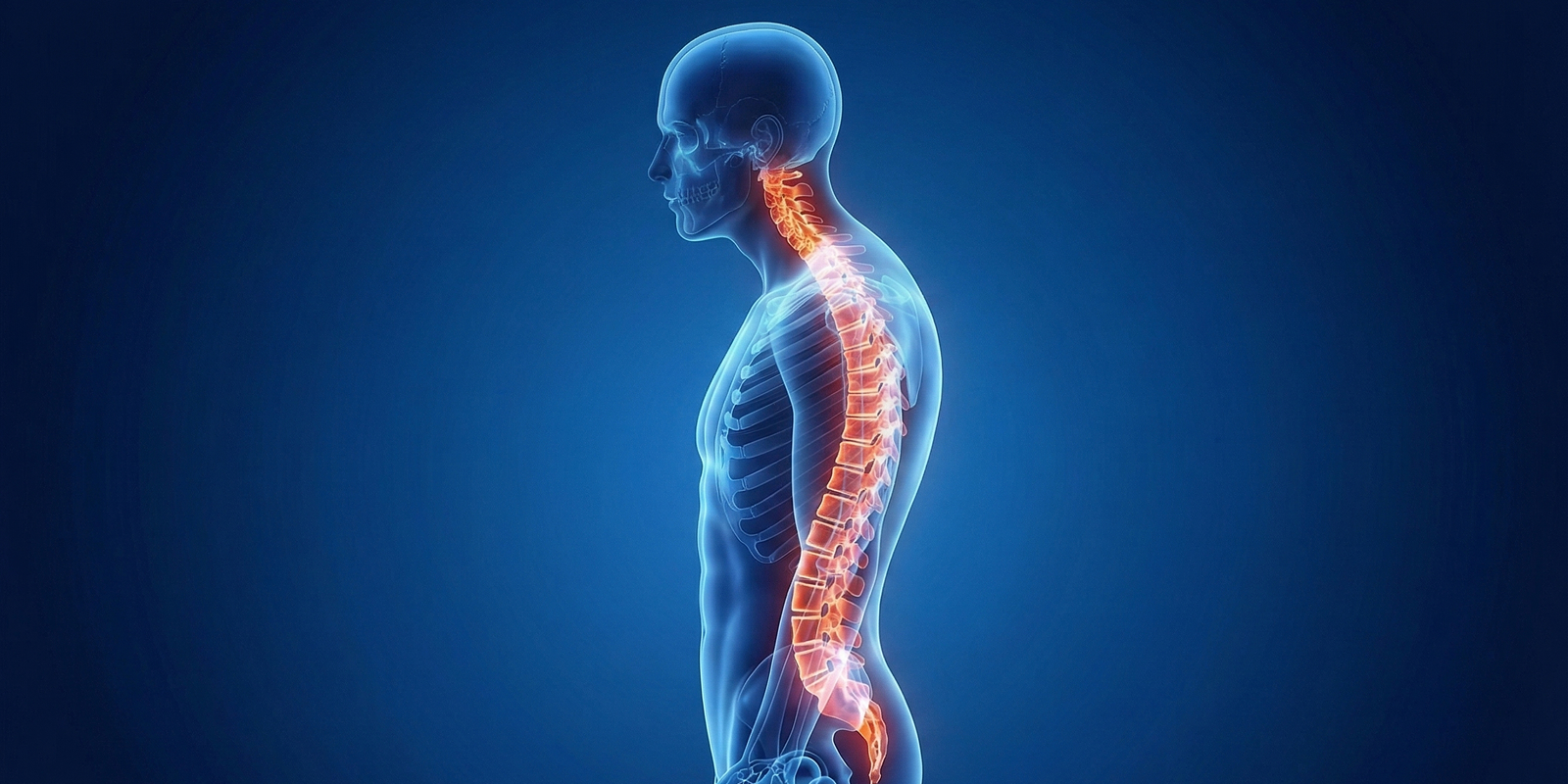
Kyphosis is an abnormal increase in the natural curve of the thoracic (chest) spine. Normally, when viewed from the side, the spine has a mild “C” curve that helps the body carry load and keep balance. When this curve exceeds a certain threshold, posture changes, the back looks “hunched,” and both aesthetic and functional problems can appear. Kyphosis is commonly known as “hunchback” and can occur in both childhood and adulthood.
Kyphosis should not be seen only as a posture problem. Severe kyphosis can narrow the chest, reduce breathing capacity, and disturb spinal mechanical balance. It is therefore a spinal problem that requires timely diagnosis and a correct treatment plan.
Normal Spinal Curves and the Anatomic Basis of Kyphosis
Viewed from the side, the spine has an S-shaped curve. There is lordosis in the neck (cervical), kyphosis in the chest (thoracic), and lordosis again in the low back (lumbar). These curves optimize load distribution. Thoracic kyphosis is normally accepted as about 20–45 degrees. This range keeps the spine both flexible and stable.
Kyphosis is defined when this normal thoracic curve exceeds 45 degrees. The increased curve bends the spine forward, makes the chest look sunken, and makes the back clearly hunched. The degree of kyphosis determines the treatment plan and progression risk.
What Causes Kyphosis (Hunchback)?
Causes are varied and often not limited to a single factor. The mechanism may involve change in vertebral shape, structural disc damage, muscle imbalance, connective-tissue problems, or congenital anomalies.
1. Postural Kyphosis
This is one of the most common types. It develops especially in adolescence from prolonged poor posture and weak muscle support. In postural kyphosis the spine is not structurally damaged; muscle imbalance and posture habits are the main issues. This type is usually painless and may become more noticeable during the day.
If recognized early, postural kyphosis can be corrected with physical therapy and posture training. As it progresses and the spine adapts, correction can become harder.
2. Scheuermann Kyphosis (Juvenile Kyphosis)
Scheuermann kyphosis appears in adolescence and is characterized by wedging (collapse) of the front of the vertebrae. Vertebral shape is altered and the curve becomes permanent. It usually appears between ages 12 and 16. Pain, muscle tightness, and a visible hunch are typical.
Scheuermann kyphosis is a structural disorder, unlike postural kyphosis, and progression risk is higher. Early diagnosis, especially during growth, improves treatment success.
3. Congenital Kyphosis
Congenital kyphosis results from abnormal development of the spine before birth. Abnormal vertebral shape, fused vertebrae, or segmental developmental anomalies create the curve. This type usually becomes clear at an early age and progression risk is high.
Congenital kyphosis may occur together with other organ anomalies. Diagnosis and follow-up therefore require a multidisciplinary approach.
4. Neuromuscular Kyphosis
Neuromuscular diseases (for example muscular dystrophies, cerebral palsy, spinal cord injuries) can disrupt spinal stability. Muscle weakness and loss of control cause the spine to bend forward and kyphosis develops. This type usually progresses rapidly and can cause serious functional loss.
Neuromuscular kyphosis usually appears during growth. The treatment plan is based on general condition, muscle strength, and respiratory function.
5. Degenerative Kyphosis
In later life, vertebrae and discs undergo age-related structural change. Reduced disc height, degeneration of the joints between vertebrae, and muscle weakness can cause kyphosis. This type is usually seen together with back and low-back pain.
Degenerative kyphosis often accompanies other spinal problems and can reduce quality of life.
6. Trauma and Infection
Spinal fractures, especially osteoporotic fractures, are important causes of kyphosis. Collapse of the vertebral body increases the forward curve. Infections (for example vertebral osteomyelitis) can also destroy bone and lead to kyphosis.
What Are the Symptoms of Kyphosis?
Symptoms depend on type, degree, and speed of progression. Mild kyphosis often causes no clear symptoms and is noticed only as a posture problem. Severe kyphosis can create both aesthetic and functional problems.
The first noticed sign is usually a “hunched” appearance in the upper back. When the patient stands straight, the shoulders fall forward and the chest looks more sunken. This becomes especially noticeable in adolescence. Patients often present with the complaint “my posture is poor.”
As kyphosis progresses, back and low-back pain may increase. Pain is more noticeable with prolonged standing, sitting, or carrying heavy loads. Muscle tightness and fatigue are also common. Pain and spasm may be more marked in Scheuermann kyphosis.
Severe kyphosis can affect the mechanical structure of the chest. The chest may narrow and breathing capacity may fall. This becomes more noticeable with age and in severe kyphosis. Disturbed spinal balance can also increase fall risk.
Some patients may have nerve compression or radiculopathy. Numbness, tingling, or weakness in the legs may then appear. This is usually related less to kyphosis itself than to accompanying lumbar disc herniation or spinal stenosis.
How Is Kyphosis Diagnosed?
Diagnosis is made with clinical examination and imaging. Posture, shoulder position, the curve of the back, and muscle imbalance are assessed. Simple clinical tests such as Adams’ forward bend test show the presence and degree of kyphosis.
Plain X-ray is the basic imaging tool. The thoracic kyphosis angle is measured to determine severity. In Scheuermann kyphosis, anterior vertebral collapse and wedging are seen. In congenital kyphosis, vertebral anomalies become clear on X-ray.
MRI and CT may be needed in some cases. MRI is important for neurologic findings and for examining the spinal cord and discs. CT is used for detailed bone assessment and surgical planning.
Identifying the cause is critical for the treatment plan. Age, duration of symptoms, pain level, neurologic findings, and imaging are therefore evaluated together.
How Is Kyphosis Treated?
Treatment is planned according to type, degree, age, and symptoms. The aims are to reduce pain, restore spinal balance, and stop progression. Mild kyphosis is usually managed conservatively; severe and progressive kyphosis may require surgery.
Conservative Treatment
The basic conservative approach is to increase muscle strength, improve posture, and reduce pain. A physical therapy program includes exercises aimed especially at strengthening the back muscles. Posture training and adopting correct posture in daily activities are important for success.
Medication (such as NSAIDs), muscle relaxants, and pain-management methods may be used for pain control. Medicines alone do not correct kyphosis; they only control symptoms.
Brace treatment may be used in growing patients, in Scheuermann kyphosis, and in cases with a high risk of progression. A brace can stop further curving. Success depends on adherence and duration of use.
Surgical Treatment
Surgery is usually considered in patients with severe kyphosis, progression, or failure of conservative care. The aims are to restore anatomic balance, reduce pain, and stop progression.
Options include posterior spinal fusion and deformity correction, combined anterior-posterior approaches, and methods tailored to the case. Screws, rods, and grafts are used to stabilize the vertebrae. Rehabilitation and follow-up after surgery are very important.
Age, degree of kyphosis, neurologic findings, pain severity, and quality of life are considered. Surgery is considered earlier when neurologic findings are present.
Rehabilitation and Recovery
Rehabilitation is one of the most important parts of treatment. In conservative care, the physical therapy program should be followed regularly. It includes back-muscle strengthening, flexibility exercises, posture training, and core stabilization. These exercises support a more balanced spinal position.
After surgery, rehabilitation is more controlled and staged. The first period focuses on pain control, wound healing, and light mobilization. The second period starts muscle strengthening and gait training. In the long term, exercises that increase spinal stability and return to daily activities are the goal.
Patient motivation and regular follow-up directly affect success. Adherence is especially important in adolescents using a brace; if the brace is not used regularly, the curve may progress.
Possible Complications of Kyphosis
If kyphosis progresses, several complications can appear. Severe kyphosis can affect chest mechanics. Breathing capacity may fall and the patient may have shortness of breath. Disturbed spinal balance can also make back and low-back pain chronic.
As kyphosis progresses, changed load distribution can increase low-back pain. This can limit daily activities and reduce quality of life. In some patients, spinal imbalance increases fall risk.
Neurologic complications are less common, but in severe deformities nerve compression or spinal cord stretching may occur. Weakness, numbness, or loss of balance in the legs may then appear. These situations may require urgent evaluation and surgery.
Life After Kyphosis and Follow-up
Success is not measured only by reduction of the curve. In the long term, pain level, spinal mobility, respiratory function, and quality of life are assessed. Regular follow-up is therefore important. In growing patients, whether the curve is progressing is monitored.
In adults with degenerative kyphosis, lifestyle changes and a regular exercise program are critical for long-term success. Weight control, exercises that strengthen spinal muscles, and correct posture habits can slow progression.
Conclusion
Kyphosis (hunchback) is a spinal deformity caused by an increased thoracic curve and can lead to both aesthetic and functional problems. The cause varies with age, developmental period, and underlying pathology. Types include postural kyphosis, Scheuermann kyphosis, congenital kyphosis, neuromuscular kyphosis, and degenerative kyphosis. Each has a different treatment approach and progression risk.
Diagnosis is made with clinical examination and imaging. The plan is based on degree, age, symptoms, and neurologic findings. Mild kyphosis with low progression risk is usually managed conservatively; severe and progressive kyphosis may require surgery. Conservative care includes physical therapy, posture training, and bracing. Surgery aims to stabilize the spine and correct the deformity.
Early diagnosis and regular follow-up improve success. Interventions during growth can stop progression of the deformity. With appropriate treatment and rehabilitation, most patients can preserve quality of life and continue daily activities. If kyphosis progresses, more advanced options should be considered and a multidisciplinary approach adopted.
Frequently Asked Questions

Specialist Opinion
Kyphosis (hunchback) is a spinal deformity caused by an increased thoracic curve and can lead to both aesthetic and functional problems. The cause varies with age, developmental period, and underlying pathology. Types include postural kyphosis, Scheuermann kyphosis, congenital kyphosis, neuromuscular kyphosis, and degenerative kyphosis. Each has a different treatment approach and progression risk.
Diagnosis is made with clinical examination and imaging. The plan is based on degree, age, symptoms, and neurologic findings. Mild kyphosis with low progression risk is usually managed conservatively; severe and progressive kyphosis may require surgery. Conservative care includes physical therapy, posture training, and bracing. Surgery aims to stabilize the spine and correct the deformity.
Early diagnosis and regular follow-up improve success. Interventions during growth can stop progression of the deformity. With appropriate treatment and rehabilitation, most patients can preserve quality of life and continue daily activities. If kyphosis progresses, more advanced options should be considered and a multidisciplinary approach adopted.
Contact us to have your symptoms assessed and to learn about treatment options that may be right for you. Get in touch .
Frequently Asked Questions
No. Mild kyphosis may remain a posture issue, but severe kyphosis can affect breathing, spinal mechanical balance, and quality of life.
Progressive kyphosis can lead to pain, breathing difficulty, spinal imbalance, and chronic muscle fatigue. In some cases neurologic problems may develop.
No. Kyphosis can occur in childhood, adolescence, and adulthood. Degenerative kyphosis is more common in older adults.
Brace treatment is more effective during growth and in Scheuermann kyphosis with a high risk of progression. A brace is usually not needed in postural kyphosis.
Surgery can provide substantial correction depending on the degree of deformity and spinal stability. Rehabilitation and follow-up are still needed after surgery.
Yes. Swimming, pilates, core strengthening, and flexibility exercises are often recommended. Sports that involve heavy lifting and excessive bending should be done carefully.
 WhatsApp
  Facebook
  Twitter
  Linkedin



 +90 505 398 34 34
 doctoryavuzarikan@gmail.com
 Book Appointment / Contact