

Total Knee Replacement


What Is Total Knee Replacement?
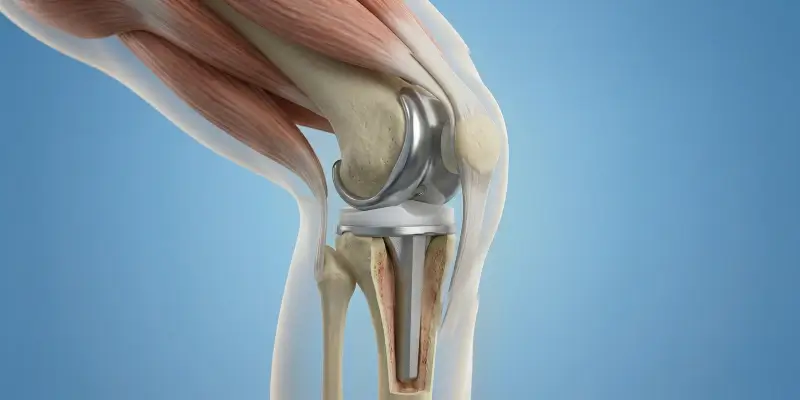
Total knee replacement is a surgical joint-resurfacing procedure used when there is advanced damage or wear in the knee. Damaged cartilage and bone surfaces are removed and metal and high-quality polyethylene prosthetic components are placed. The aim is to reduce pain, increase mobility, and restore joint function.
The knee is made of three bones: the femur (thigh bone), tibia (shin bone), and patella (kneecap). Osteoarthritis, rheumatoid arthritis, or trauma can damage these bone and cartilage structures, disrupt the joint surface, and cause pain and limited motion. Total knee replacement eliminates this damage and reconstructs the joint.
Key Features of Total Knee Replacement
- Precise alignment: The implant is placed to match the natural anatomy of the knee.
- Pain control: Pain from advanced osteoarthritis and cartilage loss is substantially reduced.
- Functional motion: The implant preserves the knee’s natural range of motion and joint balance.
- Long-term use: With correct surgery and rehabilitation, modern implants can provide 15–20 years of trouble-free use.
Who Is Total Knee Replacement Suitable For?
- People with advanced knee osteoarthritis
- People with rheumatoid arthritis or degenerative joint disease
- People whose previous knee operations have failed or who have developed serious deformity
- Patients for whom conservative methods (medication, physical therapy, joint supports) have been insufficient
In summary, total knee replacement is an effective surgical method for patients with serious knee damage and loss of function, aimed at providing a less painful, mobile, durable knee. Modern techniques and robotic systems increase placement precision, speed recovery, and extend implant life.
When Is Total Knee Replacement Used?
Total knee replacement is a surgical treatment used when the knee has serious damage, pain, and limited motion. The main aim is to restore joint function, reduce pain, and improve quality of life. Modern implant techniques, planned for the individual knee anatomy, offer long-lasting, safe results.
Advanced Osteoarthritis (Joint Wear)
- Cartilage in the knee is completely worn, bone surfaces rub, and severe pain and limited motion occur.
- Slowly progressive deformity and joint disruption in osteoarthritis cannot be corrected with conservative methods.
- Total knee replacement renews these joints, reduces pain, and restores natural motion.
Rheumatoid Arthritis and Other Inflammatory Diseases
- Chronic inflammatory joint diseases such as rheumatoid arthritis cause cartilage loss, deformity, and pain in the knee.
- Total knee replacement repairs damage after joint inflammation and provides stability.
Trauma and Previous Surgery
- Knee fractures, ligament injuries, or previous operations can cause deformity and cartilage loss.
- Total knee replacement reconstructs the joint after trauma or failed surgery and restores mobility.
Failure of Conservative Treatment
- If medication, physical therapy, knee support, or lifestyle changes cannot adequately control pain and loss of function, surgery becomes the remaining option.
- Total knee replacement enables a safe return to daily activities.
Severe Deformity or Joint Imbalance
- Patients with varus/valgus deformity, leg-length difference, or joint imbalance have difficulty walking and bearing weight.
- Total knee replacement restores balance and increases range of motion through precise component placement and alignment.
Evaluation Before Total Knee Replacement
A comprehensive evaluation before total knee replacement is critical for surgical success, long-term implant use, and a smooth recovery. The aim is to gather detailed information about the patient’s general health, knee structure, and suitability for an implant. Modern surgical planning, especially with robotic and computer-assisted systems, allows individualized operative strategies.
Clinical Evaluation
- Pain level, mobility, joint deformity, and functional limitations are examined in detail.
- Range of motion is measured and structural problems such as varus/valgus deformity are identified.
- The surgeon evaluates age, weight, accompanying diseases, and lifestyle to plan risks and expectations.
Imaging
- X-ray: Bone deformity, cartilage loss, and joint space are measured.
- Magnetic resonance imaging (MRI): Provides detailed information about cartilage, ligaments, and surrounding soft tissues.
- Computed tomography (CT): Used for 3D planning especially in complex deformities or revision surgery.
- These imaging data form the basis for individualized planning of implant size, angle, and alignment.
Laboratory and General Health Checks
- General health parameters such as complete blood count, blood sugar, and kidney and liver function tests are assessed.
- Necessary tests are done to reduce infection risk; if an infection is present, surgery may be postponed.
- Heart and lung function are examined to minimize anesthesia and surgical risk.
Surgical Planning and Individual Modeling
- In modern total knee replacement planning, robotic and computer-assisted systems create a 3D model of the patient’s knee.
- Implant component size, placement angle, and alignment are determined specifically for the patient’s anatomy.
- This planning provides precise, accurate placement during surgery and increases the chance of long-term success.
Setting Rehabilitation and Expectations
- Before surgery the patient is informed about rehabilitation, the recovery period, and return to daily activities.
- Physical capacity and motivation are assessed for postoperative success.
The Surgical Process of Total Knee Replacement
Total knee replacement is a surgical method that reduces pain, increases mobility, and offers a long-term solution for patients with serious knee damage or wear. The process aims at a successful result through precise planning, correct implant placement, and protection of surrounding tissues. Modern techniques and robotic guidance enable precise, individualized placement, minimize postoperative complication risk, and speed rehabilitation.
Preparation Before Surgery
- General or spinal anesthesia is given.
- The skin around the knee is sterilized and the patient is positioned appropriately.
- Before surgery the surgeon checks implant component size and alignment using 3D planning or a robotic system.
Cleaning Damaged Cartilage and Bone Surfaces
- The knee is opened and damaged cartilage and bone surfaces are removed.
- The femur (thigh bone), tibia (shin bone), and when needed the patella (kneecap) are shaped precisely with special measuring devices.
- The aim is a clean, even surface on which the implant components will sit perfectly.
Placement of Prosthetic Components
- Metal components are placed on the femoral and tibial surfaces, and a polyethylene insert (joint surface) is added.
- If a patellar implant is needed, the undersurface of the patella is reshaped and covered with a polyethylene component.
- If robotic or computer-assisted surgery is used, alignment and angle are controlled in real time, providing joint balance and a long-lasting implant.
Joint Balance and Motion Tests
- After placement, the knee is tested through full flexion and extension.
- Varus/valgus deformity and load distribution are checked, and small adjustments are made if needed.
- This step secures knee stability and long-term implant use.
Tissue and Skin Closure
- Soft tissues are closed carefully and the surgical field is closed in a sterile way.
- Drain use depends on bleeding risk and the surgeon’s preference.
- After skin closure the area is bandaged and light support is applied to the knee.
First Interventions After Surgery
- Patients usually start physiotherapy within 24 hours.
- Pain control, swelling reduction, and early mobilization support recovery.
- Precise placement of robotic implants allows early weight-bearing and movement to be done safely.
Rehabilitation After Total Knee Replacement
The rehabilitation process after total knee replacement is a critical stage for long-term implant use, increased range of motion, and a safe return to daily activities. Thanks to modern techniques and robot-assisted placement, rehabilitation is faster, safer, and more effective. This process helps the patient reach an optimal physical and functional level.
First Days After Surgery (0–2 Days)
- Patients usually stand and start walking within 24 hours.
- Short walks with light support around the knee increase circulation, reduce swelling, and lower thrombosis risk.
- Passive motion exercises are started with a physiotherapist; this preserves range of motion without harming the implant surfaces.
First 2–6 Weeks: Motion and Muscle Strengthening
- Range of motion is increased: flexion and extension exercises are done regularly.
- Exercises that strengthen the quadriceps (front thigh) and hamstring muscles improve joint stability and walking quality.
- With slow, controlled weight-bearing, the patient gradually returns to daily activities.
- Pain management and swelling control are important in this period; ice and painkiller protocols are used.
6–12 Weeks: Functional Recovery and Return to Daily Activities
- The patient can do daily activities such as climbing stairs, sitting and standing, and light carrying without support.
- Balance, coordination, and flexibility exercises are added to the program.
- Load distribution on the joint and correct walking techniques are taught so that the implant lasts longer.
3–6 Months: Advanced Strengthening and Increased Activity
- Muscle strength and joint stability are largely gained.
- Patients can safely do low-impact activities such as walking, light jogging, cycling, or swimming.
- Thanks to implant placement and alignment, joint pain falls to a minimum and range of motion reaches a maximum.
Long-term Follow-up and Lifestyle Advice
- Regular checks are done after total knee replacement; implant status and joint function are monitored with X-rays or other imaging.
- Keeping weight under control extends implant life and prevents overload.
- Avoiding high-impact activities is important for long-term joint health.
- Regular exercise and physical activity preserve muscle strength and support range of motion.
Importance and Results of Rehabilitation
- In total knee replacement done with robotic or precise placement techniques, rehabilitation directly affects success.
- Well-planned, disciplined rehabilitation supports pain-free motion, joint balance, and long-term implant use.
Advantages of Total Knee Replacement
Total knee replacement is an effective treatment for advanced knee damage, osteoarthritis, or rheumatoid arthritis. Thanks to modern techniques and robot-assisted placement, the advantages after surgery are clear both functionally and in quality of life.
Clear Reduction in Pain
- Because damaged cartilage and bone surfaces are replaced with an implant, chronic pain from advanced osteoarthritis or deformity is substantially reduced.
- Patients can walk, climb stairs, and do daily activities more comfortably.
- Reduced pain also improves sleep quality and general comfort.
Restoration of Joint Function
- Total knee replacement restores range of motion and stability.
- Correct alignment with robotic or precise surgery preserves joint balance and improves walking quality.
- Flexion and extension angles are optimized so that patients can do daily activities independently.
Long-lasting, Durable Implant Use
- With correct surgical planning and placement, modern implants can be used safely for 15–20 years.
- Robotic guidance or computer-assisted applications place components at the ideal angle and alignment, reducing wear and loosening risk.
- A long-lasting implant minimizes the need for further surgery in later years.
Improved Daily Quality of Life
- Reduced pain and restored function after surgery allow independent walking, stair use, and light sport to be done safely.
- Work, social life, and hobbies can be carried out much more comfortably and with less pain than before surgery.
Contribution to Rehabilitation and Functional Recovery
- The rehabilitation program after total knee replacement increases muscle strength, provides joint stability, and extends implant life.
- With regular physical therapy and exercise, patients return to an active lifestyle and fall or injury risk decreases.
Reduced Complication Risk
- Robotic or precise surgical methods bring implant placement to an optimal level, reducing risks such as loosening, early wear, and joint imbalance.
- Regular postoperative follow-up detects possible problems early so that measures can be taken.
Risks and Complications of Total Knee Replacement
Although total knee replacement is a safe, effective surgical method for patients with advanced knee damage, like every operation it carries some risks and complications. Modern techniques, robot-assisted placement, and careful rehabilitation can substantially reduce these risks. It is still critical that patients are informed before surgery and do not miss follow-up.
Infection Risk
- Because a foreign material (the implant) is placed in the joint, there is an infection risk.
- Sterilization measures during surgery and postoperative antibiotic protocols minimize the risk.
- Infection detected early can usually be controlled with medication or limited surgical intervention.
Implant Loosening or Wear
- Over time, implant components may wear or their connection to bone may loosen.
- High physical load, excess weight, or trauma can shorten implant life.
- Regular follow-up and correct rehabilitation support long-term use.
Joint Stiffness and Limited Motion
- If adequate rehabilitation is not applied after surgery or scar tissue forms around the joint, range of motion may be limited.
- Physical therapy and regular exercise can bring range of motion to a maximum.
Blood Clots and Circulation Problems
- After knee replacement there is a risk of deep vein thrombosis (DVT) or a clot traveling to the lung.
- Early mobilization, leg exercises, and anticoagulant treatment when needed substantially reduce this risk.
Nerve or Vessel Injuries
- Surrounding nerves or vessels may be injured during surgery, but modern techniques and robotic guidance have reduced this risk considerably.
- If injury occurs, it is usually temporary and treatable.
Other Complications
- Swelling, hematoma, pain, or skin problems may develop after surgery.
- Incorrect implant alignment can rarely lead to joint imbalance, but robotic and computer-assisted surgery minimize this risk.
Advice for Reducing Risks
- Preoperative general health checks and management of risk factors
- Preference for robotic or precise surgical techniques
- Regular rehabilitation and follow-up after surgery
- Extending implant life with weight control and low-impact activities
Life After Total Knee Replacement and Long-term Follow-up
After total knee replacement, long-term follow-up and lifestyle adjustments are very important for quality of life, mobility, and joint health. Thanks to modern implants and robot-assisted techniques, patients can move with less pain, return independently to daily activities, and extend implant life.
Daily Life After Surgery
- Patients usually adapt to home life within 1–2 weeks.
- Daily activities start with climbing stairs, sitting and standing, and light walks.
- Pain control and swelling management around the knee provide movement safety.
- Within 3–6 months the patient can return to more active life, low-impact sport, and exercise.
Long-term Activity and Exercise
- Regular walking, cycling, swimming, or yoga preserve muscle strength and joint stability.
- High-impact sports and those that require sudden direction change (such as football or running) should be limited.
- Exercise contributes to longer, safer implant use.
Regular Follow-up and Checks
- After surgery patients are followed by the surgeon at intervals: usually at 6 weeks, 3 months, 6 months, and annually.
- Alignment, loosening, and wear are monitored with X-rays or, when needed, computer imaging.
- Problems detected early can often be solved with minimal intervention.
Advice for Extending Implant Life
- Weight control reduces load on the knee and extends implant life.
- Balanced, low-impact activities prevent implant wear.
- Avoiding prolonged sitting or inactivity preserves range of motion.
- Regular physical therapy and home exercises preserve muscle strength and joint balance.
Quality of Life and Independence
- After total knee replacement, patients can do daily activities independently and return safely to stairs, walking, and light sport.
- Reduced pain and restored function allow an active role in social life, work, and hobbies.
- Robot-assisted and precise placement offer more natural joint motion and long-term implant use.
Conclusion
Total knee replacement is one of the most effective and safest surgical solutions for patients with advanced osteoarthritis, rheumatoid arthritis, post-traumatic deformity, or knee pain that has not responded to conservative treatments. Thanks to robot-assisted or precise techniques, correct placement, preserved joint alignment, and long-term use are achieved.
The postoperative rehabilitation process plays a critical role in implant longevity, increased muscle strength, and preserved range of motion. With regular follow-up, a correct exercise program, and lifestyle adjustments, patients gain less painful movement, independent daily activities, and high quality of life. Modern surgical approaches have also reduced complication risks and provided a safer, more functional recovery.
In summary, total knee replacement is a critical treatment for reducing pain, restoring joint function, and improving long-term quality of life.
Frequently Asked Questions

Specialist Opinion
Total knee replacement is one of the most effective and safest surgical solutions for patients with advanced osteoarthritis, rheumatoid arthritis, post-traumatic deformity, or knee pain that has not responded to conservative treatments. Thanks to robot-assisted or precise techniques, correct placement, preserved joint alignment, and long-term use are achieved.
The postoperative rehabilitation process plays a critical role in implant longevity, increased muscle strength, and preserved range of motion. With regular follow-up, a correct exercise program, and lifestyle adjustments, patients gain less painful movement, independent daily activities, and high quality of life. Modern surgical approaches have also reduced complication risks and provided a safer, more functional recovery.
In summary, total knee replacement is a critical treatment for reducing pain, restoring joint function, and improving long-term quality of life.
Contact us to have your symptoms assessed and to learn about treatment options that may be right for you. Get in touch .
Frequently Asked Questions
It is suitable for patients with advanced knee osteoarthritis, rheumatoid arthritis, post-traumatic deformity, or those who have not responded to conservative treatments.
In most patients pain decreases substantially or disappears. In some cases mild pain or discomfort may remain in the long term.
Modern total knee replacements can be used for 15–20 years or longer. Robot-assisted and correctly placed implants can last even longer.
Most patients can stand in a controlled way and walk a short distance on the first day or within 24 hours.
Swimming, cycling, walking, and low-impact exercise can be done safely. Football, running, or high-impact sports should be limited.
Yes; there are risks such as infection, implant loosening, joint stiffness, or blood clots. Modern surgery and rehabilitation minimize these risks.
The intensive rehabilitation period usually lasts 3–6 months; full functional recovery may occur between 6 and 12 months.
Weight control, low-impact activities, regular exercise, and annual checks can extend implant life.
Yes; reduced pain, restored range of motion, and independent daily activities substantially improve quality of life.
 WhatsApp
  Facebook
  Twitter
  Linkedin



 +90 505 398 34 34
 doctoryavuzarikan@gmail.com
 Book Appointment / Contact