

Shoulder Arthroscopy (Bankart, Rotator Cuff)


What Is Shoulder Arthroscopy?
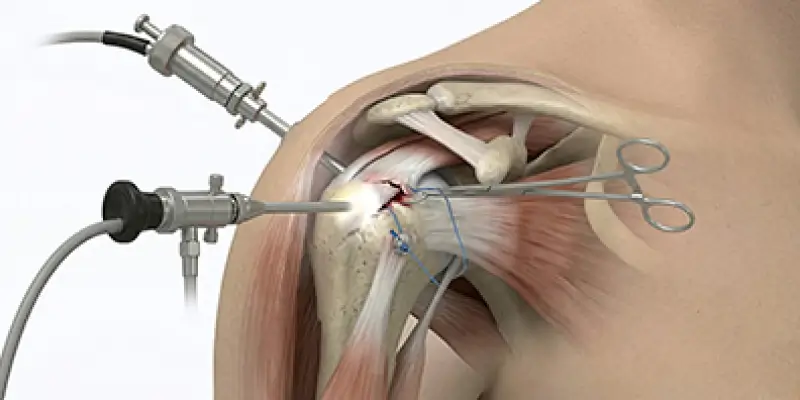
Shoulder arthroscopy is a modern surgical procedure used to diagnose and treat damage in the shoulder joint with a minimally invasive method. Compared with conventional open surgery, this procedure is done through much smaller incisions using a special camera (arthroscope) and thin surgical instruments. The surgeon can thereby examine the inner structure of the shoulder in magnified detail and perform the necessary repairs.
Shoulder arthroscopy is preferred especially in situations such as Bankart lesions, rotator cuff tears, labrum injuries, shoulder dislocations, and chronic instability. During the procedure the surgeon stitches or fixes worn or torn tissues, restoring function and stability of the shoulder.
Advantages:
- Minimally invasive: It is done through small incisions, so tissue damage is minimal.
- Rapid recovery: Compared with conventional open surgery, hospital stay and recovery are shorter.
- Less pain and complication risk: Postoperative pain and infection risk are low.
- Functional recovery: Range of motion and muscle strength of the shoulder are preserved; sport or daily activities are regained more quickly.
Shoulder arthroscopy allows the surgeon to see inside the joint in detail, enabling both a correct diagnosis and targeted treatment. It is therefore an effective method for protecting shoulder health both for athletes and for people who are active in daily life.
What Is a Bankart Lesion?
A Bankart lesion is one of the most common ligament and labrum injuries in the shoulder. It usually forms after a shoulder dislocation and leads to tearing of the glenoid labrum together with the anteroinferior ligaments in the front-lower part of the shoulder. The labrum is a cartilage structure that provides stability to the shoulder; in a Bankart lesion this structure is injured and the shoulder becomes more prone to recurrent dislocations and instability.
Mechanism of a Bankart Lesion
- A sudden fall or a direct blow onto the shoulder
- Reverse or exaggerated movement of the shoulder during sports
- Recurrent shoulder dislocations and chronic instability
Symptoms
- Recurrent dislocation or a giving-way feeling in the shoulder
- Pain and tenderness in the front-lower shoulder region
- Weakness in the arm and limited motion
- Sudden instability and loss of confidence during sports
Important Points
- If a Bankart lesion is not treated, shoulder dislocations can become chronic and cartilage damage can form in the joint.
- Diagnosis is usually made with MRI and arthroscopic evaluation.
- Among treatment options, arthroscopic Bankart repair is the most preferred method; the labrum and ligaments are thereby stabilized and normal function of the shoulder is restored.
A Bankart lesion directly affects shoulder health especially in athletes and young, active people. With correct diagnosis and arthroscopic intervention, shoulder instability is prevented and the risk of recurrent dislocation is reduced.
What Is the Rotator Cuff?
The rotator cuff is a critical structure made of four muscles and tendons that provide movement and stability of the shoulder. These muscles and tendons keep the humeral head fixed in the glenoid socket and enable the arm to be lifted, rotated, and moved in various directions.
Structures That Form the Rotator Cuff
- Supraspinatus: Involved in lifting the arm to the side.
- Infraspinatus: Provides external rotation of the arm.
- Teres minor: Assists in external rotation of the arm and contributes to shoulder stability.
- Subscapularis: Involved in internal rotation of the arm and supports front shoulder stability.
Rotator Cuff Tears
- Rotator cuff tears present with pain, limited motion, and loss of strength in the shoulder.
- Tears usually form as a result of:
- Sudden trauma from sport or overload
- Age-related degeneration
- Repeated microtrauma and strenuous movements
Symptoms
- Pain in the shoulder especially during lifting and rotating
- Night pain and discomfort during sleep
- Inability to move the arm at certain angles
- Muscle weakness and loss of function
Important Points
- If rotator cuff tears are not treated, shoulder mobility decreases and cartilage damage can develop.
- Arthroscopic rotator cuff repair restores shoulder function and range of motion by fixing the tendons to bone again.
The rotator cuff is vital for shoulder health and daily activities. In situations of shoulder pain, weakness, or instability, early evaluation and, if needed, arthroscopic intervention are recommended.
Why Is Shoulder Arthroscopy Done?
Shoulder arthroscopy is used to diagnose and treat problems inside the joint with a minimally invasive method. In situations such as Bankart lesions and rotator cuff tears, surgical intervention is critical for restoring shoulder function and preventing further injuries.
Repair of Bankart Lesions
- A Bankart lesion is characterized by a tear of the anteroinferior labrum of the shoulder and can cause recurrent dislocations.
- With an arthroscopic method the labrum and anteroinferior ligaments are repaired, shoulder stability is provided, and the risk of recurrent dislocation is reduced.
Treatment of Rotator Cuff Tears
- Rotator cuff tears form as a result of rupture or injury of muscles and tendons.
- With arthroscopy the tendons are fixed to bone, pain is reduced, and arm mobility is restored.
Correction of Labrum and Cartilage Damage
- Labrum or cartilage damage in the shoulder can lead to limited motion and pain.
- Arthroscopic surgery repairs the damaged tissue, restores the joint surface, and protects joint health in the long term.
Treatment of Shoulder Instability
- Chronic shoulder instability or recurrent dislocations restrict daily life and sports.
- With an arthroscopic method, ligaments and soft tissues are stabilized so that normal mobility of the shoulder is provided.
Advantages
- Because it is done through small incisions, tissue damage is minimal.
- Hospital stay is short and recovery is rapid.
- Return of athletes and active people to daily and sports activities is easier.
With correct diagnosis and targeted intervention, shoulder arthroscopy reduces shoulder pain, restores mobility, and protects long-term joint health.
How Is Shoulder Arthroscopy Performed?
Shoulder arthroscopy is a procedure done with minimally invasive surgical techniques in which damage in the shoulder is evaluated for both diagnosis and treatment. An arthroscope (camera) and surgical instruments are placed in the joint through small incisions, so the surgeon can view the inside of the joint in magnified form and perform the necessary repairs.
Preparation and Anesthesia
- The procedure is usually done under general anesthesia.
- The shoulder is prepared in a sterile way and the patient is placed in an appropriate position (usually lateral decubitus or beach-chair position).
Incisions and Access
- Several small incisions (0.5–1 cm) are made in the shoulder.
- The arthroscope is inserted through one incision and the inside of the joint is viewed in detail.
- Surgical instruments are inserted through the other incisions to perform the repair.
Surgical Intervention
- Bankart repair: The torn labrum and anteroinferior ligaments are stitched to provide shoulder stability.
- Rotator cuff repair: Torn tendons are fixed to bone with anchors or sutures.
- When needed, labrum, cartilage, or other soft-tissue injuries are repaired.
Duration and Recovery
- The procedure usually lasts 1–2 hours.
- Thanks to small incisions, postoperative pain is minimal.
- The patient is usually discharged the same day or after 1 night in hospital.
Advantages
- Minimally invasive: Large incisions are not needed; tissue damage is limited.
- Faster recovery and a short hospital stay
- Lower complication risk
- Early return to activity for athletes and active people
Arthroscopic Bankart Repair
Arthroscopic Bankart repair is a minimally invasive surgical method used for anteroinferior shoulder dislocations and Bankart lesions. This procedure provides shoulder stability by fixing the labrum tissue and anteroinferior ligaments in the shoulder again and prevents recurrent dislocations.
Evaluation Before the Procedure
- MRI and physical examination determine the location and size of the Bankart lesion and accompanying other shoulder injuries.
- The surgeon plans graft and suture techniques.
Surgical Technique
- The arthroscope is placed in the joint through small incisions and the damaged labrum is viewed.
- The torn labrum tissue is pulled back into place and anchors or special sutures are used to fix it.
- The anteroinferior ligaments are also stabilized so that natural movement and stability of the shoulder are restored.
Advantages
- Faster recovery thanks to the minimally invasive method
- Less pain and a shorter hospital stay
- Natural range of motion of the shoulder is preserved
- Early activities for athletes and people with an active lifestyle
Recovery and Rehabilitation
- In the first weeks a sling is used and passive movements are applied.
- In the intermediate period, controlled active movements and light resistance exercises begin.
- In the advanced period, functional and strengthening exercises provide return to full activity.
Arthroscopic Bankart repair not only prevents recurrent shoulder dislocations but also protects stability and function of the shoulder in the long term, allowing a safe return to daily life and sports.
Rotator Cuff Repair
Rotator cuff repair is a surgical procedure that fixes torn tendons and muscles in the shoulder to bone again with an arthroscopic method. This procedure is done to restore shoulder mobility, reduce pain, and protect joint health in the long term.
Rotator Cuff Tears and Causes
- Age-related degeneration: Weakening of the tendons over time
- Sport or heavy lifting: Sudden trauma and strenuous movements
- Repeated microtrauma: Especially in athletes who do overhead (arm-raising) movements
Surgical Technique
- The shoulder joint is examined with the help of an arthroscope and torn tendons are identified.
- Torn tendons are fixed to bone with anchors or sutures.
- When needed, labrum or cartilage injuries are also repaired.
- Thanks to small incisions, tissue damage is minimal and recovery is rapid.
Advantages
- Shorter recovery with a minimally invasive technique
- Less pain and complication risk
- Preservation of range of motion and muscle function of the shoulder
- Rapid return of athletes and active people to daily and sports activities
Rehabilitation Process
- Use of a sling and passive movements in the first weeks
- Controlled active movements and light resistance work between 2 and 6 weeks
- Muscle strengthening and functional exercises at 6–12 weeks
- Return to full activity and sports within 3–6 months
Rotator cuff repair restores stability and mobility of the shoulder, allowing daily activities and sports performance to be continued safely.
Rehabilitation After Shoulder Arthroscopy
The rehabilitation process after shoulder arthroscopy is critical for restoring shoulder function after both Bankart repair and rotator cuff repair. A well-planned program reduces pain, preserves muscle strength, restores range of motion, and minimizes the risk of another injury.
First Period (0–2 Weeks)
- Use of a sling: After surgery a sling or special supports are used to stabilize the shoulder.
- Passive movements: Passive exercises are applied with a physical therapist to provide arm movements with minimal stress.
- Pain and swelling control: Ice and medicines recommended by the physician reduce pain and swelling.
Intermediate Period (2–6 Weeks)
- Controlled active movements: The patient begins to move the shoulder with their own strength, but strenuous movements are avoided.
- Muscle strengthening: Rotator cuff muscles and muscles around the shoulder are strengthened with light resistance exercises.
- Balance and proprioceptive work: Correct movement sense is given to the shoulder joint, reducing the risk of another dislocation.
Advanced Period (6–12 Weeks)
- Functional exercises: Arm and shoulder movements are developed in a way compatible with daily activities.
- Resistance and strengthening: Muscle strength is increased using bands, light weights, or resistance machines.
- Return checks: Shoulder stability and range of motion are assessed regularly.
Return to Full Activity (3–6 Months)
- After surgical repair and muscle strengthening are complete, the patient returns to sport or intensive physical activities in a controlled way.
- For athletes, shoulder strength, flexibility, and endurance are tested.
- Strengthening and flexibility exercises are continued in the long term to prevent another injury to the shoulder.
Importance of Rehabilitation
- Early, appropriate rehabilitation restores full stability of the shoulder and increases the success of Bankart or rotator cuff repair.
- Regular physical therapy reduces the long-term risk of joint osteoarthritis and improves quality of life.
- When patients follow the rehabilitation process, they can move safely both in daily activities and in sports.
Advantages of Shoulder Arthroscopy
Shoulder arthroscopy stands out as minimally invasive surgery in problems such as a Bankart lesion and rotator cuff tears and offers many advantages compared with conventional open surgery. These advantages both shorten recovery and allow patients to regain shoulder function to a maximum.
Minimally Invasive Method
- It is done through small incisions, so tissue damage and surgical trauma are minimized.
- Recovery speeds up with less bleeding and less postoperative pain.
Rapid Recovery and a Short Hospital Stay
- Most patients can be discharged the same day or after 1 night in hospital.
- Rapid return to daily activities and light sports is possible.
Lower Complication Risk
- Risk of infection, wound problems, and postoperative pain is low.
- Thanks to minimal trauma to the shoulder, long-term problems decrease.
Functional and Aesthetic Advantages
- Range of motion of the shoulder is preserved and loss of strength remains at a minimum.
- Thanks to small incisions, a better aesthetic result is obtained.
Early Return to Sport and Activity
- Especially for athletes and people with an active lifestyle, functional stability and strength are regained.
- With planned rehabilitation, patients can return safely to sport and intensive physical activities in a short time after surgery.
Shoulder arthroscopy stands out as an ideal surgical method for both Bankart repair and rotator cuff repair. Thanks to its minimally invasive approach, rapid recovery, low complication risk, and early return to activity, it is an effective method for protecting shoulder health both in daily life and in sports performance.
Conclusion
Shoulder arthroscopy is a modern surgical approach that provides minimally invasive diagnosis and treatment of shoulder-specific problems such as Bankart lesions and rotator cuff tears. This procedure is critical for restoring stability in the shoulder, reducing pain, and restoring mobility.
Bankart lesions lead to recurrent shoulder dislocations and anteroinferior labrum tears, while rotator cuff tears can limit lifting and rotating movements of the arm. With arthroscopic intervention these structures are repaired, the labrum and tendons are fixed, joint stability is restored, and the risk of long-term joint damage is reduced.
The rehabilitation process plays a decisive role in the success of surgery. The process that starts with passive movements and pain control in the first weeks continues with muscle strengthening, functional exercises, and restoration of shoulder balance in the intermediate and advanced periods. At the end of a 3–6 month controlled process, the patient can return safely both to daily activities and to sport.
Advantages of the arthroscopic approach include minimal incisions, rapid recovery, less pain, low complication risk, and aesthetic results. These features are of great importance for protecting shoulder health especially in people with an active lifestyle and in athletes.
In summary, shoulder arthroscopy is a safe, effective method that, together with Bankart repair and rotator cuff repair, restores shoulder function, provides stability, and improves quality of life.
Frequently Asked Questions

Specialist Opinion
Shoulder arthroscopy is a modern surgical approach that provides minimally invasive diagnosis and treatment of shoulder-specific problems such as Bankart lesions and rotator cuff tears. This procedure is critical for restoring stability in the shoulder, reducing pain, and restoring mobility.
Bankart lesions lead to recurrent shoulder dislocations and anteroinferior labrum tears, while rotator cuff tears can limit lifting and rotating movements of the arm. With arthroscopic intervention these structures are repaired, the labrum and tendons are fixed, joint stability is restored, and the risk of long-term joint damage is reduced.
The rehabilitation process plays a decisive role in the success of surgery. The process that starts with passive movements and pain control in the first weeks continues with muscle strengthening, functional exercises, and restoration of shoulder balance in the intermediate and advanced periods. At the end of a 3–6 month controlled process, the patient can return safely both to daily activities and to sport.
Advantages of the arthroscopic approach include minimal incisions, rapid recovery, less pain, low complication risk, and aesthetic results. These features are of great importance for protecting shoulder health especially in people with an active lifestyle and in athletes.
In summary, shoulder arthroscopy is a safe, effective method that, together with Bankart repair and rotator cuff repair, restores shoulder function, provides stability, and improves quality of life.
Contact us to have your symptoms assessed and to learn about treatment options that may be right for you. Get in touch .
Frequently Asked Questions
It is suitable for people with recurrent shoulder dislocations and a Bankart lesion; patients with rotator cuff tears, labrum or cartilage damage; and athletes and people who are active in daily life.
The first 0–2 weeks involve a sling and passive movements; 2–6 weeks, controlled active movements and light resistance exercises; 6–12 weeks, functional exercises and muscle strengthening; at 3–6 months, sport and intensive activities start in a controlled way.
Bankart repair provides shoulder stability by fixing the anteroinferior labrum and ligaments, preventing recurrent dislocations. Rotator cuff repair fixes torn tendons to bone, restoring shoulder mobility and arm strength.
Thanks to the minimally invasive technique, postoperative pain decreases in a short time. Complication risk is low; infection, bleeding, and joint stiffness are uncommon.
When the rehabilitation program is followed, return to full activity is achieved between 3 and 6 months. For athletes, a safe return is made with special strengthening and balance tests.
It is minimally invasive and done through small incisions; recovery is rapid and hospital stay is short; there is less pain and complication risk; range of motion and function of the shoulder are preserved; early return to sport and daily activities.
 WhatsApp
  Facebook
  Twitter
  Linkedin


 +90 505 398 34 34
 doctoryavuzarikan@gmail.com
 Book Appointment / Contact