

Meniscus Repair and Transplant


What Is the Meniscus?
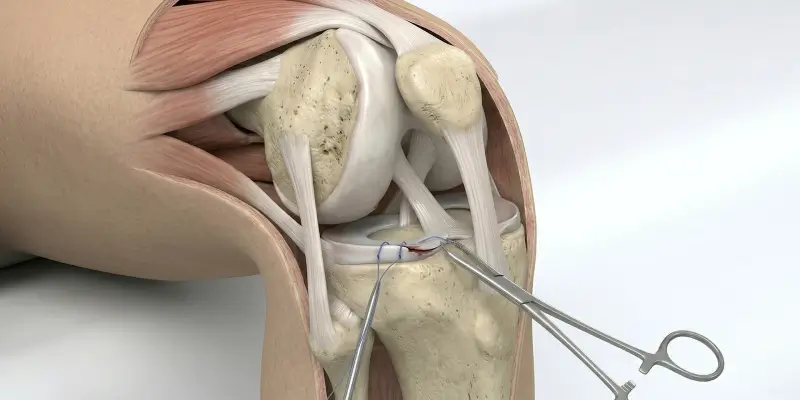
The menisci are C-shaped cartilage structures in the knee that protect joint health and are of vital importance. There is one meniscus on each side of the knee: the inner (medial) meniscus and the outer (lateral) meniscus. These cartilage structures prevent the bones from rubbing against each other, balance load distribution, and provide joint stability.
The meniscus also acts as a shock absorber of the knee and protects against trauma that may form in the joint during sudden movements. Structurally elastic and fibrocartilaginous, the meniscus offers both flexibility and durability.
Functions of the Meniscus
- Load distribution: Ensures that body weight is distributed evenly to the knee.
- Joint stability: Supports turning and bending movements of the knee.
- Reducing friction: Prevents direct contact between the femur and tibia.
- Cartilage nutrition: Spread of joint fluid through the meniscus contributes to nutrition of cartilage tissue.
Risk Factors for Meniscus Damage
- Sports injuries: Sports such as football, basketball, skiing, and tennis
- Aging and degeneration: Meniscus tissue thins over time and becomes more prone to tearing
- Trauma: Sudden turning or overload of the knee
A healthy meniscus is critical for knee joint health and mobility. A damaged meniscus can lead to problems such as pain, swelling, locking of the knee, and limited motion, so early diagnosis and appropriate treatment are very important.
Meniscus Tear and Causes
A meniscus tear is partial or complete disruption of the inner (medial) or outer (lateral) meniscus tissue in the knee. This condition leads to symptoms such as pain, swelling, locking, and limited motion. Meniscus tears can form both for traumatic reasons in young, active people and as a result of degenerative processes in older people.
Traumatic Meniscus Tears
- They are usually seen in athletes or people with an active lifestyle.
- Sudden turning, rapidly changing direction, or a direct blow to the knee can lead to meniscus tears.
- Risk is higher in sports such as football, basketball, skiing, tennis, and volleyball.
- Traumatic tears usually present with sudden pain and swelling in the knee.
Degenerative Meniscus Tears
- They are seen more in older people and those over 40.
- Meniscus tissue weakens with age, loses elasticity, and can tear even with a small strain.
- They are usually seen together with mild or moderate pain, joint stiffness, and osteoarthritis.
Risk Factors
- Age: Aging of meniscus tissue increases tear risk.
- Sport and physical activity: High-pace sports and sudden movements strain the meniscus.
- Joint structure: Anatomic differences in the knee or varus/valgus deformities can raise tear risk.
- Obesity: Extra weight increases load on the knees and strains meniscus tissue.
- Previous knee injuries: Anterior cruciate ligament (ACL) or other joint injuries raise meniscus tear risk.
Symptoms
- Sudden or ongoing pain in the knee
- Swelling and increased warmth
- A locking or catching feeling in the knee
- Difficulty going up and down stairs or squatting
- Limited motion and instability in joint movements
What Is Meniscus Repair?
Meniscus repair is the procedure of surgically stitching or repairing torn or damaged meniscus tissue so that it becomes functional again. This procedure is preferred especially in young, active people to preserve the natural structure of the knee, provide joint stability, and prevent joint osteoarthritis that may form later.
Meniscus repair is mostly done today with arthroscopic surgical methods in a minimally invasive way. Surgical incisions are thereby small, recovery is shorter, and complication risk is minimal.
Who Is Meniscus Repair For?
- If the torn meniscus tissue has adequate blood flow
- If there is no serious osteoarthritis or degenerative change in the joint
- If the patient’s general health is suitable for surgery
Techniques Used
- Arthroscopic suturing: The torn meniscus region is stitched through small incisions with an arthroscope.
- Meniscus rim repair: The edge of the tear is repaired so that the tissue can heal.
- Meniscus resection (partial): In tears that cannot be repaired, only the damaged tissue is removed; healthy meniscus is preserved.
Advantages of Meniscus Repair
- Preserves joint function and provides stability in the knee
- Reduces pain and increases mobility
- Reduces the risk of knee osteoarthritis later
- Rapid recovery and a short hospital stay thanks to minimally invasive methods
Rehabilitation and Recovery
- Swelling and mild pain in the knee after surgery are normal.
- Loading on the knee is restricted for the first 2–6 weeks.
- Range of motion and muscle strength are regained with a physical therapy program.
- Full recovery usually lasts 2–3 months; return to active sport is done under a physician’s supervision.
What Is Meniscus Transplant (Allograft)?
Meniscus transplant is the procedure of transplanting healthy meniscus tissue taken from a donor into the knee in place of a damaged meniscus or one that was previously completely removed. This procedure is preferred especially in young, active patients when meniscus loss has disrupted joint function and caused pain. Meniscus transplant is an effective treatment used to protect knee joint health, provide load distribution in the joint, and prevent joint osteoarthritis (osteoarthritis) that may form later.
Who Is Meniscus Transplant For?
- Patients whose entire meniscus was previously removed
- People without serious loss of stability in the knee and with relatively healthy joint cartilage
- Patients with an active lifestyle who have pain and loss of function
Meniscus Transplant Methods
- Allograft transplant: Meniscus tissue taken from a donor is prepared with special processes and placed surgically in the patient’s knee.
- Arthroscopic application: The transplant is performed with a minimally invasive technique, so recovery is shorter and complication risk decreases.
- Osteochondral support: In some cases, meniscus transplant can be combined with stem cells or biological support to support joint cartilage damage.
Advantages of Meniscus Transplant
- Preserves knee joint function and increases stability
- Reduces pain and makes daily activities easier
- Reduces the risk of progressive knee osteoarthritis
- Provides an early return to performance in athletes
- Recovery is short thanks to the minimally invasive method
Rehabilitation and Recovery
- Loading on the knee is restricted for the first 4–6 weeks after transplant
- Range of motion and muscle strength are regained with physical therapy
- Full recovery usually lasts 3–6 months, and return to sports is provided under a physician’s supervision
Methods Used in Meniscus Tear and Transplant
In meniscus tears and losses, meniscus repair or transplant is planned according to the patient’s age, activity level, and the degree of damage in the knee. Today, minimally invasive applications with arthroscopic surgical techniques are at the forefront. These methods both shorten recovery and help preserve joint function.
Meniscus Repair Methods
- Arthroscopic suturing:
- The meniscus tear is stitched with an arthroscopic camera and special suture devices.
- Because it is a minimally invasive method, hospital stay is short.
- It is especially successful in the rim regions of the meniscus.
- Meniscus rim repair:
- The edge of the tear is stitched so that healing of the tissue is encouraged.
- The healthy part of the meniscus is preserved and joint stability is increased.
- Partial meniscus resection:
- In tears that cannot be repaired, only the damaged tissue is removed so that the remaining part of the meniscus is preserved.
- Recovery after surgery is rapid, but the integrity of the meniscus is not fully provided.
Meniscus Transplant Methods
- Allograft transplant:
- Meniscus tissue taken from a donor is transplanted to the patient after special processing.
- It is preferred to preserve joint function and reduce pain.
- Arthroscopic meniscus transplant:
- The transplant is performed with a minimally invasive technique.
- Recovery is shorter and surgical complication risk in the knee decreases.
- Biologically supported transplant:
- Transplants combined with stem cells or growth factors support renewal of meniscus tissue and strengthening of connective tissue.
Importance of Rehabilitation
- After surgery, physical therapy and controlled exercises increase range of motion and muscle strength of the knee.
- Loading restriction is applied in the first weeks, then a gradual return to daily activities is provided.
- Rehabilitation is a critical part of success in both meniscus repair and transplant.
Symptoms of Meniscus Damage
If meniscus tears or injuries are not noticed early, they can seriously affect knee function. Symptoms of meniscus damage may vary with the type, location, and size of the tear. Early diagnosis increases the chance of success for both meniscus repair and meniscus transplant.
Pain and Tenderness
- Pain is felt in the knee especially in the region of the tear.
- Pain increases while walking, climbing stairs, or squatting.
- Tears in the back part of the meniscus usually cause pain when sitting and standing and during bending movements.
Swelling and Increased Warmth
- Swelling and edema may be seen in the knee after injury.
- Increased warmth and tenderness in the knee are also common findings.
Locking and Catching Feeling
- Meniscus fragments can catch between the joint, creating a locking or catching feeling in the knee.
- Locking is usually seen in tears in the middle or back regions of the meniscus.
Limited Motion
- Difficulty with full bending or straightening of the knee may be experienced.
- Restriction and instability in movements may be seen in sport or daily activities.
Unsteadiness and Weakness
- Because meniscus damage affects stability of the knee, the knee may feel weak or unsteady during sudden turns or load changes.
Rehabilitation After Meniscus Repair and Transplant
The rehabilitation process after meniscus repair or transplant is critical for the knee to regain full function and for the tear or transplanted meniscus to heal healthily. Rehabilitation is personalized according to the surgical method and the patient’s age and activity level.
First Period (0–2 Weeks)
- Knee protection: After meniscus repair or transplant the knee is usually stabilized with support or a brace.
- Light movements: In the first days only light passive movements are applied; excessive load on the joint is avoided.
- Ice and swelling control: Ice and elevation are recommended to reduce swelling and pain.
Intermediate Period (2–6 Weeks)
- Partial loading: Controlled loading on the knee is started; walking is usually supported with a cane or walker.
- Physical therapy:
- Light range-of-motion exercises
- Low-resistance exercises that strengthen the quadriceps and hamstring muscles
- Balance and proprioceptive exercises that increase knee stability
Advanced Period (6 Weeks–3 Months)
- Full loading: The knee can now gradually carry normal load.
- Functional exercises:
- Squats, using stairs, light running, and low-impact sports movements
- Resistance work that increases muscle strength
- Support of tissue healing: Biological supports such as stem cells or PRP can be used when needed.
Full Function and Return to Sport (3–6 Months)
- Full recovery after meniscus repair or transplant usually lasts 3–6 months.
- In athletes and active people, sports are restarted when tenderness and pain are gone.
- Recurrence risk decreases with regular physical therapy and a knee-strengthening program.
Importance of Rehabilitation
- Without appropriate rehabilitation, the risk of the meniscus tearing again or failure after transplant increases.
- Thanks to physical therapy, range of motion, muscle strength, and stability of the knee are preserved.
- In the long term, the risk of knee osteoarthritis is also reduced.
Advantages of Meniscus Repair and Transplant
Meniscus repair and transplant are effective surgical methods used to protect knee joint health and improve quality of life. With the correct technique and appropriate rehabilitation, both pain is reduced and knee function is preserved.
Preserving Joint Function
- Meniscus repair and transplant preserve range of motion and stability in the knee.
- Locking of the knee and limited motion that may form because of a torn or missing meniscus are prevented.
- Load distribution in the joint is kept at a normal level, and bone and cartilage tissues are protected.
Reducing Pain and Swelling
- After surgical repair or transplant, pain in the knee decreases and swelling and inflammation are controlled.
- Restrictions related to knee pain, especially in active athletes and in daily life, are relieved.
Preventing Progressive Joint Osteoarthritis
- Preserving or transplanting meniscus tissue reduces the risk of osteoarthritis (joint wear) in the knee.
- It provides protection against joint disruption that may form with advancing age in young, active people.
Minimally Invasive Surgery and Rapid Recovery
- Thanks to arthroscopic techniques, surgery is done through small incisions, complication risk decreases, and recovery is shorter.
- Patients can usually return to daily activities quickly.
Early Return to Sport and Activity
- With appropriate rehabilitation after repair or transplant, athletes can continue their active lives in a short time.
- Knee stability and muscle strength are preserved with functional exercises.
Long-term Knee Health
- Preserving or transplanting meniscus tissue allows the knee to stay healthy for a long time.
- It is important for improving quality of life and preserving knee mobility in both young and middle-aged patients.
Conclusion
Meniscus repair and transplant are critical orthopedic surgical methods used to protect knee joint health, reduce pain, and maintain joint function. The menisci are C-shaped cartilage structures that provide load distribution in the knee, absorb shock, and support joint stability. A torn or missing meniscus can lead to problems such as pain, swelling, locking, and limited motion in the knee.
Meniscus tears can be seen both for traumatic reasons in young, active people and in degenerative processes with age. Early diagnosis therefore increases the chance of success for both meniscus repair and, if needed, meniscus transplant (allograft).
Meniscus repair is done in a minimally invasive way with arthroscopic surgery; the torn meniscus is restored to its previous function by stitching or rim repair. Advantages of repair include preservation of joint function, reduced pain, prevention of progressive knee osteoarthritis, and a short recovery.
Meniscus transplant is the procedure of adding healthy meniscus tissue taken from a donor in place of a previously removed or seriously damaged meniscus. Transplant is used especially in young, active patients to provide stability of the knee, reduce pain, and prevent knee osteoarthritis.
For both methods, the rehabilitation process is of great importance. Loading on the knee is restricted in the first weeks, then range of motion and muscle strength are regained with controlled exercise and physical therapy. Rehabilitation secures the long-term health of the knee after both repair and transplant.
Frequently Asked Questions

Specialist Opinion
Meniscus repair and transplant are critical orthopedic surgical methods used to protect knee joint health, reduce pain, and maintain joint function. The menisci are C-shaped cartilage structures that provide load distribution in the knee, absorb shock, and support joint stability. A torn or missing meniscus can lead to problems such as pain, swelling, locking, and limited motion in the knee.
Meniscus tears can be seen both for traumatic reasons in young, active people and in degenerative processes with age. Early diagnosis therefore increases the chance of success for both meniscus repair and, if needed, meniscus transplant (allograft).
Meniscus repair is done in a minimally invasive way with arthroscopic surgery; the torn meniscus is restored to its previous function by stitching or rim repair. Advantages of repair include preservation of joint function, reduced pain, prevention of progressive knee osteoarthritis, and a short recovery.
Meniscus transplant is the procedure of adding healthy meniscus tissue taken from a donor in place of a previously removed or seriously damaged meniscus. Transplant is used especially in young, active patients to provide stability of the knee, reduce pain, and prevent knee osteoarthritis.
For both methods, the rehabilitation process is of great importance. Loading on the knee is restricted in the first weeks, then range of motion and muscle strength are regained with controlled exercise and physical therapy. Rehabilitation secures the long-term health of the knee after both repair and transplant.
Contact us to have your symptoms assessed and to learn about treatment options that may be right for you. Get in touch .
Frequently Asked Questions
Sudden turning or loading; sports injuries (football, basketball, skiing); weakening of meniscus tissue with age (degenerative tears); and anterior cruciate ligament (ACL) or other knee injuries can lead to a meniscus tear.
In repair, existing meniscus tissue is stitched or repaired so that it functions again. In transplant, a meniscus taken from a donor is added if the meniscus is completely lost or seriously damaged.
Yes. Arthroscopic techniques are minimally invasive; hospital stay is short and complication risk is low. Success increases with rehabilitation.
After repair, return to daily activities is possible in about 2–3 months. After transplant it may take 3–6 months; return to sports is done under a physician’s supervision.
Absolutely. Rehabilitation restores range of motion, muscle strength, and stability of the knee and reduces recurrence risk.
Yes, mild pain and swelling in the first weeks are normal. They can be controlled with ice, elevation, and painkillers recommended by the physician.
After repair, about 8–12 weeks; after transplant, 4–6 months. Full function, muscle strength, and stability of the knee are important for a rapid return.
Yes. Repair or transplant preserves load distribution in the knee and reduces the risk of osteoarthritis related to meniscus loss.
 WhatsApp
  Facebook
  Twitter
  Linkedin



 +90 505 398 34 34
 doctoryavuzarikan@gmail.com
 Book Appointment / Contact