

How Often Should Dressings Be Changed? When Are Sutures Removed?


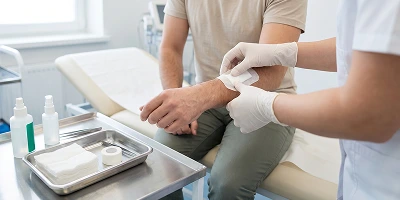
Wound care after surgery plays a critical role in recovery. Managing dressings and sutures at the right time and in the right way reduces infection risk, speeds wound healing, and prevents postoperative complications. Many patients encounter questions such as “How often should dressings be changed?” and “When are sutures removed?” The answers can vary with the type of surgery, the location of the wound, the patient’s general health, and the surgeon’s preferences.
The Purpose and Importance of Dressing
A dressing is applied after surgery to keep the wound clean, reduce infection risk, and protect the wound. According to Prof. Dr. Yavuz Arıkan, the sterile covering applied to the wound reduces contact with the outside environment and protects the wound’s moisture balance. A correct dressing helps the wound heal faster and reduces irritation of the surrounding skin.
The main purposes of dressing are:
- Keeping the wound area clean and dry
- Reducing infection risk
- Protecting the area around the wound
- Protecting the sutures and surgical field safely
- Supporting wound healing
Correct dressing becomes even more important after major procedures such as joint replacement. Infection can lead to serious complications when a foreign body such as an implant is present.
How Often Should Dressings Be Changed?
Dressing frequency varies with the type of surgery, the wound’s condition, and the surgeon’s recommendation. As a general rule, dressings are done more often in the first days after surgery and the frequency decreases as the wound becomes stable.
Factors that affect dressing frequency:
- Type and extent of surgery
- Whether the wound has a drain
- Whether there is bleeding or leakage around the wound
- The patient’s infection-risk factors (diabetes, weakened immune system, and similar)
- The wound’s moisture status and scabbing process
In most surgical procedures, dressing is planned as follows:
- First 24–48 hours: daily dressing
- Days 2–7: dressing every 2–3 days
- Days 7–14: once a week or according to the surgeon’s recommendation
These times are a general framework and may change with the patient’s condition. In wounds with drains, dressing may be done more often. If there is discharge, redness, or a bad odor around the wound, dressing frequency is increased and the doctor is contacted.
The Setting of Dressing and Hygiene
Doing the dressing in a sterile setting reduces infection risk. In hospital, dressing is usually done by a nurse or doctor. If dressing is done at home, the patient and relatives must observe hygiene rules.
Points to watch when dressing at home:
- Washing hands with soap and water
- Using sterile gloves
- Dressing materials being sterile and clean
- Cleaning the area around the wound
- Seeing and checking the wound during dressing
When dressing at home, excessive pressure should not be applied to the wound, and the tightness of the dressing should be appropriate. If redness, discharge, or a bad odor is noticed around the wound during dressing, the doctor should be contacted.
When Are Sutures Removed?
The time of suture removal varies with the location of the wound, the suture material used, and the surgeon’s preference. In general, sutures are removed when wound healing is adequate. This period usually varies between:
- Face: 5–7 days
- Chest and abdomen: 7–10 days
- Arm and leg: 10–14 days
After major procedures such as joint replacement, the time of suture removal may change according to the surgeon’s assessment.
The wound’s healing status is assessed before sutures are removed. If the wound edges have come together, redness has decreased, and there is no discharge, suture removal is safe. Removing sutures too early can cause the wound to open; removing them too late can increase scarring.
How Is Suture Removal Done?
Suture removal is usually a short, painless procedure. Before sutures are removed, the wound area is cleaned and a local antiseptic is applied if needed. Sutures are cut and removed with a special forceps or scissors.
There may be a mild pulling sensation during suture removal, but pain is usually very little. After sutures are removed, the wound area is cleaned and a protective dressing is applied if needed.
Points to Watch in Dressing and Suture Care
There are some important points patients should watch during wound care after surgery. These reduce infection risk and support wound healing.
Points to watch:
- Keeping the wound area dry and clean
- Preventing the dressing from getting wet
- Contacting the doctor if there is redness, swelling, or discharge around the wound
- Avoiding heavy exercise and sudden movements
- Smoking adversely affects wound healing; it should be stopped if possible
- Keeping chronic conditions such as diabetes under control
- Nutrition being adequate in protein and vitamins
These measures speed wound healing and reduce complication risk.
Signs of Wound Infection and When to See a Doctor
Wound infection is one of the most important complications after surgery. If infection is noticed early, treatment is easier. Patients should therefore check the wound area regularly.
Signs of wound infection include:
- Increasing redness around the wound
- Increased warmth
- Severe pain
- Discharge and a bad odor
- Fever
- Separation of the wound edges
If any of these signs is seen, the doctor should be contacted as soon as possible. Infection is treated with antibiotics and, if needed, a change of dressing. In some cases drainage or additional surgery may be required.
Conclusion and Overall Assessment
Dressing and suture care after surgery is one of the most critical stages of recovery. Doing the dressing at the right frequency, keeping the wound clean and dry, and removing sutures at the appropriate time reduce infection risk and speed healing. In this process it is important for the patient to follow the surgeon’s recommendations and to check the wound area regularly.
According to the clinical assessments of Prof. Dr. Yavuz Arıkan, the answer to how often dressings should be changed and when sutures should be removed varies with the type of surgery and the patient’s condition. The most correct approach is therefore for the patient to follow the plan recommended by their surgeon. Contacting the doctor when there is any doubt or problem in wound care plays a critical role in preventing complications.
Frequently Asked Questions About Dressings and Sutures

Specialist Opinion
Dressing and suture care after surgery is one of the most critical stages of recovery. Doing the dressing at the right frequency, keeping the wound clean and dry, and removing sutures at the appropriate time reduce infection risk and speed healing. In this process it is important for the patient to follow the surgeon’s recommendations and to check the wound area regularly.
According to the clinical assessments of Prof. Dr. Yavuz Arıkan, the answer to how often dressings should be changed and when sutures should be removed varies with the type of surgery and the patient’s condition. The most correct approach is therefore for the patient to follow the plan recommended by their surgeon. Contacting the doctor when there is any doubt or problem in wound care plays a critical role in preventing complications.
Contact us to have your symptoms assessed and to learn about treatment options that may be right for you. Get in touch .
Frequently Asked Questions
The first dressings are usually done in hospital. When home dressing is needed, the surgeon or nurse informs the patient about the correct technique and frequency.
The dressing is removed according to the time recommended by the surgeon. Early change may be needed if the dressing gets wet or dirty.
Suture removal is usually painless. There may be a mild pulling sensation, but most patients tolerate it comfortably.
Limiting water contact with the suture area is important. Showering and bathing may be limited until the time recommended by the surgeon. In some cases a water-resistant dressing can be used.
The suture mark usually fades over time. Good wound care, not smoking, balanced nutrition, and sun protection reduce scarring.
 WhatsApp
  Facebook
  Twitter
  Linkedin



 +90 505 398 34 34
 doctoryavuzarikan@gmail.com
 Book Appointment / Contact