

How Much Should I Be Able to Bend My Knee? Ideal Angles


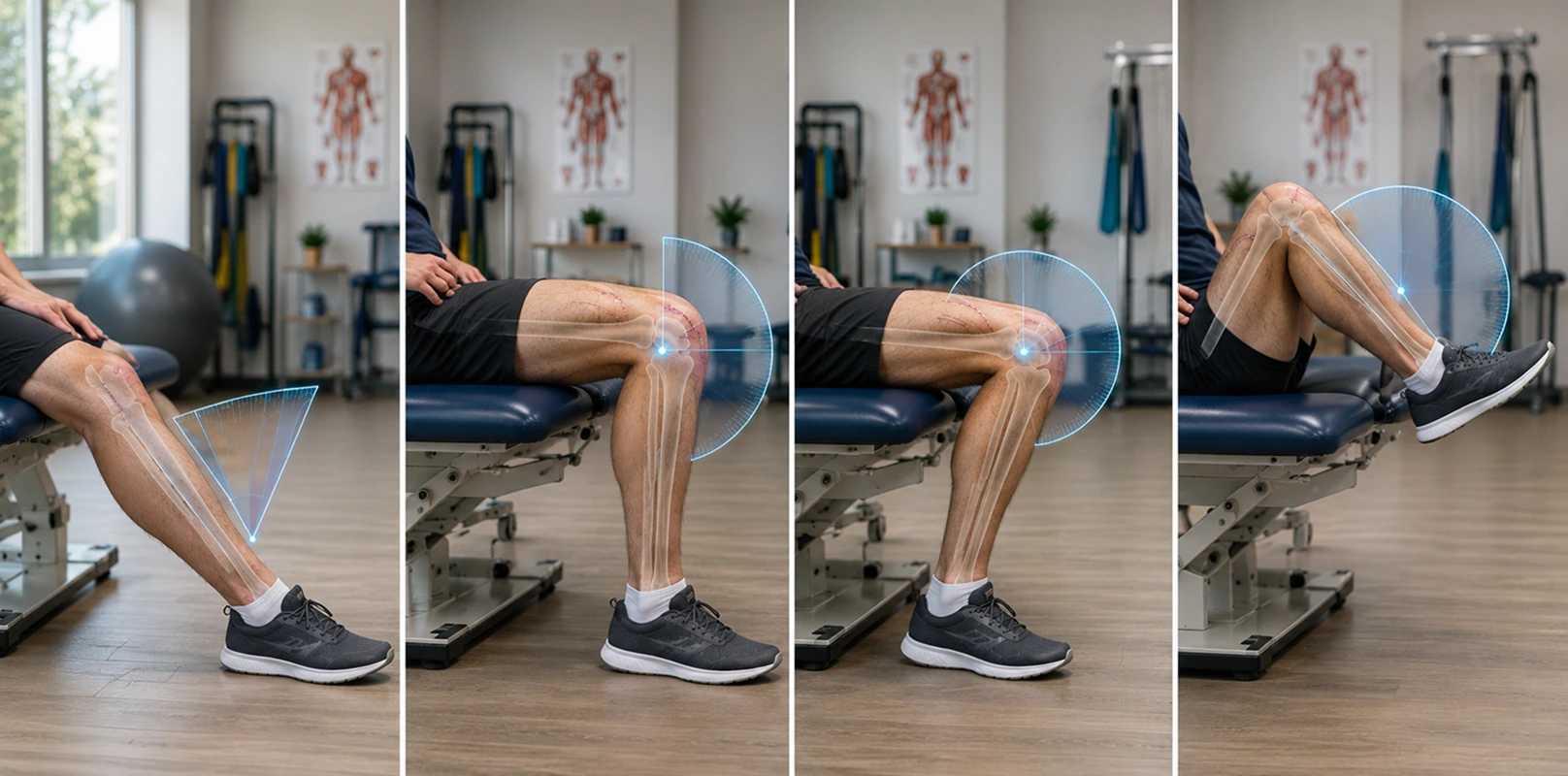
The knee is one of the body’s most complex and most heavily loaded joints. A large share of daily activities is related to bending the knee. Sitting, squatting, using stairs, walking, and sport all require the knee to bend to certain angles. Knee range of motion therefore matters both for quality of life and for the success of surgical procedures.
After procedures such as knee replacement, anterior cruciate ligament (ACL) reconstruction, and meniscus repair, one of the questions patients ask most is “How much should I be able to bend my knee?” The answer varies with the type of surgery, the patient’s age, anatomy, and rehabilitation. There are, however, some standards for the ideal flexion angle and targeted range of motion. This article covers ideal knee flexion angles, which movements require which angles, how postoperative targets are set, and points to watch while bending the knee.
What Is Knee Range of Motion and Why Does It Matter?
Knee range of motion (ROM) is the knee’s capacity to bend and straighten. The knee joint can normally provide about 0 degrees of full extension and up to 135 degrees of flexion. These values vary from person to person. Age, muscle structure, flexibility, joint structure, and lifestyle all affect range of motion.
Range of motion is not only a matter of “how much it bends.” It also determines the knee’s functional capacity. Sitting and standing and using stairs require a certain flexion angle. In sport, the knee bends more. Adequate range of motion therefore improves quality of life.
Inadequate range of motion can cause stiffness, pain, and loss of function. This restricts daily activities and lowers quality of life. After knee replacement in particular, adequate range of motion makes implant use easier and increases patient satisfaction.
Normal Knee Flexion: Ideal Angles
A normal knee’s flexion capacity can usually reach 135 degrees. The range of motion needed for daily life is not that high. For sitting and standing and using stairs, 110–120 degrees of flexion is usually enough. The target after knee replacement is therefore usually set at a level that allows daily life to continue comfortably.
Some general thresholds for knee range of motion can be summarized as:
-
0 degrees when the knee is fully straight: this means the knee is completely extended and a straight line is formed in the leg.
-
110–120 degrees for daily activities: considered adequate for using stairs and sitting and standing.
-
120–135 degrees for sport: a higher range of motion can be targeted in people who play sport.
These values are a general guide. Each patient’s targets may differ. An athlete may target more flexion, while daily-life function may be enough for an older patient.
Ideal Flexion Angle After Knee Replacement
The ideal flexion angle after knee replacement is determined according to age, activity level, and preoperative range of motion. The aim of knee replacement is to provide knee stability and make daily life easier. After replacement, 110–120 degrees of flexion is therefore considered adequate for most patients. This angle is usually enough for stairs, sitting and standing, and daily activities.
Some patients want a more active life. In those who play sport or are younger, the targeted flexion angle may be higher. The target can then go up to 120–130 degrees. This target should be compatible with the patient’s anatomy and postoperative rehabilitation.
Flexion after knee replacement can also vary with implant type and surgical technique. Some implant types can provide more range of motion; in other cases anatomical limits may restrict flexion. Targets after replacement are therefore set according to the patient’s situation.
Knee Flexion After ACL Surgery
Range of motion after ACL surgery can return faster than after joint replacement. The target is still full range of motion. Regular exercise for full extension and flexion should be done especially in the early period. After ACL surgery, the target is usually 0 degrees of extension and 120–130 degrees of flexion. This target also matters for return to sport.
Knee flexion after ACL surgery is related to muscle strengthening and the flexibility of tissues around the joint. The rehabilitation program therefore includes both strengthening and flexibility work. In patients whose flexion is not adequate, range of motion can be increased early with physiotherapy and an exercise program.
Targets and Timing for Knee Flexion
Range-of-motion targets vary with the type of surgery. Targets after knee replacement are usually more conservative, while targets after ACL surgery may be higher. After knee replacement, 90 degrees of flexion is targeted in the first 6 weeks, and 110–120 degrees is expected within 3 months. This course may change with age and preoperative range of motion. After ACL surgery, 120 degrees of flexion is usually targeted within 3 months.
The logic behind these targets is healing of the tissues around the joint and strengthening of the muscles. If flexion does not reach the targeted level, the rehabilitation program is reviewed and additional interventions are planned if needed. Inadequate range of motion can affect knee function negatively in the long term.
The Relationship Between Knee Flexion and Pain
Pain during knee flexion is a concern for many patients. The correct approach is not to wait for pain to disappear completely, but to keep it at a tolerable level. Mild pain during flexion in the first period after surgery is normal. This pain is accepted as part of tissue healing. If pain steadily increases and swelling increases with it, the exercise program should be adjusted.
Pain during flexion may be related to muscles not being flexible enough or to stretching of tissues around the joint. Exercises should therefore be done under control, and warning signs such as swelling and pain should be followed. When pain increases, exercise intensity should be reduced and rest increased.
Practical Recommendations for Knee Flexion
The most effective way to increase knee flexion is regular exercise and movements done with the correct technique. The goal is to progress a little each day and increase flexibility. Regular application of the program recommended by the physiotherapy specialist is important. Elevation and ice to reduce swelling are also useful alongside exercises.
Care should be taken against the risk of straining the knee while increasing flexion. Situations such as “locking” or “catching” may suggest a mechanical problem inside the joint. In such cases the doctor should be contacted. If severe pain around the kneecap or a sense of slipping occurs during flexion, the exercise program should be reassessed.
Conclusion: The Ideal Knee Flexion Angle Is Individual
The knee flexion angle is not the same for everyone. Normally the knee can bend up to 135 degrees; for daily life, 110–120 degrees is usually enough. Targets after knee replacement are more conservative, while targets after ACL surgery may be higher. These targets vary with age, activity level, type of surgery, and anatomy.
Regular exercise, correct technique, and patience are needed to increase knee flexion. Warning signs such as pain and swelling during flexion should be followed. If flexion does not reach the targeted level, the program should be replanned with physiotherapy and medical review.
In conclusion, the ideal flexion angle is determined according to the person’s goals and surgical situation. Range-of-motion targets should therefore be planned individually and progressed according to specialist recommendations.
Frequently Asked Questions

Specialist Opinion
The knee flexion angle is not the same for everyone. Normally the knee can bend up to 135 degrees; for daily life, 110–120 degrees is usually enough. Targets after knee replacement are more conservative, while targets after ACL surgery may be higher. These targets vary with age, activity level, type of surgery, and anatomy.
Regular exercise, correct technique, and patience are needed to increase knee flexion. Warning signs such as pain and swelling during flexion should be followed. If flexion does not reach the targeted level, the program should be replanned with physiotherapy and medical review.
In conclusion, the ideal flexion angle is determined according to the person’s goals and surgical situation. Range-of-motion targets should therefore be planned individually and progressed according to specialist recommendations.
Contact us to have your symptoms assessed and to learn about treatment options that may be right for you. Get in touch .
Frequently Asked Questions
In a healthy knee, about 0° of full extension and up to 135° of flexion are expected. For daily life, 110–120° is enough for most people.
In most patients, 110–120° is the target. In active and younger patients, 120–130° may be possible. About 90° is expected in the first 6 weeks and 110–120° by the third month.
The target is usually 0° of extension and 120–130° of flexion. In most patients, about 120° of flexion is targeted around the third month.
Mild pain can be normal. If pain and swelling increase, the program should be adjusted and a physician consulted if needed.
No. Forcing movements can cause harm. Exercises should be controlled, at the pain limit, and under physiotherapist guidance.
Locking, catching, severe pain, a sense of giving way, or failure to progress toward the expected angle require assessment.
 WhatsApp
  Facebook
  Twitter
  Linkedin




 +90 505 398 34 34
 doctoryavuzarikan@gmail.com
 Book Appointment / Contact