

Return-to-Sport Timeline After ACL Surgery: Month-by-Month Recovery


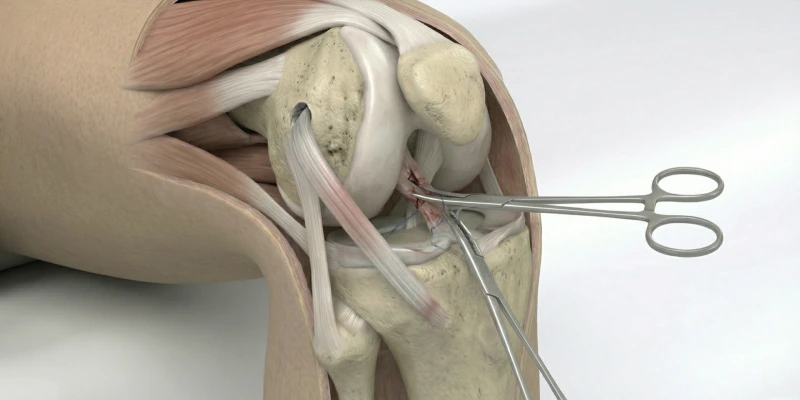
Anterior cruciate ligament (ACL) surgery is a procedure performed especially in people who play sport, to restore knee stability and make return to sport possible. Success is completed not only by surgical technique, but by disciplined postoperative rehabilitation. For an athlete or someone with an active lifestyle, the most critical question is “When can I return to sport?” The answer is determined not only by time, but by the functional level of the knee. After ACL surgery, the knee must heal, muscle strength must return, balance and proprioception must be reorganized, and psychological confidence must develop.
Month 1: The First Period After Surgery – Healing and Basic Function
The first month after surgery is when the knee heals surgically and surrounding tissues reorganize. The aims in this period are control of pain and swelling, recovery of range of motion (especially full knee extension), and keeping the muscles active even at a minimal level. Talking about sport is a very early expectation, because the knee’s load-bearing capacity is not yet adequate.
Patients usually learn basic activities such as walking and stair use in the first days. Details such as knee extension and step length during walking matter. Until full extension is achieved, excessive step length or full knee flexion during walking can cause unwanted strain. Walking therefore starts in a controlled way over short distances. Swelling may increase in the first weeks; this is usually related to excessive movement or fatigue. If swelling increases, it should be controlled with rest, elevation, and ice.
The basic goal in this period is return of the knee to normal daily function rather than sport: toilet use, dressing, indoor walking, and simple household tasks. An athlete’s mindset may create a wish to “return quickly,” but excessive loading early on can harm the knee. The first month therefore focuses not on sport, but on safely increasing the knee’s load-bearing capacity.
Month 2: Strengthening and Range of Motion – The Foundation of Sport Preparation
The second month is one of the most critical periods of rehabilitation. Range of motion increases more clearly and muscle strengthening accelerates. Activation of the quadriceps (front of the thigh) and hamstrings (back of the thigh) plays a decisive role in knee stability. The physiotherapy program intensifies with strengthening and balance work. Low-impact activities are still recommended for sport, but they become longer and more controlled.
Swelling and increased pain are among the most important indicators of rehabilitation pace. If swelling increases, exercise intensity should be reduced and rest increased. The point patients should note is not “complete absence of pain,” but “pain remaining at a tolerable level.” Some patients may feel mild pain while exercising; this is normal. If pain steadily increases and swelling accompanies it, the program should be scaled back.
A cycle ergometer can be used at low resistance. Cycling is an ideal tool for increasing range of motion and working the muscles. Walking in water or water aerobics can also be added. Water reduces load on the knee while increasing mobility. Even these activities should be seen as part of rehabilitation, not as return to sport.
Month 3: Increased Activity – First Steps Toward Running
The third month is an important turning point in return to sport. Muscle strength increases further, balance and proprioception develop, and patients can move to more active movements. The critical issue is not “how early running can start,” but whether the knee is suitable for running. Running significantly increases load on the knee, and starting too early can raise the risk of re-injury.
The physiotherapist’s and surgeon’s assessment is important in planning return to sport. If strength and control in the knee are adequate, walking pace can be increased and light-tempo walks can last longer. If a transition to running is considered, walking speed should first be increased, then short “easy run” intervals added. Before running starts, strength balance and single-leg balance control should be tested. Standing and controlling on one leg is one of the basic requirements of running.
Patients also need to become psychologically ready for sport. Some are physically ready but struggle with the transition to running because of fear of re-injury. A gradual, controlled approach then increases confidence. Return to sport is a mental process as well as a physical one.
Month 4: Running and Balance Work – Core Stages of the Transition to Sport
The fourth month is when return to sport becomes more distinct. Muscle strength and balance reach a better level, and the knee’s load-bearing capacity increases. Controlled running and jumping can therefore be added to the program. The most important point is that the “duration and intensity” of running remain controlled.
When starting a running program, short distances and a low pace should be preferred. For example, an interval program of 1–2 minutes of running followed by walking can be used. Loading of the knee is then gradual. If swelling, pain, or a sense of instability occurs during running, the program should be stopped and rest increased. Balance and proprioception work should also continue. Balance-board work, single-leg balance, and eyes-closed balance improve knee control.
Another important element of return to sport in this period is strengthening of the hip and core muscles. Knee stability is related not only to the knee muscles, but also to hip and trunk stability. Stronger hip muscles reduce load on the knee and improve sport performance. The rehabilitation program should therefore include the hip and core as well as the muscles around the knee.
Month 5: Approaching Sport – Change of Direction and Acceleration Work
The fifth month is when more dynamic movements such as acceleration and change of direction are included. Movements suited to the nature of the sport begin. In football, basketball, and tennis, change of direction and sudden stop–start movements are common. Controlled work of this kind is therefore needed in this period for those sports.
Change-of-direction work is first done slowly and under control. Side steps, backward steps, and 45-degree direction changes are applied at low speed. Speed is then increased. Knee control and safety are tested. If there is pain, swelling, or a sense of instability, the program is scaled back to lower-intensity work.
One of the greatest risks in this period is “too much confidence” and “loading too early.” Patients may speed up the program because they want to return to sport. The knee structure is not yet fully mature, so early loading increases re-injury risk. Patience in this period is therefore critical for a lasting return to sport.
Month 6: The Critical Threshold – Performance Tests and Risk Assessment
The sixth month is one of the most critical stages of return to sport. The knee’s strength and control determine whether it is suitable for return. Functional tests come into play: single-leg squat, single-leg balance, and knee control during running are used to assess performance. Muscle symmetry is also evaluated. If knee muscle strength is clearly lower than the other leg, return to sport may be risky.
The return-to-sport decision should be determined by performance criteria, not time alone. The physiotherapist’s and surgeon’s assessment is therefore very important. If functional tests are at an appropriate level, the return-to-sport program can be intensified. If there is swelling, pain, or instability, the program is scaled back and strengthening is replanned.
One of the biggest problems athletes experience in this period is the feeling of “not reaching full performance.” Even if strength and control have returned, performance comes back over time. Patience and gradual progress are therefore needed. The goal is not only to return to sport, but to do sport safely and lastingly.
Months 7–8: Return to Sport – Competitive Activities and Sport-Specific Movements
The seventh and eighth months are when return to sport approaches a competitive level. Movements suited to the sport are done more intensively: passing, shooting, change of direction, and sprint work for football; jumping, fast direction change, and sudden stop–start work for basketball; fast direction change and turning for tennis.
The knee’s load-bearing capacity increases and it adapts to the movements the sport requires. The most important point is that return is done in a controlled way, not at “full capacity.” Returning early and at high intensity can increase re-injury risk. The program therefore increases performance while keeping knee safety in the foreground.
Psychological confidence also becomes more important. Some athletes are physically ready but cannot show full performance because of fear of re-injury. Psychological support and gradual exposure can then help. Return to sport is a mental process as well as a physical one.
Months 9–12: Full Return to Sport and Recovery of Performance
From the ninth month, many patients can make a full return to sport with the approval of the surgeon and physiotherapist. Knee stability has largely been restored, and muscle strength and coordination have reached an adequate level. Full return does not mean returning to “the level before injury.” Recovery of performance can sometimes take longer. In competitive athletes, it may take more than 12 months.
For a safe return, the knee should succeed on functional tests, and muscle symmetry and strength balance should be in place. The nature of the sport and the athlete’s trauma risk are also considered. Some sports carry higher risk, so return may progress more slowly. Sports that require change of direction, such as football or basketball, may need longer rehabilitation and more balance work.
The main goal in this period is to prevent re-injury and increase the athlete’s performance safely. There should be no rush, and the knee’s signals should be heeded. Return to sport should be determined by the right measurements, not by time alone.
The Most Common Mistakes in Return to Sport and How to Prevent Them
The most common mistake after ACL surgery is returning to sport early and without control. This increases re-injury risk. Irregular rehabilitation also leads to muscle weakness and imbalance, which makes return harder. The program should therefore be applied regularly, muscle balance protected, and warning signs such as swelling and pain followed.
Another mistake is focusing only on the knee muscles and neglecting the hip and core. Knee stability is related not only to the knee muscles, but also to hip and trunk stability. The program should therefore include the hip and core as well. Suitable footwear, proper warm-up and cool-down, and correction of technical errors during sport also matter.
Conclusion: Return to Sport Requires Patience and Discipline
Return to sport after ACL surgery requires patience and discipline. Goals change month by month: healing and basic strengthening in the first months, preparation for running and bringing sport back in later months, and full return and recovery of performance in the final months. The timeline should be individual and shaped by the assessments of the surgeon and physiotherapist.
A successful operation gains meaning with the right rehabilitation and return at the right time. There should be no rush, progress should follow the right steps, and the knee’s signals should be heeded. Return to sport should be determined by the right measurements, not by time alone.
Frequently Asked Questions

Specialist Opinion
Return to sport after ACL surgery requires patience and discipline. Goals change month by month: healing and basic strengthening in the first months, preparation for running and bringing sport back in later months, and full return and recovery of performance in the final months. The timeline should be individual and shaped by the assessments of the surgeon and physiotherapist.
A successful operation gains meaning with the right rehabilitation and return at the right time. There should be no rush, progress should follow the right steps, and the knee’s signals should be heeded. Return to sport should be determined by the right measurements, not by time alone.
Contact us to have your symptoms assessed and to learn about treatment options that may be right for you. Get in touch .
Frequently Asked Questions
Return depends on functional readiness, not the calendar alone. For many athletes, full return may take 9–12 months.
The first month focuses on pain and swelling control, full extension, and daily function. Starting sport in this period is far too early.
From about months 3–4, short, controlled running intervals can begin. Single-leg balance and strength should be adequate.
Around months 5–6, change-of-direction, acceleration, and performance tests assess muscle symmetry and functional readiness.
Yes. Early return increases the risk of re-injury. Irregular rehabilitation and neglecting hip and core strengthening are also common mistakes.
In most patients, full return to sport is targeted at months 9–12. High performance may take longer than 12 months in some athletes.
 WhatsApp
  Facebook
  Twitter
  Linkedin



 +90 505 398 34 34
 doctoryavuzarikan@gmail.com
 Book Appointment / Contact