

Anterior Cruciate Ligament (ACL) Reconstruction


What Is the Anterior Cruciate Ligament (ACL)?
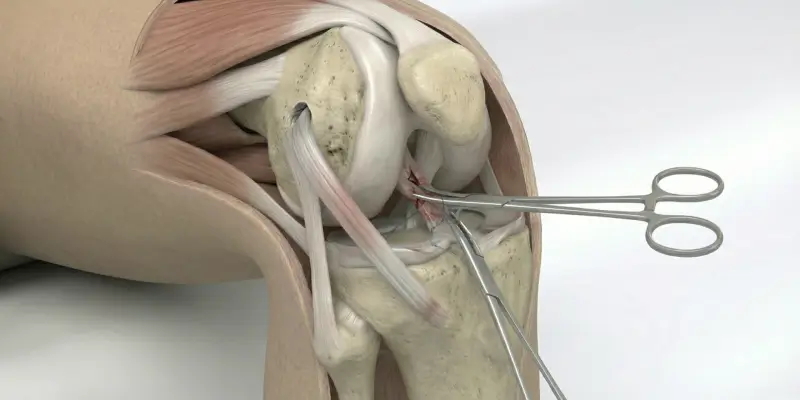
The anterior cruciate ligament (ACL) is one of the two main ligaments in the knee, located between the thigh bone (femur) and the shin bone (tibia). As one of the most critical stabilizers of the knee, the ACL controls especially anterior-posterior sliding and rotational movements, providing joint stability.
The ACL helps the knee move safely in sport and daily activities. In sudden direction change, turning, or acceleration, the ACL balances load distribution in the knee and protects the joint from excessive movement.
If it tears or is injured, the ACL can cause the knee to lose stability and lead to problems such as giving way, pain, swelling, and limited motion. ACL injuries are especially common in sports such as football, basketball, volleyball, skiing, and tennis.
Key features:
- Controls stability and anterior-posterior sliding in the knee
- Limits rotational movements and protects the knee joint
- Contributes to safe knee movement in sport and daily activities
- Joint function is seriously affected if it is damaged
Causes of ACL Injury
ACL injuries are serious conditions that directly affect knee stability and mobility. They are common especially in athletes and people with an active lifestyle, but they can also occur for various reasons in daily life.
Sports Injuries
In sports such as football, basketball, volleyball, skiing, and tennis, excessive force can form on the knee during sudden stopping, direction change, or jumping. These sudden movements can stretch and tear the ACL. Correct warm-up, appropriate shoes, and technical movements are very important for protecting athletes’ knees.
Sudden Turning and Twisting Movements
When the knee is exposed to turning or twisting beyond its normal limits, the ACL is strained. Sudden turns on one foot or movements on uneven ground can lead to a tear of the ligament.
Direct Impact and Trauma
Direct blows to the knee, traffic accidents, or falls can cause the ACL to rupture. Examples include a hard blow to the front of the knee in a football match or sudden stretching of the knee after a fall while skiing.
Occurrence Together With Other Knee Injuries
ACL tears are often seen together with meniscus, collateral ligament, or knee cartilage injuries. Injury of the cruciate ligament can also lead to damage in the meniscus and joint cartilage, so early diagnosis and intervention are very important.
Age and Degenerative Factors
In young people and athletes, traumatic injuries predominate, while with age the elasticity of ligament tissue may decrease and even small strains can tear the ACL. These tears usually occur during non-sport daily activities and have a degenerative character.
ACL injuries usually present with sudden pain, swelling, a feeling of the knee giving way, and limited motion. When the cause of the injury is correctly identified, ACL reconstruction can be planned together with evaluation of meniscus or collateral ligament injuries.
What Is ACL Reconstruction?
The surgical procedure used after ACL injury to restore knee stability and preserve joint function is called ACL reconstruction. This procedure involves placing new ligament tissue in place of the torn or damaged ACL.
ACL reconstruction is usually performed today with arthroscopic techniques. Surgery is thereby minimally invasive, large incisions around the knee are not needed, and recovery is shorter. The ligament tissue used during surgery is usually obtained in two ways:
- Autograft (the patient’s own tissue): A new ACL is created using hamstring tendons, the patellar tendon, or quadriceps tendons. This method increases compatibility of the ligament with the body and reduces rejection risk.
- Allograft (tissue taken from a donor): ACL reconstruction can be done using a donor ligament or tendon. This method is preferred especially after previous operations or when autograft tissue is insufficient.
The surgeon chooses the appropriate graft type considering the anatomy of the knee and the patient’s needs. The aim is to prevent anterior-posterior sliding, stabilize rotational movements, and restore safe knee function in daily life and sport.
After ACL reconstruction, patients regain range of motion, muscle strength, and knee stability with an appropriate rehabilitation program. This surgical method, which has a high success rate, is critical for protecting knee health in the long term for athletes and active people.
Graft Types Used in ACL Reconstruction
In ACL reconstruction, new ligament tissue (a graft) is placed in place of the torn ligament. Graft choice is determined according to the patient’s age, activity level, previous surgery history, and the surgeon’s preferences. Correct graft choice is critical for providing knee stability and long-term success.
Autograft (Graft Taken From the Patient’s Own Tissue)
- Definition: The ACL is recreated using the patient’s own tendon tissue.
- Common types:
- Hamstring tendons: Taken from the back of the knee; flexibility is high and healing after surgery is rapid.
- Patellar tendon: Taken from the front of the knee; provides a strong, durable graft, preferred especially in athletes.
- Quadriceps tendon: Taken from above the knee; a thick, strong graft is obtained.
- Advantages: Because the body uses its own tissue, there is no rejection risk; healing is natural and rapid.
Allograft (Graft Taken From a Donor)
- Definition: ACL reconstruction is done with tendon or ligament tissue taken from another person.
- Uses:
- If autograft was not used in previous operations
- If the patient’s tendon tissue is not sufficient
- In multiple knee injuries or when another operation is needed
- Advantages: Graft harvest time during surgery is shortened; there is no need to take extra tissue from the patient.
Factors Considered in Graft Choice
- The patient’s age and physical activity level
- Previous knee injuries or surgery history
- The surgeon’s experience and preferences
- Targeted sport and daily activities
Whatever the graft type, an appropriate rehabilitation program after ACL reconstruction is essential to provide knee stability, range of motion, and long-term function.
Symptoms of ACL Injury
ACL injuries can seriously affect knee stability and daily activities. Symptoms may vary with the severity of the injury and the status of accompanying knee structures. Early diagnosis is very important both for ACL reconstruction and for appropriate rehabilitation.
Sudden, Severe Pain
- The most common symptom of ACL injuries is sudden, intense pain in the knee.
- A “pop” sound may often be heard at the moment of injury and pain starts immediately.
- Pain and loss of function in the knee are seen during sport or after a fall.
Swelling and Bleeding (Hemarthrosis)
- After the injury, fluid and blood accumulate rapidly inside the knee.
- The knee swells in a short time, and limited motion and a feeling of tightness form.
- Swelling is usually obvious within 24 hours after the injury.
Giving Way or a Feeling of Instability
- ACL rupture creates a “giving way” or “loosening” feeling in the knee.
- It is possible to feel the knee sliding or being unstable during sudden turning, running, or going down stairs.
Limited Motion
- Difficulty may occur in bending or straightening the knee.
- Range of motion can be seriously limited especially if meniscus or collateral ligament injuries are also present.
Long-term Muscle Weakness and Balance Problems
- After the injury, the quadriceps and hamstring muscles may weaken.
- Because knee stability is disrupted, loss of balance in sudden movements and the risk of another injury increase.
When symptoms of ACL injury are seen, orthopedic evaluation and imaging (MRI and physical examination) should be used without delay to make the diagnosis. Early intervention increases the success of reconstruction and rehabilitation.
How Is the ACL Diagnosed?
Correct diagnosis of ACL injuries is critical for restoring knee stability and determining an appropriate treatment plan. The diagnostic process includes physical examination, imaging, and detailed evaluation of the patient’s history.
Physical Examination
- Lachman test: With the knee bent about 20–30°, the tibia is pulled forward; excessive movement indicates an ACL tear.
- Anterior drawer test: With the knee bent 90°, the tibia is pulled forward to check ligament stability.
- Pivot shift test: Sliding of the tibia is observed while the knee rotates; it is used to detect instability often seen in athletes.
- Swelling, tenderness, and limited motion are also assessed during physical examination.
Imaging
- MRI (magnetic resonance imaging): Shows an ACL tear and accompanying meniscus, collateral ligament, or cartilage injuries most accurately.
- X-ray: Used to assess fractures or joint deformities in bone structures; it does not show an ACL injury directly.
- Ultrasound: In some cases it provides additional information in assessing soft tissue and ligament structures.
Patient History and Injury Mechanism
- How the injury happened, blows the knee received during sport or a fall, and a felt “pop” sound help the diagnosis.
- Previous knee injuries or operations are also assessed.
Importance of Diagnosis
If the correct diagnosis is not made, complications such as instability in the knee, another injury, and meniscus or cartilage damage can develop. When ACL reconstruction is planned, the diagnostic process allows the graft type and surgical technique to be chosen correctly.
Rehabilitation After ACL Reconstruction
The rehabilitation process after ACL reconstruction is critical for restoring knee stability, preserving muscle strength, and returning safely to sport or daily activities. The program is personalized according to the surgical method, graft type, and the patient’s age.
First Period (0–2 Weeks)
- Knee stabilization: After the operation the knee is usually protected with a brace or supported orthosis.
- Light passive movements: Excessive loading on the knee is avoided; only passive exercises aimed at preserving range of motion are applied.
- Swelling and pain control: Ice, elevation, and medicines recommended by the physician manage swelling and pain.
Intermediate Period (2–6 Weeks)
- Partial loading: Patients begin to load the knee in a controlled way; walking is supported with a cane or walker.
- Muscle strengthening: Low-resistance exercises that strengthen the quadriceps and hamstring muscles are done.
- Range of motion: Knee bending and straightening movements are increased, but stress on the graft is managed carefully.
Advanced Period (6 Weeks–3 Months)
- Functional exercises: Squats, light running, using stairs, and balance work are started.
- Increasing muscle strength: Muscles around the knee are strengthened with a resistance band or weights.
- Graft protection: Strenuous rotational movements and sudden loading are still limited.
Full Activity and Return to Sport (3–9 Months)
- After the graft has fully healed, patients can return to sport or intensive physical activities in a controlled way.
- For athletes, stability and muscle balance of the knee are tested to provide a safe return.
- Knee strengthening and flexibility exercises are continued in the long term to reduce the risk of another injury.
Importance of Rehabilitation
- If appropriate rehabilitation is not applied, the risk of graft failure increases and instability in the knee may continue.
- Regular physical therapy preserves range of motion, muscle strength, and the balance system of the knee.
- In the long term, the risk of knee osteoarthritis also decreases and quality of life increases.
Advantages of ACL Reconstruction
ACL reconstruction is an effective surgical method used to restore knee stability and improve quality of life. Results obtained with correct graft choice and a rehabilitation program allow patients to return safely both to daily life and to sport.
Restoring Knee Stability
- ACL reconstruction provides stability by controlling anterior-posterior sliding and rotational movements of the knee.
- A stable knee increases safety during sudden movements or direction changes in sport and reduces the risk of another injury.
Reduced Pain and Giving-way Feeling
- A torn ACL causes pain, giving way, and a feeling of instability in the knee.
- After reconstruction, pain decreases, the knee can move safely, and daily activities are done more comfortably.
Preventing Progressive Joint Damage
- An unstable knee leads to overload of the meniscus and cartilage tissues.
- ACL reconstruction reduces this type of joint damage and the long-term risk of osteoarthritis.
Minimally Invasive Surgery and Rapid Recovery
- ACL reconstruction done with an arthroscopic technique is performed through small incisions, hospital stay is short, and postoperative complication risk is low.
- Thanks to the rehabilitation process, patients can return to normal activities in a short time.
Early Return to Sport and Activity
- With appropriate rehabilitation, athletes can return to training and competition in a controlled way after full stability of the knee is achieved.
- Muscle strength, balance, and coordination programs bring knee performance to a maximum.
Long-term Knee Health and Quality of Life
- With reconstruction, the natural mechanics of the knee are preserved and joint function remains stable for a long time.
- It provides a clear increase in quality of life both for active athletes and for people who care about knee health in daily life.
Conclusion
ACL reconstruction is a critical surgical intervention to provide stability in the knee, reduce pain, and improve quality of life. The ACL is one of the main ligaments that control anterior-posterior sliding and rotational movements in the knee; tearing or damage leads to serious restrictions in daily life and sport.
ACL injuries usually result from sports, sudden turning movements, direct blows, or age-related degenerative processes. After injury, pain, swelling, a giving-way feeling, and limited motion are seen in the knee. After the correct diagnosis is made with physical examination and imaging such as MRI, reconstruction can be planned.
ACL reconstruction is usually done arthroscopically using autograft or allograft. After surgery, knee stability is provided, and range of motion, muscle strength, and balance are regained with an appropriate rehabilitation program. Rehabilitation includes passive movements and swelling control in the first weeks, controlled loading and muscle strengthening in the intermediate period, and functional exercises and return to full activity in the advanced period.
Successful ACL reconstruction reduces pain and giving way in the knee, allows a safe return to sport and daily activities, helps prevent joint osteoarthritis, and protects long-term knee health.
Frequently Asked Questions

Specialist Opinion
ACL reconstruction is a critical surgical intervention to provide stability in the knee, reduce pain, and improve quality of life. The ACL is one of the main ligaments that control anterior-posterior sliding and rotational movements in the knee; tearing or damage leads to serious restrictions in daily life and sport.
ACL injuries usually result from sports, sudden turning movements, direct blows, or age-related degenerative processes. After injury, pain, swelling, a giving-way feeling, and limited motion are seen in the knee. After the correct diagnosis is made with physical examination and imaging such as MRI, reconstruction can be planned.
ACL reconstruction is usually done arthroscopically using autograft or allograft. After surgery, knee stability is provided, and range of motion, muscle strength, and balance are regained with an appropriate rehabilitation program. Rehabilitation includes passive movements and swelling control in the first weeks, controlled loading and muscle strengthening in the intermediate period, and functional exercises and return to full activity in the advanced period.
Successful ACL reconstruction reduces pain and giving way in the knee, allows a safe return to sport and daily activities, helps prevent joint osteoarthritis, and protects long-term knee health.
Contact us to have your symptoms assessed and to learn about treatment options that may be right for you. Get in touch .
Frequently Asked Questions
They are more common in people active in sports such as football, basketball, volleyball, skiing, and tennis. They are also common in young and middle-aged people who make sudden turning or twisting movements.
Sudden, severe knee pain; swelling and blood accumulation in the knee; a giving-way or instability feeling; limited motion and muscle weakness may be seen.
It is used in complete or partial ACL tears; when there is repeated giving way or instability of the knee; and in athletes and people with an active lifestyle to preserve knee function.
Autograft: The patient’s own tendon tissue is used (hamstring, patellar, quadriceps tendons); there is no rejection risk. Allograft: A tendon or ligament taken from a donor is used; it is preferred after previous surgery or when autograft is insufficient.
In the first weeks the knee is supported and light passive movements are done. At 2–6 weeks, controlled loading and muscle strengthening; at 6 weeks–3 months, functional exercises and balance work; at 4–9 months, sport and intensive activities are started in a controlled way.
It is needed to restore knee stability, preserve muscle strength, provide range of motion, and reduce the long-term risk of another injury and joint osteoarthritis.
In most patients a controlled return to sport is possible between 4 and 9 months. For athletes, muscle balance and stability of the knee are tested to provide a safe return.
 WhatsApp
  Facebook
  Twitter
  Linkedin



 +90 505 398 34 34
 doctoryavuzarikan@gmail.com
 Book Appointment / Contact