

How Many Hours After Joint Replacement Will I Be Walking?



Joint replacement operations are surgical procedures performed especially on joints such as the hip and knee. One of the questions patients ask most after these operations is “How many hours after joint replacement can I walk?” According to the clinical assessment of Prof. Dr. Yavuz Arıkan, this question matters both for how long recovery will take and for when the patient can return to daily life.
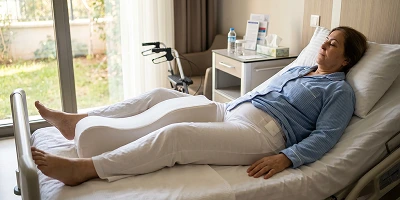
The walking process after joint replacement can vary with the type of surgery, the patient’s general health, and the surgeon’s preference. In general, however, early mobilization (getting the patient walking early) is the approach used today. The main aims of early mobilization are faster recovery, a lower risk of blood clots, and prevention of muscle loss.
The Importance of Early Mobilization After Joint Replacement
Starting to walk in the early period after joint replacement benefits the patient both physically and psychologically. According to Prof. Dr. Yavuz Arıkan, the main benefits of early mobilization are:
- It reduces the risk of blood clots (deep vein thrombosis)
- It helps protect lung function
- It reduces muscle loss
- It has a positive effect on wound healing
- It increases the patient’s independence and confidence
In modern orthopedic surgery, patients are therefore started walking as early as possible. The process is planned according to the patient’s condition and progressed safely.
When Is the First Walk After Joint Replacement?
Walking after joint replacement is usually planned within the first 24 hours after surgery. In some centers, depending on the patient’s condition, a short walk may even be done on the same day. These walks usually start:
- With a walker or crutches
- Accompanied by a physiotherapy specialist
- Over short distances
According to Prof. Dr. Yavuz Arıkan, the first postoperative walk is planned according to pain, the wearing off of anesthesia, and bleeding risk. The same time window therefore may not apply to every patient.
Factors That Affect When Walking Starts
The time to first walking after joint replacement depends on many factors. Leading among them are general health, type of surgery, anesthesia method, and bleeding during the operation.
These factors can be summarized as:
- Age and general health
- Additional chronic conditions such as diabetes, hypertension, and heart disease
- Whether surgery was one-sided or two-sided
- Implant type and surgical difficulty
- Blood loss and fluid balance during surgery
- Psychological state and motivation
These factors can lengthen or shorten the time to first walking.
How Should the First Walk Be Done?
The first walk after joint replacement is usually short and controlled. The aim is not independent walking, but:
- Supporting circulation
- Activating the muscles
- Reducing clot risk
- Protecting respiratory function
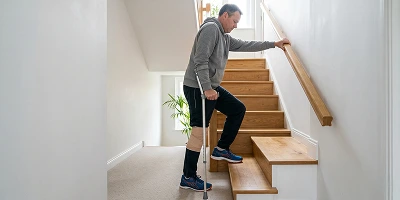
A walker or crutches are usually used for the first walk. Walking with a physiotherapy specialist or nurse is considered a safe approach. Duration and distance are increased gradually according to the patient’s pain threshold and endurance.
Points to Watch While Walking
The most important points after joint replacement are:
- Avoiding excessive loading
- Taking controlled, slow steps
- Using the walker or cane carefully
- Resting if sudden pain or swelling develops at the surgical site
- Choosing suitable shoes to reduce fall risk
Prof. Dr. Yavuz Arıkan’s clinical recommendation is that doing the prescribed exercises regularly speeds walking progress and reduces complication risk.
Walking Duration and Progression Plan
The walking progression plan after joint replacement varies with the patient’s condition. A general approach is:
- First 24 hours: short-distance walks
- First 1–3 days: longer walks with a walker or crutches
- First 1–2 weeks: transition to independent indoor walking
- 2–6 weeks: daily activities and simple walks
- After 6 weeks: longer walks and increased activity
This course may change with general condition, type of surgery, and the physiotherapy program. According to the clinical assessments of Prof. Dr. Yavuz Arıkan, the physician and physiotherapy team evaluate the patient’s progress regularly.
The Role of Physiotherapy and Rehabilitation After Joint Replacement
Rehabilitation after joint replacement is critical for walking to progress safely. Physiotherapy specialists apply specific exercise programs to increase muscle strength, protect joint range of motion, and improve balance.
In this process:
- Exercises that strengthen the knee or hip joint
- Walking and balance work
- Breathing exercises
- Pain-control and swelling-reduction techniques
are used. The rehabilitation program is tailored to the patient’s needs and made gradually more demanding.
Problems That May Occur After Walking Starts
After walking begins, some patients may encounter certain problems. These can be part of normal recovery, but some situations may require medical attention.
Common problems include:
- Pain and swelling at the surgical site
- Unsteadiness while walking
- Stiffness around the knee or hip
- A hissing or clicking sensation while walking
- Fatigue and tiring quickly
Some of these can be controlled with physiotherapy and rest. Severe pain, sudden swelling, fever, redness in the leg, and increased warmth, however, require prompt medical review.
When Does Fully Independent Walking Begin After Joint Replacement?
Fully independent walking depends on general health and the speed of postoperative recovery. According to the clinical assessments of Prof. Dr. Yavuz Arıkan, some patients move to independent walking within a few weeks, while others may use a walker or cane for longer.
In general:
- Within 6 weeks most patients can walk more independently
- Within 3 months longer walks and daily activities become easier
- Within 6 months joint function improves further
These times may change with age, physical condition, and surgical difficulty. The physician and physiotherapy team evaluate progress and determine the most suitable walking plan.
Conclusion and Overall Assessment
Walking after joint replacement is planned on the principle of early mobilization. Starting to walk as soon as possible after surgery speeds recovery and reduces complication risk. The timing of first walking and the rate of progress can, however, vary from patient to patient.
It is important for the patient to be careful during walking, follow the exercise program, and seek medical care if problems arise. According to the clinical assessments of Prof. Dr. Yavuz Arıkan, starting to walk early is one of the most important steps that increase success after joint replacement.
Frequently Asked Questions

Specialist Opinion
Walking after joint replacement is planned on the principle of early mobilization. Starting to walk as soon as possible after surgery speeds recovery and reduces complication risk. The timing of first walking and the rate of progress can, however, vary from patient to patient.
It is important for the patient to be careful during walking, follow the exercise program, and seek medical care if problems arise. According to the clinical assessments of Prof. Dr. Yavuz Arıkan, starting to walk early is one of the most important steps that increase success after joint replacement.
Contact us to have your symptoms assessed and to learn about treatment options that may be right for you. Get in touch .
Frequently Asked Questions
In most centers the first walk is within the first 24 hours. In suitable patients, a short walk may also start on the same day.
Early walking reduces the risk of blood clots, protects lung and muscle function, and supports faster independence.
It usually starts with a physiotherapist, using a walker or crutches, over a short distance.
Age, general health, chronic conditions, one- or two-sided surgery, pain control, blood loss, and the effect of anesthesia all affect when walking begins.
Most patients gain indoor independence in 1–2 weeks, more comfortable walking at about 6 weeks, and clear ease with daily activities by the third month.
Severe pain, sudden swelling, fever, redness, or increased warmth should prompt medical review.
 WhatsApp
  Facebook
  Twitter
  Linkedin




 +90 505 398 34 34
 doctoryavuzarikan@gmail.com
 Book Appointment / Contact