

Why Does Sharp, Stabbing Pain Occur in the Groin and Hip?


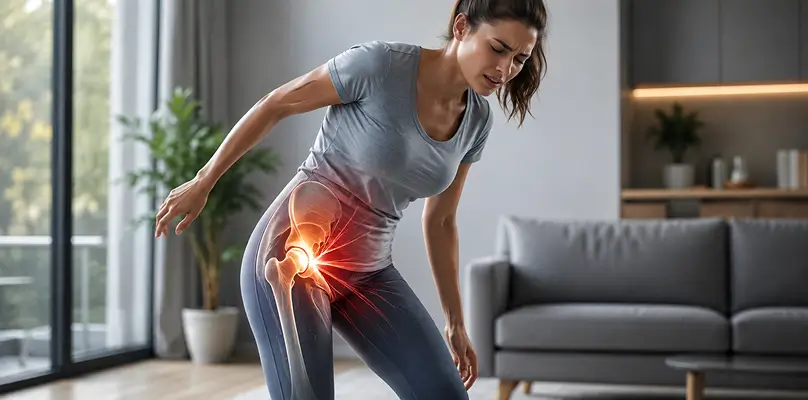
Sudden, sharp pain in the groin or hip that feels like a stabbing sensation can seriously affect daily life. This type of pain sometimes comes from a simple muscle strain; at other times it may signal more serious problems involving the hip joint, tendons, nerves, or surrounding tissues. The exact location of the pain, when it started, which movements increase it, and accompanying signs give important clues for reaching the correct diagnosis.
The hip and groin region has a complex anatomy of bones, joints, muscles, tendons, ligaments, and nerves. For this reason, it is not always possible to understand the source of pain by looking only at where it is felt. Pain felt in the groin often comes from the hip joint, while some pain felt in the hip may come from the lumbar spine.
This article covers conditions that can cause sharp, stabbing pain in the groin and hip, which signs matter, and when you should see an orthopedic specialist.
Why Can Groin and Hip Pain Occur Together?
The hip joint is anatomically very close to the groin. For this reason, many problems in the hip joint can cause pain to be felt in the groin. Patients often think there is a problem in the hip while they describe the actual pain in the groin.
In addition, pain felt on the outer side of the hip may come from tendons or from fluid-filled sacs called bursae. The exact location of the pain, how it radiates, and its relationship to movement are very important for diagnosis.
Muscle Strains and Muscle Tears
Sudden movements, heavy lifting, sports injuries, or uncontrolled exercise can strain the muscles around the groin and hip.
Signs that may be seen include:
- Sudden, sharp pain during movement
- A stabbing sensation in the groin
- Muscle spasm
- Swelling or bruising
- Difficulty walking
- Pain that increases when climbing stairs
Mild muscle strains may improve with rest and appropriate treatment, while serious muscle tears may require different treatment methods.
Hip Impingement (Femoroacetabular Impingement)
Hip impingement, seen especially in young, active people, is an important cause of groin pain.
It develops when the bony structures of the hip joint contact each other more than normal during movement.
Symptoms include:
- Sharp, stabbing pain in the groin
- Pain after sitting for a long time
- Discomfort when squatting
- Pain that increases during sports
- Limited hip motion
- Sounds from the hip
If untreated, damage to the joint cartilage can develop.
Hip Osteoarthritis
As age advances, osteoarthritis can develop as cartilage in the hip joint wears down. Symptoms may be mild in the early period, but over time the following complaints can appear:
- Deep pain in the groin
- Pain radiating to the hip
- Morning stiffness
- Difficulty walking
- Pain that increases with movement
- Symptoms that partly decrease with rest
In advanced stages, daily activities can be clearly affected.
Hip Labral Tear
A tear of the labrum that surrounds the hip joint can be seen especially in athletes and active people.
The most common symptoms:
- Sharp pain in the groin
- A locking sensation in the hip
- Catching during movement
- Pain with twisting movements
- A clicking sound from the hip
MRI plays an important role in diagnosis.
Tendinitis and Bursitis
Inflammation of the tendons around the hip (tendinitis) or irritation of fluid-filled sacs called bursae (bursitis) can also cause sharp pain.
In these patients:
- Pain on the outer side of the hip
- Pain that increases when lying on that side
- Difficulty climbing stairs
- Symptoms that increase after long walks
- Local tenderness
may be seen.
Lumbar Disc Herniation and Nerve Compression
Not every groin or hip pain comes directly from the hip joint. Compression of nerves leaving the lumbar region can cause pain to radiate to the hip, groin, and leg.
Nerve-related pain may be considered if there is:
- Hip pain together with low back pain
- Pain radiating down the leg
- Numbness or tingling
- Muscle weakness
- Symptoms that increase after sitting for a long time
In this situation, detailed orthopedic evaluation and imaging when needed are required.
Stress Fractures
Stress fractures can develop especially in long-distance runners, soldiers, and people with low bone density.
Symptoms:
- Groin pain that increases with movement
- Symptoms that decrease with rest
- Pain when standing on one leg
- Complaints that worsen as walking continues
If not diagnosed early, the fracture can progress.
Hip Fractures
One of the most important causes of sudden, severe groin pain in older adults is a hip fracture. Especially after a fall, if there is:
- Inability to stand up
- Severe groin pain
- Inability to move the hip
- Deformity of the leg
urgent evaluation is needed.
Sports Injuries
Groin injuries are common in people who play sports such as football, basketball, tennis, and running. Sudden change-of-direction movements can cause:
- Muscle strains,
- Ligament injuries,
- Tendon damage,
- Muscle tears.
Returning to sport without proper rehabilitation increases the risk of re-injury.
Which Accompanying Signs Matter?
If any of the following is present together with groin and hip pain, a doctor should be seen without delay:
- Fever
- Severe swelling
- Inability to bear weight
- A history of trauma
- Numbness in the leg
- Loss of bladder or bowel control
- Pain that wakes you from sleep at night
- Unexplained weight loss
These signs may signal more serious disease.
How Is the Diagnosis Made?
To identify the cause of groin and hip pain, a detailed history is taken first and a physical examination is performed. When needed, the following methods may be used:
- X-ray
- Magnetic resonance imaging (MRI)
- Computed tomography (CT)
- Ultrasound
- Blood tests
Not every patient needs the same investigations. The most appropriate evaluation is planned according to examination findings.
How Is Treatment Planned?
Treatment is determined entirely by the cause of the pain. Possible methods include:
- Activity modification
- Rest
- Medication
- Physical therapy and rehabilitation
- Exercise programs
- Injection treatments
- Surgery when needed
Using painkillers on your own or ignoring symptoms for a long time is not the right approach. Early evaluation, especially for pain that lasts a long time or is getting worse, increases treatment success.
What Can Be Done to Prevent Groin and Hip Pain?
Some lifestyle changes can reduce the risk of groin and hip pain:
- Exercise regularly.
- Always warm up before exercise.
- Maintain a healthy weight.
- Do muscle-strengthening exercises.
- Avoid sudden, uncontrolled movements.
- Use appropriate sports equipment.
- Try not to stay in the same position for a long time.
These suggestions can help protect joint health and reduce injury risk.
Conclusion
Sharp, stabbing pain in the groin and hip can arise from many different causes, from muscle strain to hip impingement, osteoarthritis, labral tears, nerve compression, and stress fractures. Treatments applied without correctly identifying the cause of the pain may not provide a lasting solution.
If the pain is severe, has been present for a long time, limits your ability to move, or is accompanied by signs such as fever, numbness, or inability to bear weight, it is important to see an orthopedics and traumatology specialist without delay. With early diagnosis and an individualized treatment plan, both pain control and quality of life can be protected.

Specialist Opinion
Sharp, stabbing pain in the groin and hip can arise from many different causes, from muscle strain to hip impingement, osteoarthritis, labral tears, nerve compression, and stress fractures. Treatments applied without correctly identifying the cause of the pain may not provide a lasting solution.
If the pain is severe, has been present for a long time, limits your ability to move, or is accompanied by signs such as fever, numbness, or inability to bear weight, it is important to see an orthopedics and traumatology specialist without delay. With early diagnosis and an individualized treatment plan, both pain control and quality of life can be protected.
Contact us to have your symptoms assessed and to learn about treatment options that may be right for you. Get in touch .
Frequently Asked Questions
This pain can arise from different causes such as muscle strain or tear, hip impingement, osteoarthritis, labral tear, tendinitis, bursitis, nerve compression, stress fracture, or hip fracture.
Yes. Because the hip joint is close to the groin, many problems in the joint can cause pain to be felt in the groin. The location, radiation, and relationship of pain to movement are important for diagnosis.
Sharp, stabbing groin pain, discomfort after sitting or squatting for a long time, pain that increases during sports, limited motion, and sounds from the hip may be seen.
If there is fever, severe swelling, inability to bear weight, a history of trauma, numbness in the leg, loss of bladder or bowel control, pain that wakes you at night, or unexplained weight loss, a doctor should be seen without delay.
After a detailed history and physical examination, X-ray, MRI, computed tomography, ultrasound, and blood tests are used when needed. Not every patient needs the same investigations.
Treatment is planned according to the cause of the pain. Activity modification, rest, medication, physical therapy, exercise, and injections may be used; surgery may be considered when needed.
 WhatsApp
  Facebook
  Twitter
  Linkedin



 +90 505 398 34 34
 doctoryavuzarikan@gmail.com
 Book Appointment / Contact